
What is application security posture management (ASPM)?
Application security posture management (ASPM) is a security discipline that gives teams a unified view of application risk across development, deployment, and runtime, helping them identify exploitable risks and remediate them faster. ASPM shifts application security from a traditional “find and fix” model to a more effective “validate and prioritize” approach.
Instead of treating findings from Static Application Security Testing (SAST), software composition analysis (SCA), secrets detection, infrastructure as code (IaC), and other tools as final truths, ASPM treats them as risk hypotheses. It correlates those signals with code, cloud, runtime, identity, network exposure, and deployment context to determine whether a vulnerability is reachable, exploitable, and meaningful in practice.
Why AppSec teams need Application Security Posture Management
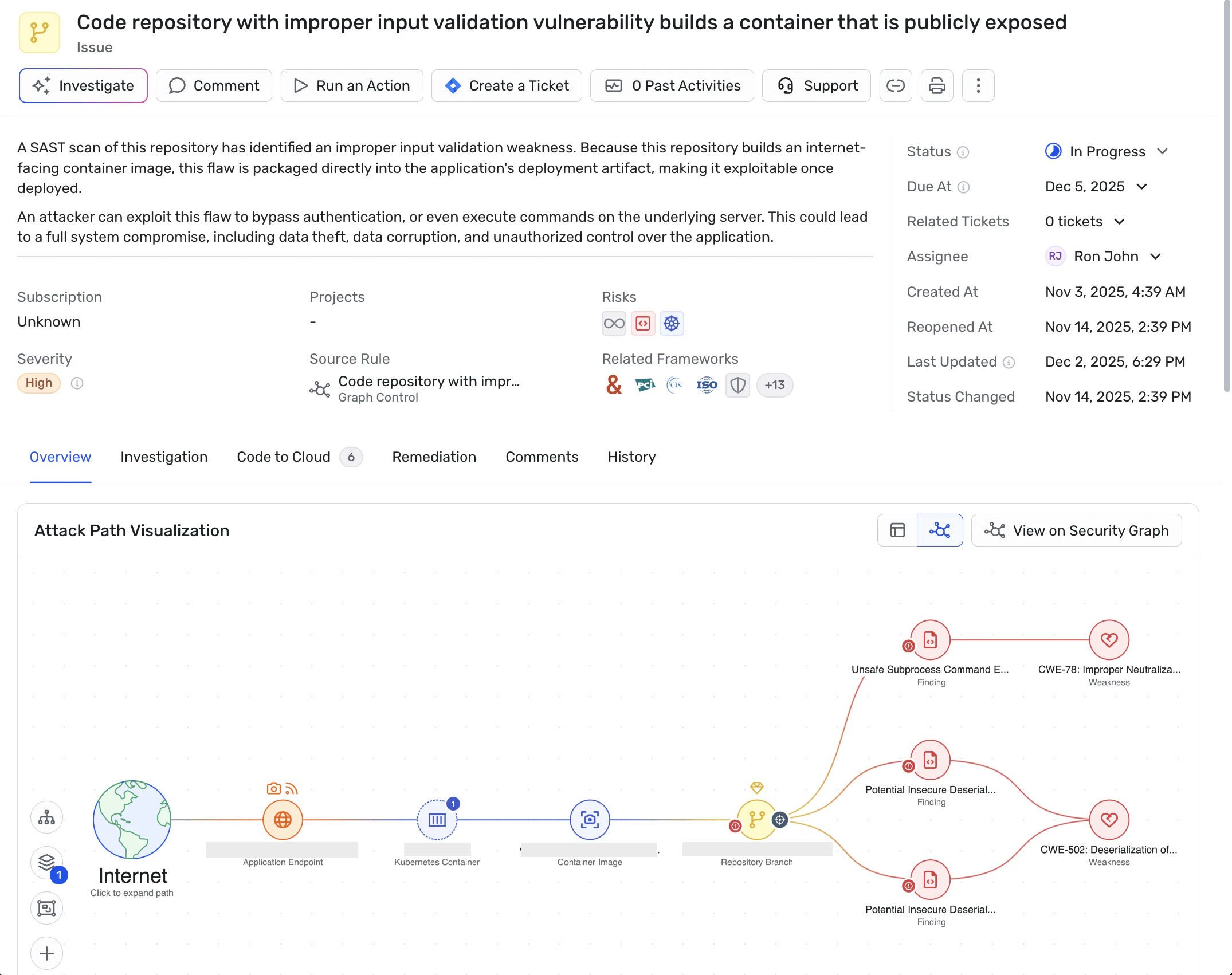
AppSec teams are drowning in alerts but still struggle to prioritize risk with confidence. Most organizations already run SAST, SCA, Dynamic Application Security Testing (DAST), secrets scanning, and IaC checks across the SDLC, yet teams often cannot tell which findings actually require action. ASPM solves that signal-versus-noise problem by validating exploitability.
2026 ASPM Buyer’s Guide: The Shift to AI-Native Application Security
This guide details the transition from traditional, aggregation-focused ASPM to an AI-native architecture.

ASPM helps address these four core challenges:
1. AppSec teams struggle to prove which risks are truly exploitable
Traditional AppSec tools surface issues, but they often stop short of showing whether a vulnerability is actually exploitable in a real environment. As a result, teams must manually determine which findings matter most. ASPM addresses this challenge by validating exploitability with runtime, deployment, and exposure context, so teams can focus on issues that are actually reachable and impactful.
2. Cloud-native development and AI make application risk harder to manage
Modern development has changed the nature of application risk. Cloud-native architectures tightly connect applications to infrastructure, identity, and deployment pipelines, while AI-assisted coding increases development speed and can introduce insecure patterns at scale. ASPM helps teams manage this complexity by correlating code-level findings with cloud, identity, and runtime context, making it easier to understand how risk moves through production environments.
3. Unified visibility alone does not create prioritization confidence
ASPM and application security orchestration and correlation (ASOC) and other aggregation approaches improved visibility by centralizing findings from fragmented AppSec tools. But visibility alone does not tell teams which issues are actually exploitable, leaving validation as a manual burden. ASPM closes that gap by connecting findings to runtime behavior, attack paths, permissions, and exposure so teams can prioritize based on real risk, not just alert volume.
4. AppSec teams need code-to-cloud correlation to reduce risk without slowing development
Application risk does not exist separately from how software is built, deployed, and exposed. To prioritize effectively, AppSec teams need to understand how code-level issues interact with cloud infrastructure, identities, network exposure, and production runtime. ASPM provides that code-to-cloud correlation, giving teams clearer ownership, faster prioritization, and more actionable remediation paths so they can reduce risk without becoming a bottleneck.
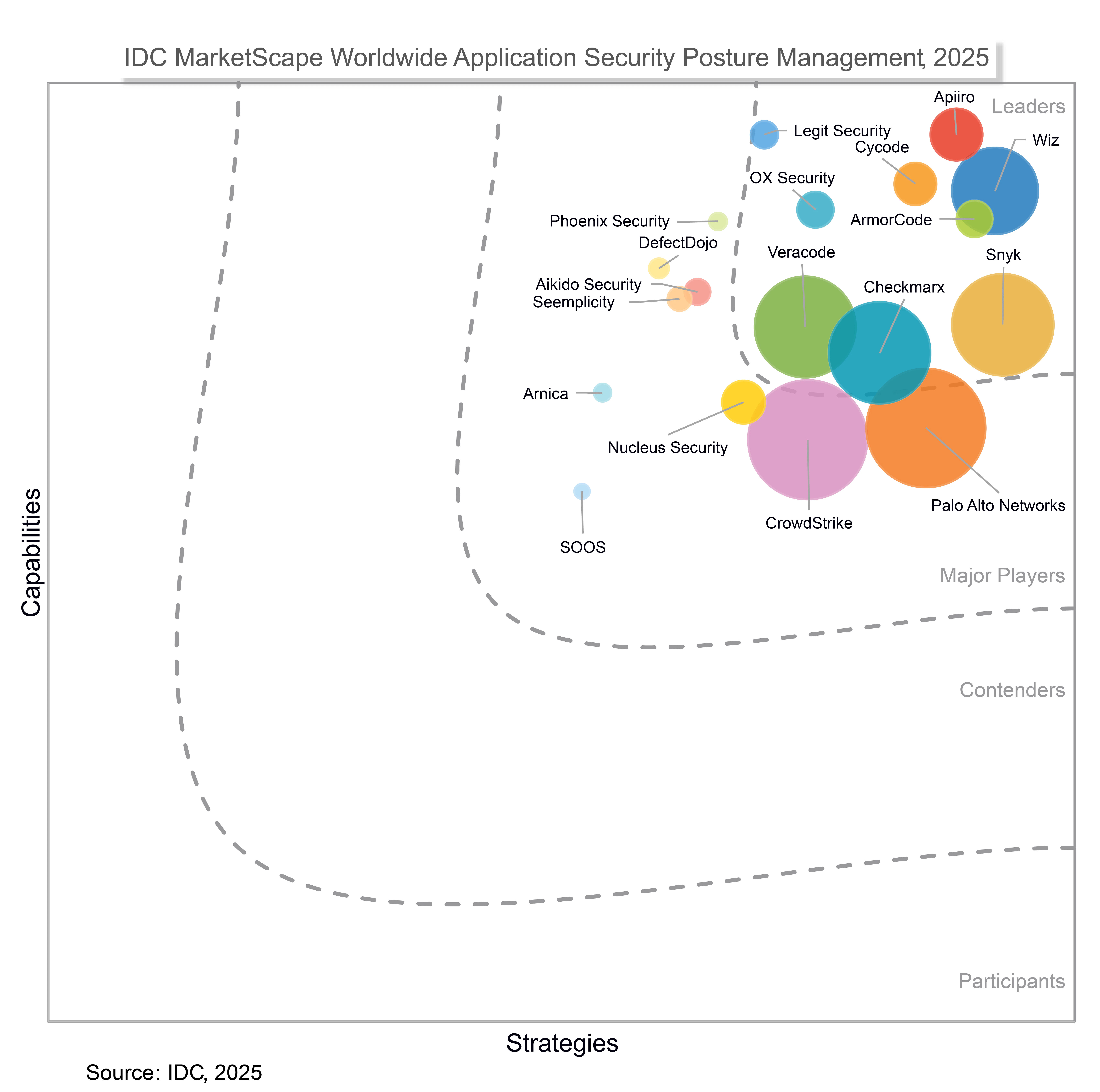
Wiz Named a Leader in IDC’s ASPM MarketScape
See why IDC recognized Wiz as a leader in Application Security Posture Management and how we’re helping organizations reduce risk across the SDLC.

What are the benefits of ASPM?
ASPM transforms application security outcomes by grounding prioritization in real-world exploitability and making remediation faster and clearer for both security and development teams. Instead of adding more tools or creating more alerts, ASPM helps teams understand where risk actually exists and how to remove it efficiently.
Here are the primary benefits of ASPM:
Prioritized focus on exploitable risk
ASPM prioritizes application risks based on whether attackers can actually reach and exploit them in real environments, rather than relying only on severity scores or scanner labels. By validating reachability, exposure, potential data impact, and attack paths, ASPM helps teams focus on the small set of issues that create meaningful business risk.
This approach reduces alert fatigue and shifts AppSec programs away from chasing theoretical findings toward fixing real threats.
Faster remediation with clear ownership
ASPM maps validated risks to the right repository, pipeline, and owning team, so developers get actionable findings instead of vague alerts that require manual investigation. Clear ownership and fix context reduce back-and-forth between security and engineering, helping teams remediate critical vulnerabilities faster.
That speed matters because shorter remediation timelines give attackers less time to exploit exposed weaknesses.
Stronger alignment between security and development
By validating risk before escalation, ASPM gives developers higher-confidence findings that they are more likely to trust and address. That reduces friction between security and engineering and makes it easier to embed security into everyday developer workflows.
As a result, teams can support a shift-left security approach without forcing developers to act like security analysts.
Lower operational overhead for AppSec teams
ASPM reduces the manual effort required to correlate findings across tools, environments, and stages of the software development lifecycle. By automating validation and prioritization, it frees AppSec teams from triage-heavy workflows and lets them focus on higher-value work, such as improving coverage, advising on architecture, and reducing systemic risk.
Clearer measurement of application security posture
ASPM tracks validated risk across releases, giving teams a clearer view of how their application security posture changes over time. That visibility makes it easier to spot regressions, show progress, and communicate risk to leadership.
Because ASPM measures exploitable application risk instead of raw findings, reporting becomes more meaningful for both security operations and compliance readiness. It also gives teams the traceability needed to support internal controls and external requirements, including SOC 2, ISO 27001, and industry-specific standards.
Get the Application Security Best Practices [Cheat Sheet]
This 6-page guide goes beyond basics — it’s a deep dive into advanced, practical AppSec strategies for developers, security engineers, and DevOps teams.

How does ASPM integrate with existing security workflows?
AppSec managers evaluating ASPM options often flag tool sprawl as a common concern. Most security teams already operate a dense toolchain, and adding another platform feels counterproductive. ASPM actually addresses that concern without compounding it.
Well-designed ASPM platforms don’t replace your existing tech stack—they sit above it. ASPM ingests findings from your SAST, DAST, SCA, IaC scanners, and CI/CD pipelines, correlating them with runtime and cloud context to surface only exploitable risk. Your existing scanners keep doing what they do best while ASPM adds the validation and prioritization layer that connects findings to actual business exposure.
Rather than route findings through a separate security portal, ASPM surfaces issues directly in IDEs, pull request workflows, and ticketing systems. Wiz supports this model by meeting developers where they work, with clear ownership and fix guidance attached to validated findings.
How to secure the SDLC with Wiz
Learn how to secure the SDLC from code to runtime with DevSecOps best practices: SAST, SCA, IaC scanning, CI/CD hardening, CSPM, CDR, and compliance mapping.
Read more

What to look for in an ASPM solution
Not all ASPM solutions approach application risk the same way. Some focus primarily on aggregating findings, while others emphasize validation and action. When evaluating ASPM tools, look beyond surface-level features and focus on how the solution reduces real-world risk in day-to-day development.
| Capability | What to look for |
|---|---|
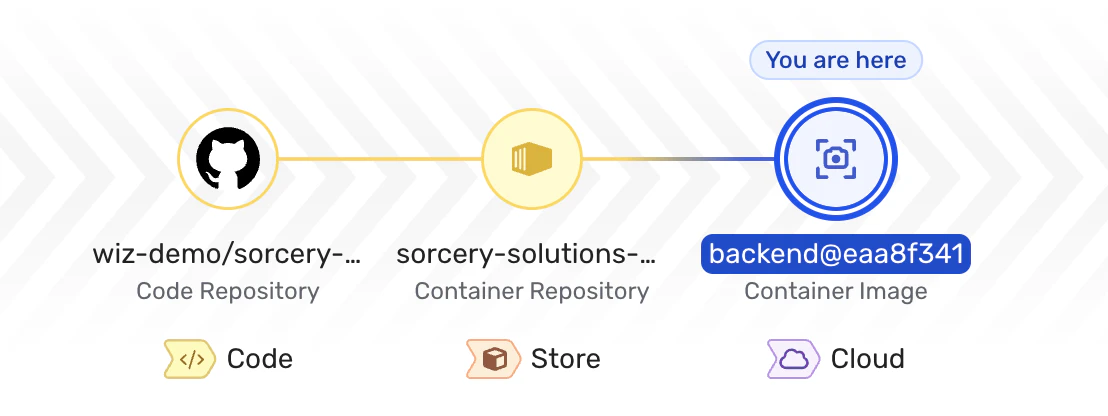
| Code-to-cloud correlation | Correlates SAST, SCA, secrets, and IaC findings with runtime context to analyze deployment status, network exposure, identity permissions, and attack paths. This unified context differentiates true ASPM from alert aggregation platforms. |
| Validation before escalation | Challenges findings and assesses reachability, exposure, and impact before routing them to humans, reducing alert fatigue and building developer trust. |
| Clear ownership and actionable remediation | Automatically maps validated risks to the correct repository, pipeline, and team owner. Provides fix guidance so developers don’t have to become security experts. |
| Support for modern development and AI-driven workflows | Scales with cloud-native architectures and AI-assisted development patterns. Manages high-velocity code changes without increasing noise or slowing delivery. |
| Continuous posture tracking and measurement | Moves beyond alert counts and tracks validated, exploitable risk trends to report actual security posture to stakeholders. |
| Integration with existing tools and workflows | Connects with CI/CD pipelines, developer tools, issue trackers, and cloud security platforms to make security a workflow default. |
Consult our guide to selecting an ASPM vendor for a deeper evaluation framework.
What are common ASPM implementation challenges?
ASPM delivers value, but implementation isn’t frictionless. Anticipate these common challenges to help teams plan and choose approaches that limit disruption and streamline security.
Organizational change management can stall adoption. Shifting how security and development teams interact requires buy-in from both sides. Developers accustomed to low-confidence alerts often resist new security workflows. Security teams must rebuild credibility by proving escalated findings are validated and warrant prioritization. Start with a focused use case—such as correlating SAST findings with runtime exposure in one high-priority application—to build trust before expanding.
Tool integration complexity can strain already crowded security stacks. Strong ASPM platforms reduce that friction through native integrations and agentless deployment, eliminating the need to instrument environments or rewrite pipelines. Wiz Code connects to cloud environments and existing AppSec scanners without agents, which helps teams reach value faster.
ROI can feel abstract in the early stages of deployment. Track mean time to remediation, false positive rates, and the ratio of validated to total findings to measure progress. These metrics make it easier to show how ASPM reduces manual triage and improves prioritization over time.
How Wiz enables effective ASPM for modern security teams
Wiz Code helps teams validate application risk in production environments before it reaches end users. Powered by the Wiz Security Graph, it correlates application risk with cloud infrastructure, identity, data, and runtime context to map reachability and impact.
By combining native SAST, SCA, secrets detection, and IaC scanning with existing AppSec scanners, Wiz Code unifies signals in one place. It then evaluates findings against real-world conditions such as deployment status, network exposure, identity permissions, and attack paths. That context reduces noise, improves prioritization confidence, and helps teams secure the SDLC faster with clear ownership and remediation guidance.
Book a Wiz Code demo to see how ASPM works without agents, silos, or context gaps. Or, start a free security assessment to benchmark your cloud security posture.