
What is a CISO?
A Chief Information Security Officer (CISO) is the senior executive accountable for developing, implementing, and managing an organization's information security program. This means the CISO owns everything from security strategy and policy to incident response and regulatory compliance.
The practical meaning of this role has shifted dramatically with cloud adoption. Today's CISO must secure environments that change by the minute while translating technical risk into language the board understands. Unlike a decade ago when security meant protecting a well-defined network perimeter, the modern CISO manages risk across cloud infrastructure, SaaS applications, remote workforces, and AI systems.
The CISO owns the security strategy, not just the tools. This includes aligning security investments with business objectives, meeting regulatory requirements, and ensuring the organization can operate safely at speed. The role sits at the intersection of technology, risk management, and business strategy.
The Board-Ready CISO Report Deck
Present your cloud security strategy like a business leader. This editable template helps you communicate risk, impact, and priorities in language your board will understand—so you can gain buy-in and drive action.

How is the role of a CISO evolving?
The CISO role has transformed dramatically from its origins as a technical specialist to today's strategic business partner. The shift reflects fundamental changes in how organizations operate, the threats they face, and the expectations placed on security leadership.
Compliance regulations drove the role's expansion in the early 2000s. SOX, HIPAA, and PCIDSS increased pressure on organizations to formalize security programs and assign clear accountability, particularly in financial services, healthcare, and retail sectors handling payment card data. CISOs became the executives responsible for demonstrating compliance to auditors and regulators.
The evolution from "old" to "new" CISO is striking. The original CISO focused on network perimeter defense, managing firewalls and antivirus software. Today's CISO is a strategic risk executive managing cloud security, identity systems, application vulnerabilities, and AI workloads. High-profile breaches over the past decade elevated the role to board-level visibility, shifting the focus from reactive incident response to proactive security built into development and operations.
What is a Deputy CISO?
A Deputy CISO is a senior security leadership role that serves as the CISO's operational partner, typically owning day-to-day program execution while the CISO handles strategic and board-level responsibilities.
Read more
What does a CISO do?
The CISO role is multi-faceted, spanning strategy, operations, governance, and communication. Responsibilities vary by organization size and industry, but core functions remain consistent across most enterprises.
Setting security strategy and governance
CISOs define the organization's risk appetite and establish security policies that align with business objectives. They own security frameworks, standards, and governance structures that guide how teams make security decisions. This includes managing security budgets and justifying investments to executive leadership.
A key challenge is balancing security controls with business agility. CISOs must avoid the "department of no" reputation by enabling safe paths forward rather than simply blocking initiatives.
Managing cloud and infrastructure security
Modern CISOs must secure multi-cloud environments spanning AWS, Azure, GCP, and potentially on-premises systems. Visibility becomes critical across containerized workloads, serverless functions, infrastructure as code, and dynamic resources that spin up and down constantly. Agentless approaches that provide complete coverage without operational overhead have become essential.
In practice, this means understanding effective exposure (what's reachable from the internet, which identities can access it, and what sensitive data or privileges sit behind it) rather than treating findings as isolated misconfigurations or CVEs. CISOs need to understand how misconfigurations, vulnerabilities, and identity risks combine to create attack paths. A medium-severity vulnerability on an internet-exposed server with access to customer data represents far greater risk than a critical vulnerability on an isolated internal system.
Overseeing application security and DevSecOps
CISOs bridge security and engineering teams to embed security into CI/CD pipelines. Shift-left security means catching vulnerabilities and misconfigurations before code reaches production. This requires balancing developer velocity with security guardrails and owning secure software development lifecycle policies that scale across the organization.
Leading security operations and incident response
The CISO holds accountability for security operations center (SOC) performance and threat detection capabilities. This includes incident response planning, tabletop exercises, and breach preparedness. Contextual detection that correlates runtime signals with cloud posture and identity data separates effective programs from those drowning in alerts. The CISO is often the public face of the organization during and after security incidents.
Governing AI and emerging technology adoption
The newest CISO mandate involves ensuring AI systems are adopted securely as organizations deploy LLMs, ML pipelines, and AI-powered applications, especially as more organizations report gaps in AI access controls and governance. Emerging risks like prompt injection, model poisoning, and shadow AI deployments demand new governance frameworks that many security programs have yet to establish.
This requires full visibility into the AI-BOM (AI Bill of Materials), including the provenance of foundation models, the security of training data pipelines, and the governance of inference endpoints to prevent shadow AI deployments.
Communicating risk to the board and executives
CISOs must translate technical findings into business impact for non-technical stakeholders. Boards want to know what matters, not everything that exists. This means providing prioritized risk views rather than raw vulnerability counts. Quantifying cyber risk in financial terms remains challenging, but boards consistently respond better to trends, material risk scenarios, and exposure-reduction metrics than raw vulnerability counts. Effective CISOs translate technical findings into business impact by showing how security investments reduce the likelihood and potential cost of incidents affecting critical business operations.

CISO vs. CIO vs. CSO: Understanding the differences
| Role | Primary Focus | Key Responsibilities |
|---|---|---|
| CISO | Information and cybersecurity strategy | Protecting data and systems from threats, managing security programs, regulatory compliance |
| CIO | Information technology strategy broadly | Infrastructure, applications, digital transformation, IT operations |
| CSO | Physical security (often) | Facilities security, personnel safety; sometimes includes cyber security |
Overlap occurs frequently, and reporting lines vary by organization. In some companies, the CISO reports to the CIO; in others, they are peers or the CISO reports directly to the CEO. The trend is toward separating CISO from CIO to avoid conflicts of interest. The CIO prioritizes uptime and speed while the CISO prioritizes security, and these goals can conflict without organizational independence.
CISO skills and qualifications
Effective CISOs combine technical depth with business acumen and communication skills. The balance between these areas determines success more than expertise in any single domain.
Technical expertise
Key technical domains include cloud security, identity and access management, application security, threat detection and response, and network security. At the executive level, breadth matters more than depth. The CISO must understand enough to hire, evaluate, and lead specialists without being the deepest expert in every area.
Cloud-native security knowledge has become increasingly important as organizations migrate workloads. Familiarity with security frameworks like NIST, ISO 27001, and CIS benchmarks is expected.
Business and communication skills
Soft skills increasingly differentiate successful CISOs from technical experts who struggle in the role. Board presentation, risk quantification in business terms, cross-functional collaboration, vendor management, and crisis communication are essential. The CISO must build relationships with engineering, DevOps, legal, and executive teams while translating between technical and business worlds.
Common certifications
Widely recognized certifications include CISSP, CISM, CCISO, and CISA. Cloud-specific credentials like AWS Security Specialty, Azure Security Engineer, and GCP Professional Cloud Security Engineer are increasingly valuable. However, experience and demonstrated results often outweigh certifications at the executive level. Many CISOs come from non-traditional backgrounds including engineering, consulting, or military and government roles.
How to become a CISO
The typical career progression follows: security analyst → senior analyst/engineer → security manager → director of security → CISO. Alternative paths include transitioning from software engineering, IT operations, consulting, or military and government security roles.
Gaining business exposure beyond pure technical work is critical. Understanding budgets, presenting to leadership, and managing teams prepare candidates for executive responsibilities. Cross-functional experience working with development teams, compliance, and legal adds valuable perspective. Many CISOs gain visibility through incident response leadership or major security initiatives. The path through cloud security is growing as organizations prioritize candidates with modern architecture experience.
Challenges facing modern CISOs
The CISO role has never been more demanding. Attack surfaces keep expanding, and third-party involvement is a material and growing driver of breaches, while board expectations for security accountability continue to rise.
Tool sprawl and fragmented visibility: Siloed tools for CSPM, CWPP, vulnerability scanning, SIEM, and identity create operational overhead and gaps. Correlating findings across disparate systems to understand actual risk consumes significant time. CISOs need platforms that automatically identify which combinations of risks create actual attack paths to critical assets rather than managing dozens of vendor relationships and manually correlating alerts.
Securing dynamic, multi-cloud environments: AWS, Azure, and GCP coexist in most enterprises, each with different identity models, security primitives, and configuration options. Ephemeral resources like containers and serverless functions exist for minutes or hours, making traditional security approaches ineffective. Agentless approaches that discover and assess resources without manual deployment have become essential.
Balancing security with business velocity: Tension exists between locking things down and enabling developers to ship fast. The shift from "gatekeeper" to "guardrails" requires building relationships with engineering leadership to embed security without creating friction. Not every vulnerability needs immediate remediation, so prioritization becomes critical.
Communicating risk to non-technical stakeholders: Raw vulnerability counts fail to resonate with boards and executives. Contextual, prioritized risk views that connect technical findings to business impact are essential. Clear metrics and trends over time matter more than point-in-time snapshots.

How Wiz helps CISOs manage cloud security
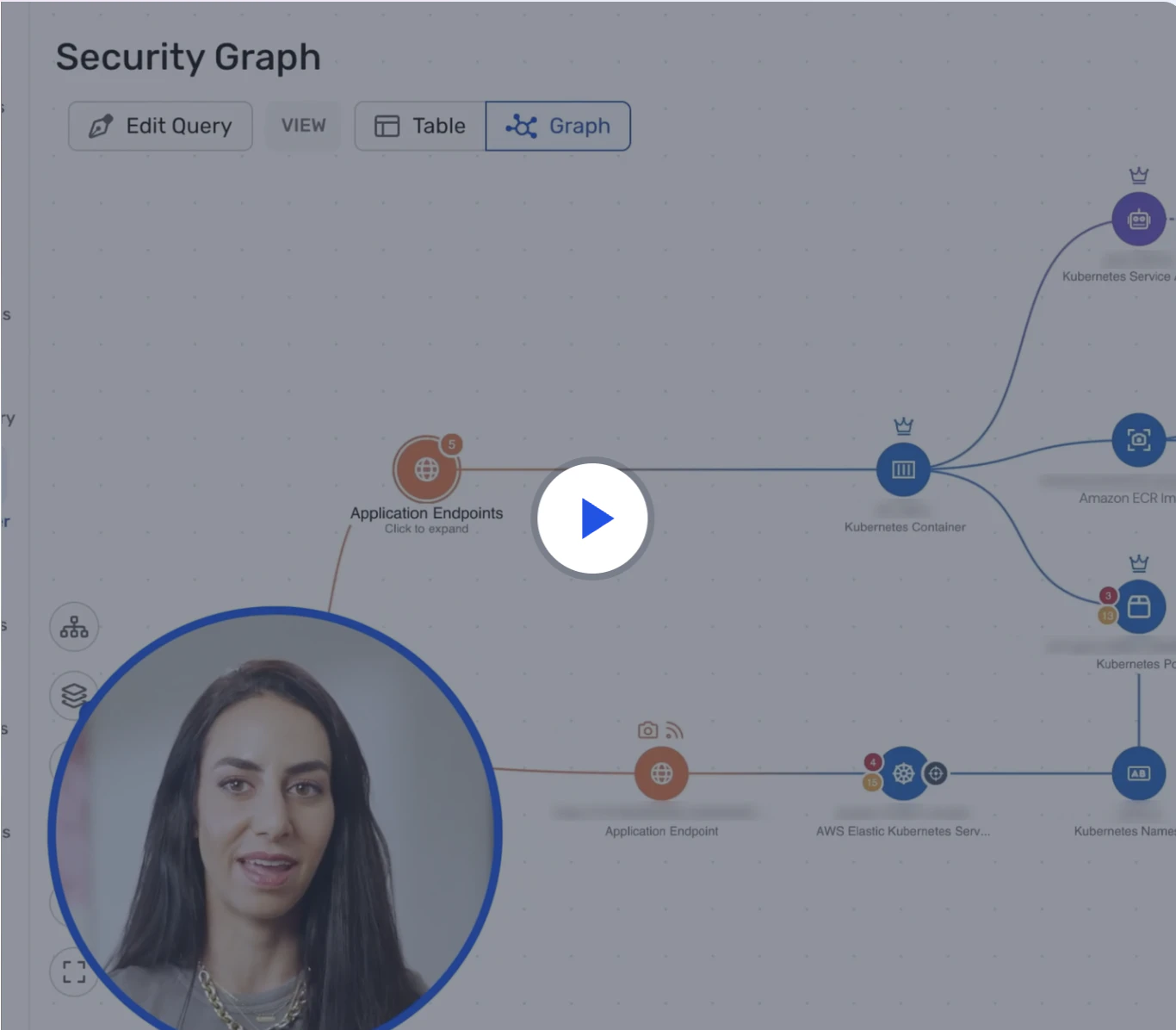
Wiz addresses the core challenges CISOs face: fragmented visibility, overwhelming alerts, and the need to communicate risk clearly. As a cloud-native application protection platform (CNAPP), Wiz consolidates security capabilities that traditionally required multiple tools. The Wiz Security Graph visualizes how vulnerabilities, misconfigurations, identities, and data exposure combine to create attack paths, giving CISOs the context needed to prioritize remediation and communicate effectively with leadership.
Key capabilities that strengthen security posture across the organization:
Unified visibility across multi-cloud environments: Agentless coverage eliminates blind spots across AWS, Azure, and GCP without operational overhead or agent deployment, providing complete asset discovery and continuous assessment.
Contextual risk prioritization: The Security Graph connects disparate findings into attack paths, helping security teams focus on toxic combinations of risks rather than isolated vulnerabilities. This reduces alert fatigue and accelerates remediation of what actually threatens the business.
Shift-left security integration: Wiz Code embeds security into development pipelines, catching misconfigurations and vulnerabilities before they reach production. This enables developers to ship fast while maintaining security guardrails.
Runtime detection and response: Wiz Defend provides threat detection capabilities that correlate runtime signals with cloud posture and identity data, enabling faster incident response with full context.
Board-ready reporting: Prioritized, contextual risk views translate technical findings into business impact, helping CISOs communicate effectively with executives and boards rather than overwhelming them with vulnerability counts.
Wiz consolidates fragmented security signals into a contextual view across cloud, code, and runtime, giving security leaders the clarity to communicate risk effectively and the confidence to prioritize what actually matters. See how Wiz delivers unified visibility and risk prioritization in your environment—get a demo today.
See Wiz in Action
Learn why CISOs at the fastest growing organizations choose Wiz to secure their cloud environments.
