


What is an API?
An application programming interface, or API, is a type of software that allows communication between different software and services.
There are four primary API architectures:
REST is a stateless, uniform architecture where the client and server operate independently and interact via HTTP.
SOAP is more intricate and consumes more bandwidth than REST, exclusively working with the XML data format.
RPC, or Remote Procedure Call protocol, allows procedures to be executed on a remote server within a distributed system.
GraphQL is a schema-driven, strongly typed infrastructure with its unique query language, enabling clients to obtain specific data in a single request.
Advanced API Security Best Practices [Cheat Sheet]
Download the Wiz API Security Best Practices Cheat Sheet and fortify your API infrastructure with proven, advanced techniques tailored for secure, high-performance API management.

What is API security?
API security is the practice of protecting application programming interfaces from threats throughout their entire lifecycle. This includes implementing authentication, authorization, encryption, and monitoring controls to prevent unauthorized access, data breaches, and malicious attacks. APIs face threats from external hackers attempting unauthorized intrusions and internal vulnerabilities that can expose systems to attack.
Web API security focuses on three significant security sectors:
information security
network security
API security can also help address issues such as access control, identity-based security, content validation, rate limiting, request throttling, monitoring and analytics, and data protection. Given that APIs serve as entry points for applications or networks, API security is paramount to shield organizations from potential threats.
Why is API security important?
API security is critical because APIs have become primary attack vectors in modern applications. APIs expose application logic and data pathways, making them attractive targets for cybercriminals seeking to exploit vulnerabilities.
The business impact is significant. Broken or exposed APIs consistently rank among the top causes of major data breaches, with the average API breach leading to at least 10 times more leaked data than the average security breach, according to Gartner. Without proper security controls, organizations face data theft, system compromises, and regulatory violations.
Effective API security preserves data confidentiality, ensures authorized-only access, and maintains data integrity throughout transmission and storage.
OWASP API security: Top 10 risks
The OWASP Top 10 is a list of security risks curated to help developers design applications with security in mind. Let's take a look at how these points relate to APIs:
1. Broken object-level authorization
APIs can connect controlling object identifiers, and without proper security in place, the API might reveal those identifiers, leaving them open to attack. For instance, in 2018, the United States Postal Service (USPS) experienced a vulnerability due to weak access and authorization controls, compromising over 60 million users' critical data.
2. Broken authentication
Without strong authentication mechanisms, it can be possible for attackers to gain access to APIs and use them for malicious ends. In June 2021, an exposed API lacking proper authentication was exploited, compromising the personal data of approximately 1.3 million individuals. Simple token or key authentication could have thwarted this attack.
3. Broken object-property-level authorization
Developers occasionally return superfluous data, assuming APIs will be accessed solely by authenticated users. This issue, which focuses on improper authorization at the object property level, combines previous OWASP categories like Excessive Data Exposure and Mass Assignment. However, attackers can exploit this excess data. HealthEngine suffered from this vulnerability in their feedback API, leaking over 59,000 patients' personal information.
4. Unrestricted resource consumption
Unrestricted resource consumption occurs when APIs lack proper rate limiting and resource controls. Each API request consumes network bandwidth, memory, and compute resources. Without limits, attackers can overwhelm APIs with excessive requests, causing service outages for legitimate users and driving up operational costs.
5. Broken function-level authorization
Many systems have access control policies that are complex. If function-level authorizations aren't implemented, attackers can access unauthorized functions. A recent case in September 2022 saw an attacker infiltrate Uber's IT infrastructure due to this API vulnerability.
6. Unrestricted access to sensitive business flows
Excessive access to critical business flows can disrupt operations. In 2011, CITI suffered a data breach affecting 350K North American cardholders due to an attack that manipulated its business flows.
7. Server-side request forgery (SSRF)
SSRF vulnerabilities occur when an API fetches data from an unvalidated user-defined URL, potentially allowing attackers to bypass security measures. Modern tech stacks, such as Docker and Kubernetes, are especially vulnerable.
8. Security misconfiguration
Insecure configurations can lead to various API attacks that expose sensitive data and gain unauthorized access. These vulnerabilities arise from myriad factors, such as missing patches, outdated systems, or exposed error details.
9. Improper inventory management
With APIs often exposing more endpoints than traditional web applications, maintaining accurate documentation is essential. Poor inventory management can result from insecure storage, weak encryption, or inadequate access controls.
10. Unsafe consumption of APIs
API consumption often hinges on the trust developers place in third-party responses. Many developers believe third-party APIs, especially those offered by well-known companies, are inherently secure. This misplaced trust can lead to vulnerabilities. Instead of directly targeting your APIs, attackers might exploit these third-party integrations. Incidents, like the SSRF attacks, can manifest because of inadequate validation and sanitization of responses.
For instance, in January 2021, Parler faced security issues by allowing third-party APIs to access data without authentication. Attackers guessed URLs containing sensitive information and accessed the data without authentication.
By understanding these risks and implementing proper security measures, organizations can significantly mitigate the potential threats associated with APIs. Visit OWASP's API Security Top 10 to get a detailed breakdown of each risk.
API security for SOAP, REST, and GraphQL
Each of the three primary API architectures—SOAP, REST, and GraphQL—has its own unique security implications.
| API Architecture | Security Implications |
|---|---|
| SOAP API Security | SOAP is a streamlined, XML-based messaging protocol designed for exchanging structured data in decentralized computer networks. It's adaptable across various protocols such as HTTP and SMTP. SOAP's security layers incorporate both transport layer security (like HTTPS) to encrypt data in transit and message-level security, including XML digital signatures, to uphold message integrity. By following Web Services (WS) specifications, which offer standardized guidelines, SOAP provides security features such as WS-ReliableMessaging for enhanced error handling. |
| REST API Security | REST APIs employ JSONs for data representation and rely on HTTP/s for data transfers, streamlining the development process. Since REST lacks inherent security mechanisms, its security is contingent upon the design of the API. Implementing security measures in data transmission, deployment, and client interactions is essential. Typically, REST APIs rely on protocols such as HTTPS and employ token-based authentication to enhance security. |
| GraphQL API Security | GraphQL, an open-source API language, functions both as a query language and a runtime for query execution. Its strictly typed schema ensures data consistency. However, its flexibility can be a double-edged sword: complex, unfiltered queries could lead servers astray, potentially running malicious requests. Adopting security practices like throttling, setting query depth limits, and implementing query timeouts can mitigate these vulnerabilities. |
Is your company developing applications with GenAI? Just like any other multi-tenant service, GenAI-incorporating applications can suffer from traditional API vulnerabilities. Learn how to deploy generative AI models as part of your multi-tenant cloud apps securely.
How is API security different from application security?
API security and application security are closely related, but they focus on different things. Application security is about protecting the entire application—its code, data, and infrastructure—from threats. API security, on the other hand, zeroes in on the interfaces that connect apps and services.
Application security covers everything from web forms to business logic, user sessions, and server configuration.
API security is all about the endpoints that let systems talk to each other. It deals with issues like broken authentication, excessive data exposure, and improper access controls that are unique to APIs.
APIs often expose more granular functions and data than traditional web apps, which means a single weak API can put your whole system at risk. That's why API security needs its own set of tools and best practices, even if you already have strong application security in place.
10 API security best practices
Effective API security requires a multi-layered approach that addresses authentication, data protection, and threat monitoring. These 10 best practices provide proven strategies to eliminate common vulnerabilities and build robust API defenses against evolving threats.
1. Discover and inventory all APIs

Your API security tool should offer and inventory of all APIs that are detected and effectively exposed to internet
Complete API visibility is the foundation of effective API security. You cannot secure what you cannot see.
Shadow APIs pose major risks. Undocumented endpoints and APIs created during development often lack security controls, creating dangerous blind spots that attackers can exploit. The widespread exposure of secrets—affecting 61% of organizations according to Wiz Research—makes credential scanning and API discovery critical.
Automated discovery tools continuously scan your environment to detect all APIs, including endpoints, parameters, data types, and third-party integrations. This comprehensive inventory enables you to apply security policies consistently and prioritize high-risk APIs for immediate attention.
2. Identify API risks & vulnerabilities
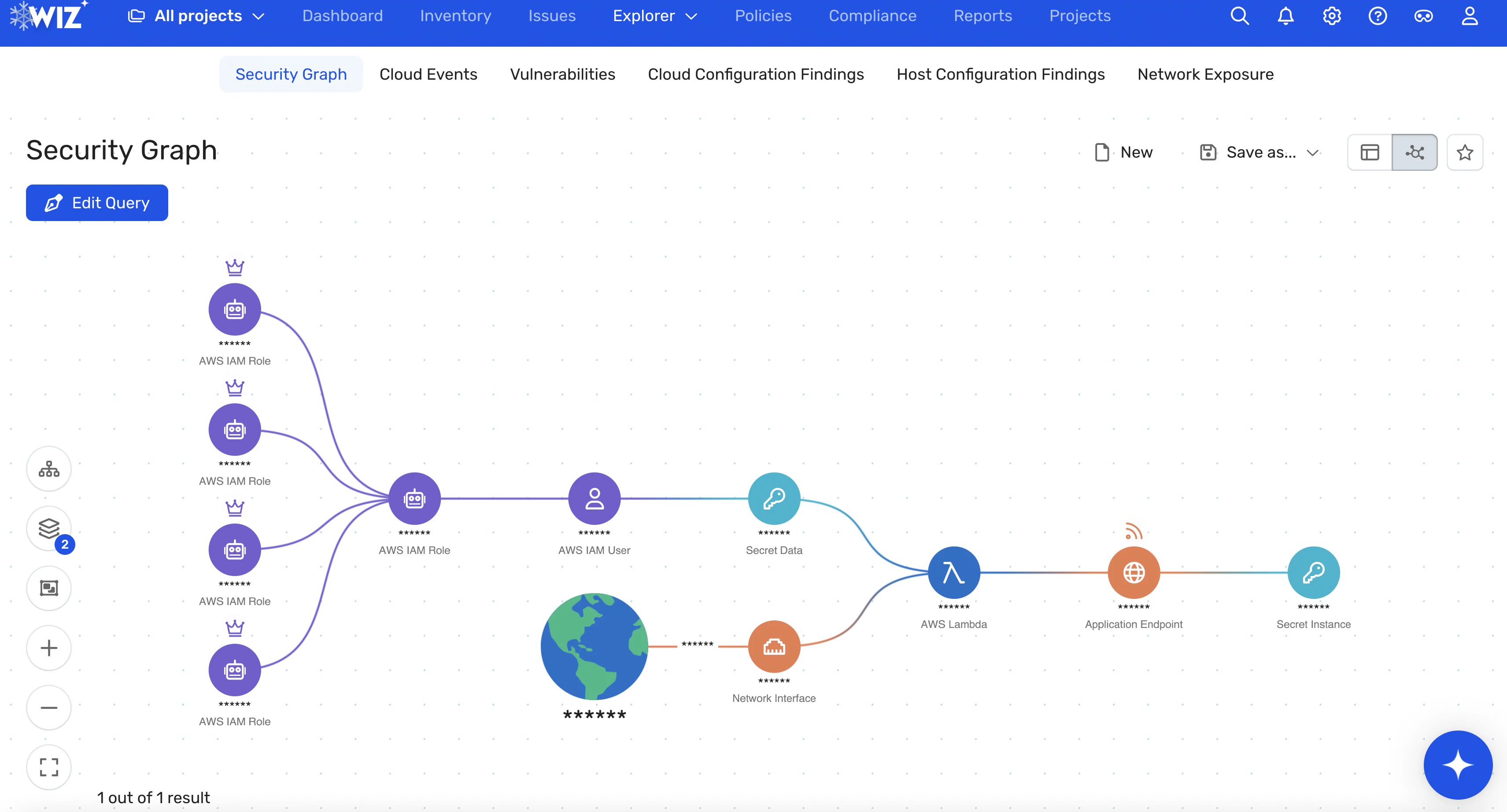
Risk identification means systematically evaluating APIs for vulnerabilities across their entire lifecycle. This proactive approach uncovers security flaws before attackers can exploit them.
Assessment should be comprehensive. Evaluate APIs against OWASP's top API risks, including broken authentication and injection vulnerabilities. Use automated scanners and penetration testing to detect configuration flaws, code weaknesses, and dependency issues.
Third-party APIs require special attention since they introduce risks beyond your direct control. Regular monitoring ensures integrated APIs maintain security standards.
3. Encrypt
Use TLS to secure communication, and encrypt sensitive fields in API responses to prevent unauthorized access. Encryption safeguards sensitive data, even in the event of a breach.
Regularly review your encryption settings to ensure they comply with modern standards, like TLS 1.3, and avoid using outdated or weak protocols. Additionally, implement proper key management practices, such as regularly rotating keys and storing them securely, to maintain the integrity of encrypted data.
4. Implement strong authentication and authorization
Strong authentication and authorization form the backbone of API security by controlling who can access your APIs and what they can do.
Authentication verifies identity using methods like OAuth 2.0 tokens to ensure only legitimate users and systems gain access. Authorization controls permissions through role-based access control (RBAC) or attribute-based access control (ABAC) to enforce granular restrictions on API operations.
Ongoing maintenance is essential. Regularly audit access controls, rotate API keys and tokens, and implement multi-factor authentication for sensitive operations to prevent unauthorized access and privilege escalation.
5. Use rate limits and throttling
Rate limiting prevents abuse by capping the number of API calls a client can make within a set timeframe. This helps protect against denial-of-service (DoS) and distributed denial-of-service (DDoS) attacks that can disrupt services. Throttling adds an additional layer of API protection by slowing down excessive requests to avoid overwhelming the system.
Implement customized rate limits for different user roles or API clients to balance performance and security. Regularly monitor and adjust these thresholds based on usage patterns to ensure legitimate users are not inadvertently blocked while protecting your API from abuse.
6. Use an API gateway
An API gateway acts as a centralized hub for managing and securing API traffic. It enforces authentication, validates inputs, and routes requests to the appropriate backend services. Gateways also support rate limiting, logging, and traffic monitoring, making them a critical component of API security.
Modern API gateways often integrate with security tools like Web Application Firewalls (WAFs) to protect against injection attacks and other common API threats. By consolidating security policies within a gateway, you reduce complexity and maintain consistent protection across all APIs.


7. Validate all input data
Input validation ensures that APIs only accept data that adheres to predefined formats and expected types. Rejecting malformed or unexpected inputs protects against injection attacks, buffer overflows, and other exploit attempts. Validation should be applied to all data, including query parameters, headers, and payloads.
In addition to validation, sanitize inputs to remove malicious scripts or code fragments. Use strict schemas, such as JSON Schema, to enforce validation rules across all endpoints. Consistent input validation reduces the risk of attacks and ensures data integrity.
8. Monitor and log API activity
Monitoring API traffic provides visibility into potential threats, such as unauthorized access attempts or unusual request patterns. Logging requests and responses in a centralized system streamlines incident detection and response. Logs should include essential details like timestamps, user identifiers, and IP addresses to aid forensic investigations.
Set up automated alerts for anomalies, such as sudden traffic spikes or repeated failed login attempts. Regularly review logs to identify trends and refine your security measures.
9. Restrict data exposure
APIs should minimize the amount of data they expose. Limit responses to only the fields necessary for the requested operation, and avoid including sensitive information in default responses. Use filtering and masking techniques to protect private data while maintaining functionality.
Conduct regular reviews of API responses to ensure compliance with privacy regulations and security best practices. Additionally, restrict error messages to prevent disclosing implementation details, which could provide attackers with useful information.
10. Update and patch regularly
Unpatched APIs and outdated components are common targets for attackers. Establish a process to apply security patches as soon as vulnerabilities are disclosed. Automated tools can help track and deploy patches to ensure updates are not delayed.
Test patches in a staging environment to verify compatibility and functionality before rolling them out to production. Proactively updating APIs and their dependencies reduces the risk of exploitation and ensures your systems remain secure.
Key API security testing approaches
A strong testing strategy is the foundation for keeping your APIs secure at every stage of their lifecycle. Here are the key approaches to consider:
Penetration testing
Penetration testing involves mimicking the actions of a potential attacker to uncover vulnerabilities. Testers may attempt to bypass authentication, exploit injection flaws, or manipulate API endpoints to see how well your defenses hold up. These tests go beyond automated scans, providing insights into logic-based weaknesses and areas attackers might exploit.
Regular penetration testing is especially valuable for public-facing APIs and those handling sensitive data. By running these tests periodically, you can identify gaps that automated tools might miss and ensure your APIs are resilient against real-world threats.
Fuzz testing
Fuzz testing pushes APIs to their limits by sending unexpected, malformed, or random inputs. The goal is to see how the API handles abnormal data without crashing, leaking information, or exposing vulnerabilities. This method is particularly effective for uncovering edge cases that traditional tests might overlook.
To get the most value from fuzz testing, focus on exposed endpoints, query parameters, and headers. Modern tools can automate this process, allowing for continuous testing to identify issues in real time and reinforce API stability.
Automated vulnerability scanning
Automated vulnerability scanning helps detect common API flaws like misconfigurations, broken authentication, and injection vulnerabilities. By integrating these tools into your development pipeline, you can catch and fix security issues early—before APIs go live.
These scans are particularly useful in dynamic environments where APIs are frequently updated. While they don’t replace manual testing, they provide continuous assessments and complement other methods to create a more comprehensive security strategy.
Integrating security testing into CI/CD pipelines
Embedding these testing methods into your CI/CD pipeline ensures security becomes a natural part of your development process. Automated scans can run with each build, while periodic penetration and fuzz tests help validate your API's security before release. This proactive approach reduces vulnerabilities in production and keeps your APIs ready to face evolving threats.


Complete API security checklist
Securing APIs is about safeguarding the data, services, and trust they enable. This checklist covers the essential practices and advanced strategies needed to address vulnerabilities throughout the API lifecycle.
Authentication & access control
Use token-based authentication protocols like OAuth 2.0 or mutual TLS.
Enforce role-based access control and follow the principle of least privilege.
Regularly audit and rotate API keys, tokens, and credentials.
Implement MFA for sensitive endpoints.
Data security
Encrypt all data in transit using TLS 1.2 or higher; consider encrypting data at rest as well.
Apply field-level encryption or tokenization for sensitive information in API responses.
Design APIs to minimize data exposure by returning only the required fields.
Regularly review and mask sensitive fields in logs to avoid accidental leakage.
Input validation & sanitization
Enforce strict input validation using schemas (e.g., JSON Schema).
Sanitize inputs to guard against injection attacks, including SQL, command, and XML injection.
Reject any input that deviates from expected formats or contains disallowed characters.
Apply validation consistently across all endpoints, including less obvious ones like error handling and debug interfaces.
Monitoring & logging
Monitor API traffic continuously for anomalies such as spikes, unauthorized access, or unusual request patterns.
Centralize logs to enable rapid incident detection and analysis.
Ensure logs include sufficient context (e.g., request origin, payload, and response time) without exposing sensitive data.
Establish thresholds and automated alerts for potential threats like brute force attacks or credential stuffing.
Security testing
Schedule regular penetration tests to evaluate API security against real-world attack methods.
Perform fuzz testing to assess how APIs handle unexpected or malformed input.
Integrate automated vulnerability scanners into the development pipeline to catch misconfigurations and common flaws early.
Test both public and internal APIs, including those shared with third-party partners.
Patch & update management
Continuously track known vulnerabilities in your dependencies, frameworks, and libraries.
Use automated tools to deploy patches promptly and avoid delays.
Maintain a testing process to verify updates do not inadvertently introduce new vulnerabilities.
Rate limiting & abuse protection
Apply rate limiting to control API usage and prevent resource exhaustion.
Use throttling to restrict excessive calls from individual users or applications.
Configure quotas for specific API clients to balance legitimate use with resource protection.
Mitigate bot attacks and abuse by incorporating CAPTCHA or behavioral analytics.
API inventory & lifecycle management
Maintain an up-to-date inventory of all APIs, including shadow and deprecated APIs.
Regularly review vulnerable API endpoints for exposure or unnecessary functionality.
Decommission unused APIs securely to prevent them from becoming attack vectors.
Enhance your API security posture with Wiz
Existing solutions for API security are mostly based on agents and network scanners. However, these fall short of giving complete visibility and are also complex to deploy as well. With the Wiz Dynamic Scanner, Wiz has brought a new and modern approach to API security.
With its agentless scanning for all of the major cloud providers, Wiz Dynamic Scanner analyzes all the cloud layers of your deployment, making it possible to detect any risk components and attack paths that might be present in your cloud environment.
This approach gives you complete visibility to identify all your APIs that are exposed to the internet, along with their associated context so you can get a full understanding of what is exposed and what the blast radius might be if they were exploited.
To get a clearer understanding and see how it behaves for your environment, schedule a demo with Wiz.
Catch code risks before you deploy
Learn how Wiz Code scans IaC, containers, and pipelines to stop misconfigurations and vulnerabilities before they hit your cloud.

API Security FAQs