

What is attack surface monitoring?
Your cloud attack surface is broader and more varied than you might think. It includes services, APIs, domains, identities, and configurations that become internet-reachable through normal development, scaling, and integration.
Adding to the complexity, cloud provider–assigned URLs, ephemeral resources, and shadow assets may appear and disappear faster than internal inventories can update. This creates visibility gaps, letting attackers with automated scanners find and probe exposed services, endpoints, and misconfigurations on internet-reachable assets.
And when these assets drift, change ownership, or stay active longer than intended, risk goes up even more. Each unmanaged change expands exposure, and it’s often difficult to trace who’s accountable.
Attack surface monitoring is your first line of cloud defense. It continuously tracks this shifting set of external-facing assets across cloud, SaaS, AI, and on-prem systems. It validates which exposures are exploitable and maps each asset to the right owner, helping you reduce unnecessary exposure and remediate public-facing risks faster.
In this blog post, we’ll explore why attack surface monitoring is essential for cloud-native security, look at some challenges, and discuss strategies for successful implementation across all your environments.
2025 Gartner® Market Guide for CNAPP
Security teams are consolidating tools, aligning workflows, and prioritizing platforms that offer end-to-end context. The 2025 Gartner® Market Guide for Cloud-Native Application Protection Platforms (CNAPP) explores this shift and outlines what security leaders should consider as the market matures.

Why attack surface monitoring matters for cloud-native environments
Cloud-native environments are defined by a few traits, like ephemeral resources, automated scaling, continuous deployment, and infrastructure that’s defined and changed by code. Under those conditions, traditional asset tracking can’t always keep up:
Manual inventories can be unreliable, causing teams to react to outdated information.
Microservices, APIs, and identities dramatically increase the number of external entry points.
Provider-generated URLs and ephemeral resources often bypass domain-based visibility, expanding exposure outside known asset lists.
Fast deployment cycles introduce public exposure before your teams can review configurations.
Attackers automate reconnaissance and quickly exploit misconfigurations or leaked data.
As cloud sprawl grows, exposures increasingly lack a clear owner.
Attack surface monitoring gives teams the context they need to separate meaningful risk from background noise and focus remediation where it actually reduces exposure.
Attack surface reduction in the cloud
Attack surface reduction strategies help you keep up with fast-changing cloud environments by continuously identifying, validating, and shrinking the set of externally reachable assets and misconfigurations attackers can target.
Read more

Types of attack surfaces to monitor
Outward-facing assets
These systems, services, and dependencies make up the external attack surface, exposing functionality to the internet and expanding what attackers can directly reach, including:
Cloud and SaaS exposure points: Internet-facing cloud services, SaaS integrations, public APIs, AI endpoints, CI/CD endpoints (runners, dashboards, artifact repositories), and any internet assets you own
On-prem and physical surfaces: Externally facing on-prem assets, IoT devices, and edge computing infrastructure that expose services over public networks
Third-party and supply chain surfaces: External dependencies, hosted components, container and package registries (Docker Hub, npm, PyPI), and partner integrations that expand your reachable footprint
Unmanaged or unsanctioned assets: Shadow IT, unsanctioned cloud assets (e.g., personal accounts or storage buckets), temporary resources outside formal provisioning, dangling DNS records, and stale or expiring TLS certificates
Internal-but-reachable assets
The assets in this category are systems that you expect to stay private but become accessible through misconfigurations, inherited complexity, or identity-driven exposure paths (such as roles, credentials, and permissions). These assets include:
Misconfigured or indirectly exposed services: Internal APIs, microservices, and data stores reachable due to routing issues, drift, permissive network rules, or identity paths (overly permissive IAM roles, exposed credentials, assumable roles)
Ephemeral and orphaned resources: Short-lived, test, or abandoned assets that remain active and unexpectedly exposed
M&A and inherited environments: Newly acquired infrastructure with inconsistent controls or incomplete visibility during integration

Attack surface monitoring vs. attack surface management
Essentially, attack surface monitoring shows what’s exposed right now, while attack surface management, particularly continuous attack surface management, ensures those exposures are systematically fixed and reduced over time.
| Attack surface monitoring | Attack surface management | |
|---|---|---|
| Purpose | Identifies new external exposures as they appear | Drives external attack surface management—remediation and long-term reduction |
| Scope | Shows what is exposed right now | Oversees the full exposure lifecycle |
| Outcome | Detects drift and unexpected public reachability | Fixes systemic causes behind recurring exposure |
| Benefits |
|
|
Common monitoring approaches
Unified external scanning: Combines DNS/IP discovery, TLS certificate and certificate-transparency log analysis, and rate-limited, non-intrusive probing (port scanning, service fingerprinting with request throttling) to map domains, subdomains, IP ranges, and cloud-generated endpoints in one workflow
Cloud-native discovery: Uses cloud provider APIs (AWS, Azure, GCP) to detect public services, permission changes, drift events, certificate lifecycle changes, and endpoint modifications that create new exposure
Context-driven prioritization: Correlates external exposure findings with internal cloud context—identity permissions (IAM roles, service accounts), data sensitivity classification (PII, PHI, payment data), and network reachability (routing, segmentation)—to focus remediation on truly exploitable risks that create real attack paths rather than isolated findings.
CI/CD-integrated checks: Surfaces newly exposed endpoints or misconfigurations during build, test, and deployment cycles
Workflow integration: Pushes validated exposures into SIEM, SOAR, and ticketing systems to support fast response and coordinated remediation
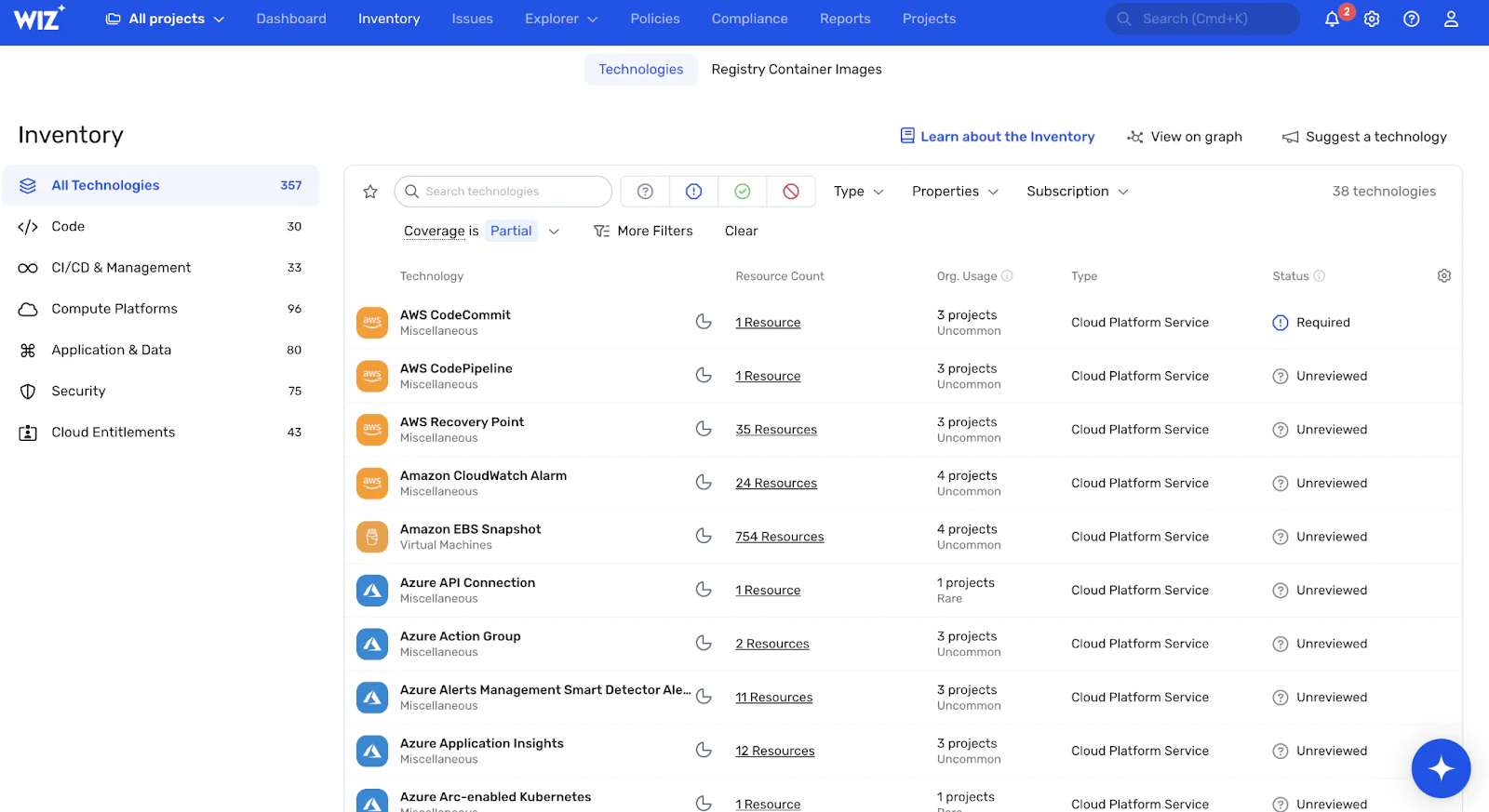
Continuous scanning and visibility: Maintains a real-time inventory of internet-reachable assets instead of relying on periodic checks
How attack surface monitoring relates to EASM and CTEM
Attack surface monitoring, external attack surface management (EASM), and Continuous Threat Exposure Management (CTEM) address overlapping but distinct aspects of exposure visibility:
| Approach | Perspective | Primary focus | Typical scope |
|---|---|---|---|
| Attack surface monitoring | Real-time visibility | Detecting new exposures as they appear | Internet-facing assets across all environments |
| EASM | Outside-in discovery | Mapping and validating external attack surface | Domains, IPs, certs, APIs, cloud services |
| CTEM | Continuous exposure lifecycle | Scoping, discovery, prioritization, validation, mobilization | Both external and internal exposure paths |
Attack surface monitoring provides the continuous detection layer that feeds both EASM programs (focused on external discovery and validation) and CTEM frameworks (which add internal context, business impact assessment, and coordinated remediation workflows). Organizations typically implement attack surface monitoring as the foundation, then layer EASM methodologies for outside-in validation and CTEM processes for comprehensive exposure management across security, IT, and development teams.
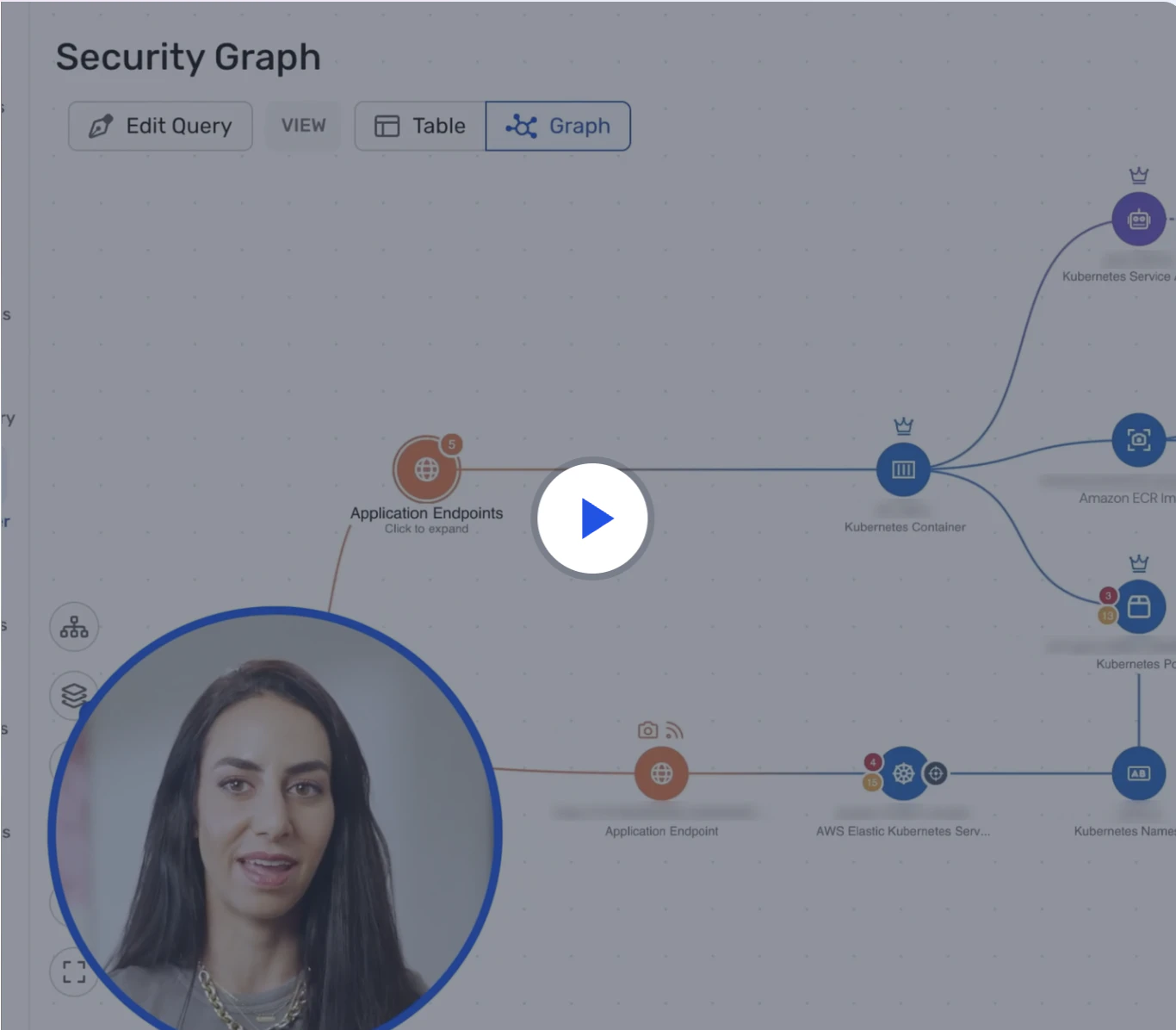
Watch 12-minute demo
Learn about the full power of the Wiz cloud security platform. Built to protect your cloud environment from code to runtime.
Watch now
Attack surface monitoring implementation challenges and solutions
| Challenge | Solution |
|---|---|
| Cloud-generated endpoints and ephemeral assets appear faster than teams can track. | Use continuous cloud-native discovery paired with external scanning to maintain an accurate, current view. |
| Shadow assets and unmanaged services introduce exposure without clear ownership. | Combine discovery with ownership mapping so each asset is tied to a team, service, or code source. |
| High false positives slow triage and overwhelm security teams. | Apply context-driven prioritization that filters findings by exploitability, reachability, data sensitivity (PII, PHI, payment data), and business impact. |
| Drift and configuration changes create exposure between periodic checks. | Adopt continuous monitoring to flag unexpected public reachability as changes occur. |
| Slow handoffs between security and engineering delay remediation. | Integrate findings into CI/CD, SIEM, SOAR, and ticketing tools to support workflow-aligned remediation. |
Implementing effective attack surface monitoring
Successful attack surface monitoring relies both on core capabilities (provided by security tools) and best practices.
Core capabilities of attack surface monitoring solutions
Effective attack surface monitoring depends on capabilities that continuously discover exposure, validate real risk, and route findings to the right teams for action.
External scanners: Continuously discover internet-reachable cloud, SaaS, AI, and on-prem assets as they appear
Exploit validation engines: Safely test for misconfigurations, vulnerabilities, and exposed data using non-destructive, read-only attacker-style techniques (passive reconnaissance, safe credential checks, configuration analysis)
Attack path analysis: Combines external exposure findings with identity context (IAM roles, credentials), network topology (routing, segmentation), and configuration data to prioritize reachable risk and model attacker progression
Ownership mapping at scale: Automatically assigns clear ownership to every exposure using cloud resource tags, Service Catalog and CMDB entries, Infrastructure-as-Code repository metadata, and CI/CD pipeline provenance. This ensures every finding routes to the right team with full context, eliminating the "who owns this?" bottleneck that slows remediation in large cloud environments.
Workflow automation: Integrates with CI/CD, ticketing, and chat tools to streamline remediation
Drift detection: Identifies unexpected public exposure caused by deployments or configuration changes
Attack surface mapping: Complete visibility guide
Attack surface mapping identifies externally reachable entry points and shows what those entry points expose inside your environment, including internal resources, identities, and data.
Read more

Best practices for effective attack surface monitoring
The following best practices will help the teams building and running your cloud environments make the most of the cloud security tools and capabilities discussed above:
Combine external scanning with internal cloud context to prioritize meaningful risk.
Monitor cloud, SaaS, AI, and on-prem exposure paths through a unified approach.
Validate exploitability to avoid reacting to low-impact findings.
Assign ownership to every exposure and route triage through existing workflows.
Detect drift continuously as environments change.
Incorporate detection into CI/CD to catch exposure before release.
Review exposure trends regularly to eliminate recurring patterns of risk.
SOC metrics for continuous attack surface monitoring
Because cloud assets change, drift, and become reachable faster than teams can review them manually, continuous attack surface monitoring is the most effective exposure management strategy. The following SOC metrics will help track improvement across your attack surface monitoring program.
| KPI | Desired direction | Explanation |
|---|---|---|
| Total asset count | ↓ | Full scope of internet-facing assets, highlighting reduction of unnecessary exposure |
| External exposure score | ↓ | Business-contextualized risk score that weights technical severity and internet reachability to prioritize exposures by real organizational impact |
| Number of newly discovered assets | ↓ | Newly surfaced unmanaged or shadow assets over time |
| Percentage of high-risk vulnerabilities | ↓ | Proportion of critical vulnerabilities on externally reachable assets versus all internet-facing systems |
| Vulnerability remediation latency | ↓ | Time between discovery of a vulnerability and full remediation |
| Mean time to exposure detection (MTTED) | ↓ | Speed at which new external exposures (newly public services, misconfigurations, certificate changes) are identified |
| Mean time to remediate (MTTR) | ↓ | Speed at which validated exposures are resolved |
| Mean time to contain (MTTC) | ↓ | Speed at which exposure-related threats are isolated and stopped |
| Patch SLA adherence (internet-facing) | ↑ | Percentage of internet-facing assets patched within defined SLA windows (e.g., critical: 7 days, high: 30 days) |
| Percentage of unmanaged assets | ↓ | Share of assets lacking proper controls, ownership, or monitoring |
| Security control coverage | ↑ | Portion of critical assets monitored by required security tools |
Wiz's approach to cloud attack surface visibility
Wiz Attack Surface Management (ASM) applies continuous attack surface monitoring using deep cloud context, exploit validation, and ownership mapping. This lets you see and act on real exposure as it appears.
Wiz offers:
Comprehensive external discovery: Wiz ASM continuously inventories every internet-facing asset—domains, IPs, APIs, and application endpoints—across AWS, Azure, GCP, SaaS, and custom domains, closing gaps left by static attack surface discovery tools.
Verified internet exposure: Through continuous scanning with DNS resolution and network reachability validation (port scanning, service response testing), Wiz ASM determines which assets are truly reachable from the internet, offering clear visibility into actual exposure.
Exploitability-driven risk assessment: Wiz ASM pairs outside-in validation (weak credentials, common misconfigurations, exposed services) with Wiz Security Graph context—identity permissions, data sensitivity, and network topology—to surface exposures that create real attack paths. For example, Wiz identifies not just an exposed API endpoint, but also that the endpoint has admin privileges to production databases containing customer PII, making it a critical priority rather than a routine finding.
Wiz’s broader CNAPP capabilities back up attack surface monitoring with unified context and response:
Wiz Security Graph for context: The Wiz Security Graph unifies findings across the environment and links external exposures to internal assets and owners to prioritize issues and reduce MTTR.
Agentless coverage: Wiz takes an API-driven approach that pairs agentless coverage with an optional eBPF runtime sensor to uncover external exposures and internal risk signals, including misconfigurations, vulnerabilities, and sensitive data.
Compliance support: Wiz aligns with 140+ frameworks, including PCI DSS, and supports PCI external vulnerability scanning workflows and reporting to complement ASV programs (Wiz does not replace required ASV scans, which must be performed by PCI-certified vendors), helping teams maintain ongoing compliance and audit readiness.

Together, Wiz and Wiz ASM keep pace with cloud change, detecting new or modified assets as they appear so that you always have the most up-to-date view of your attack surface—and are ready to act before exposure turns into impact.
See how context-driven monitoring reduces real exposure across your entire cloud environment—get a Wiz demo and discover exposures you didn't know existed.
Developer centric security from code to cloud
Learn how Wiz delivers immediate security insights for developers and policy enforcement for security teams.
