



What is DevSecOps?
DevSecOps embeds security into every phase of the software development lifecycle—from design and development to deployment and operations. This practice treats security as an integrated part of development, not a separate phase.
As organizations adopt AI more deeply, DevSecOps must now manage both human workflows and AI-driven automation. Autonomous agents increasingly act on behalf of engineers by committing code, provisioning infrastructure, and triggering deployments. These AI-driven actions introduce new risks, including unvalidated changes, unintended code execution, and model integrity issues—risks traditional security tooling wasn't built to handle.
With cloud environments spanning multiple providers, manual security approaches can’t keep up. DevSecOps must now operate with automation, continuous visibility, and context-driven prioritization at its core.
Getting Started with DevSecOps [Guide]
Master the DevSecOps lifecycle. From phased roadmaps and tool checklists to developer-first collaboration frameworks, get the blueprints to build security into every commit.

How has DevSecOps evolved to meet the needs of cloud-native teams?
While core DevSecOps practices remain the same in principle, they are adapting to address growing cloud security demands and threats from AI, threat actors, and advanced technologies. The following three contextual shifts within DevSecOps are shaping 2026 security:
1. From shift-left to continuous and context-aware security
DevSecOps emerged to address security earlier in the software lifecycle. The initial focus on “shifting left” introduced security during coding and integration, helping teams catch vulnerabilities before deployment.
Due to recent innovations, leading organizations have moved beyond shift-left toward continuous, context-aware security that spans the entire lifecycle. By embedding security into planning, building, testing, deploying, and operating, teams assess risk continuously and with full environment context rather than at isolated checkpoints. Automation underpins this model, with tools that scan, monitor, and enforce policy across the CI/CD pipeline so every code change, configuration update, and infrastructure deployment meets defined standards.
As AI agents increasingly operate inside CI/CD pipelines, security tooling must also evolve. DevSecOps now requires real-time governance of AI-driven actions, including validating AI-generated code and ensuring autonomous automation can’t bypass policy controls as these tools gain greater decision-making authority.
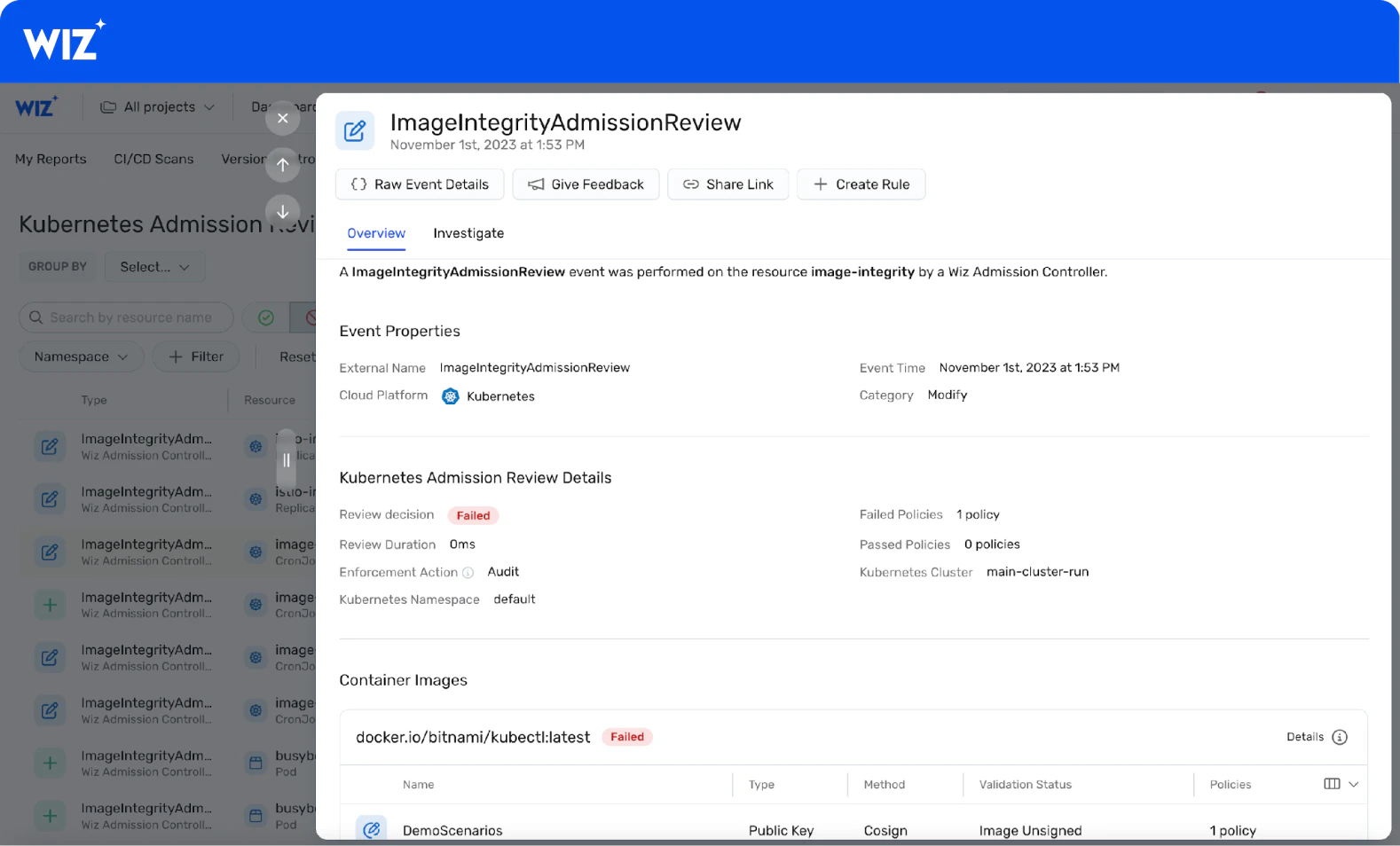
Platforms like Wiz support the transitions to context-aware security by integrating directly into developer workflows. We deliver real-time, agentless scanning across infrastructure as code, container images, secrets, misconfigurations, and cloud workloads, allowing teams to maintain velocity while addressing risk with unified context.
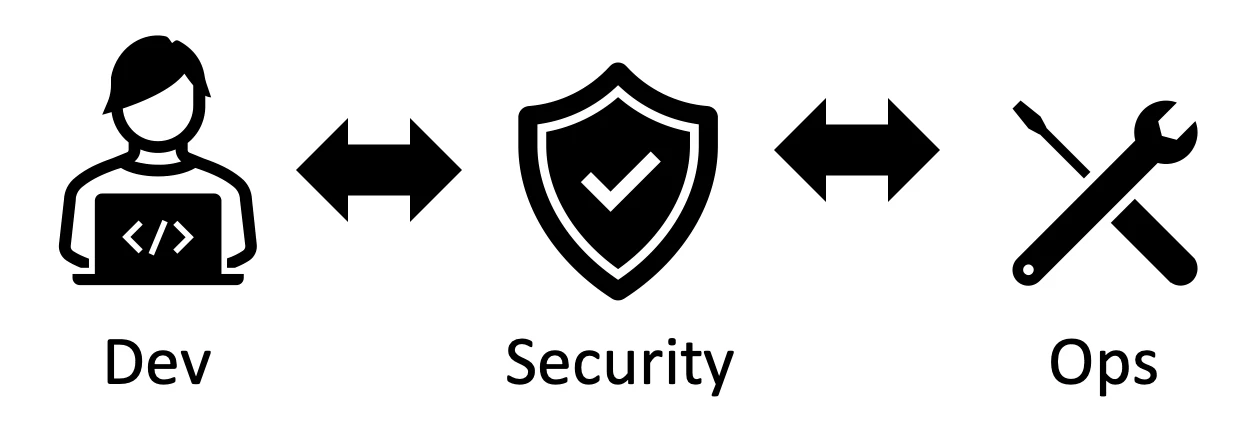
2. From siloes to shared responsibility
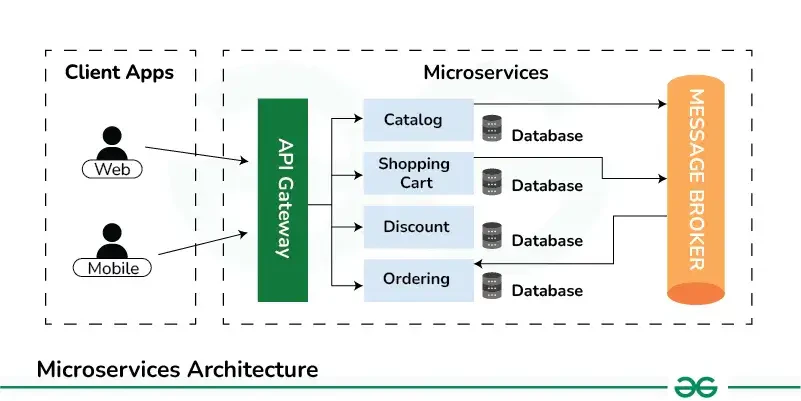
Cloud-native architectures have fundamentally reshaped how teams build and deploy software. With the adoption of containers, microservices, APIs, and infrastructure as code, development is faster and more scalable, but these innovations also introduce new layers of complexity for security teams.
In a modern security environment, each microservice, API endpoint, and cloud resource creates a potential attack surface. These components are often ephemeral and scale up and down rapidly across distributed environments. While IaC accelerates deployment, it also increases the risk of misconfiguration at scale.
At the same time, tool sprawl creates operational friction as security teams manage disconnected scanners, dashboards, and alerting systems that clash with developer workflows. This fragmented visibility complicates correlating findings, assigning ownership, and prioritizing critical risks. Developers, security teams, and platform engineers must share responsibility because no single team can secure cloud-native systems alone. DevSecOps supports this collaborative model by enabling unified visibility, clear ownership, and streamlined remediation within a single platform and workflow.
3. From manual gates to secure-by-default practices for 2026
In 2026, the most effective DevSecOps teams don’t just adopt tools. They embed secure-by-default practices into every layer of the development process. This approach replaces manual security reviews with hardened templates, trusted components, automated policy enforcement, and pre-configured security guardrails that prevent issues before they arise.
The secure-by-default model transforms security from a blocker into an accelerator of innovation. When teams build guardrails and defaults into the pipeline, they release software with greater confidence and respond faster to changes in the threat landscape or business requirements.
Maturity now matters more than tool count. Organizations that succeed with DevSecOps measure success through business and security outcomes. They track mean time to remediation, cross-team collaboration, reduced critical vulnerabilities, and overall operational efficiency.
DevSecOps is no longer solely about shifting security left. It centers on staying secure throughout the entire lifecycle and empowering every team to build, run, and innovate securely in the cloud.
Why did DevOps fall short, and what makes DevSecOps work?
DevOps introduced a revolutionary approach to building and shipping software by emphasizing collaboration between development and operations teams. This collaboration enabled faster releases, better automation, and more resilient systems. But, as cloud-native technologies matured and threats became more complex, DevOps without integrated security began to show its limitations.
Where DevOps lost momentum
DevOps prioritized speed and automation but often treated security as a separate concern. This left security risks siloed, even as code moved rapidly through the pipeline.
While DevOps improved delivery, it struggled to address vulnerabilities from insecure IaC, outdated dependencies, and excessive permissions. Teams focused on shipping fast but lacked visibility into security metrics like time to remediate or policy compliance. Security automation lagged and relied on manual checks, which slowed delivery. Teams frequently skipped these checks, fueling technical debt and increasing risk.
Real-world example: In April 2024, the City of Helsinki’s Education Division experienced a data breach that exposed personal data from students, guardians, and staff. The breach stemmed from unauthorized access to a network drive containing broad categories of sensitive information. This incident underscores why DevSecOps isn’t just about code but about modernizing infrastructure and enforcing least privilege and segmentation throughout the lifecycle to limit the impact of breaches.
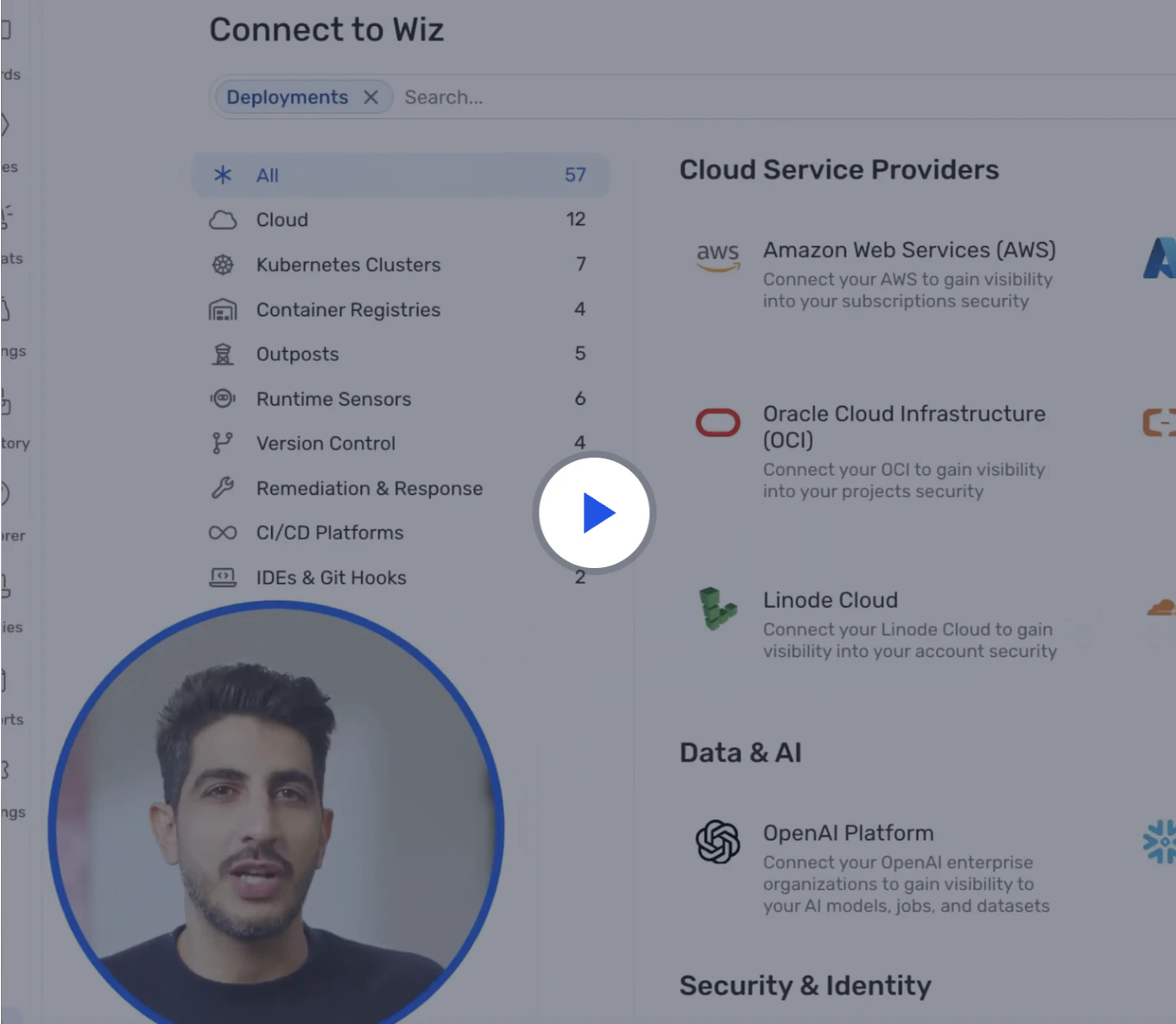
Watch 5-minute demo
Watch the demo to learn how Wiz Code scans infrastructure as code, container images, and CI/CD pipelines to catch risks early—before they reach the cloud.
Watch now
How DevSecOps fixes the gaps
DevSecOps addresses these issues by integrating security directly into the workflows and tools that developers already use. Instead of operating as a siloed function, security becomes part of the pipeline—automated, contextualized, and actionable.
Teams now use continuous scanning tools to analyze IaC, container images, secrets, and dependencies throughout the development lifecycle. These tools provide instant feedback during code commits, pull requests, and builds, helping teams catch and fix issues before deployment.
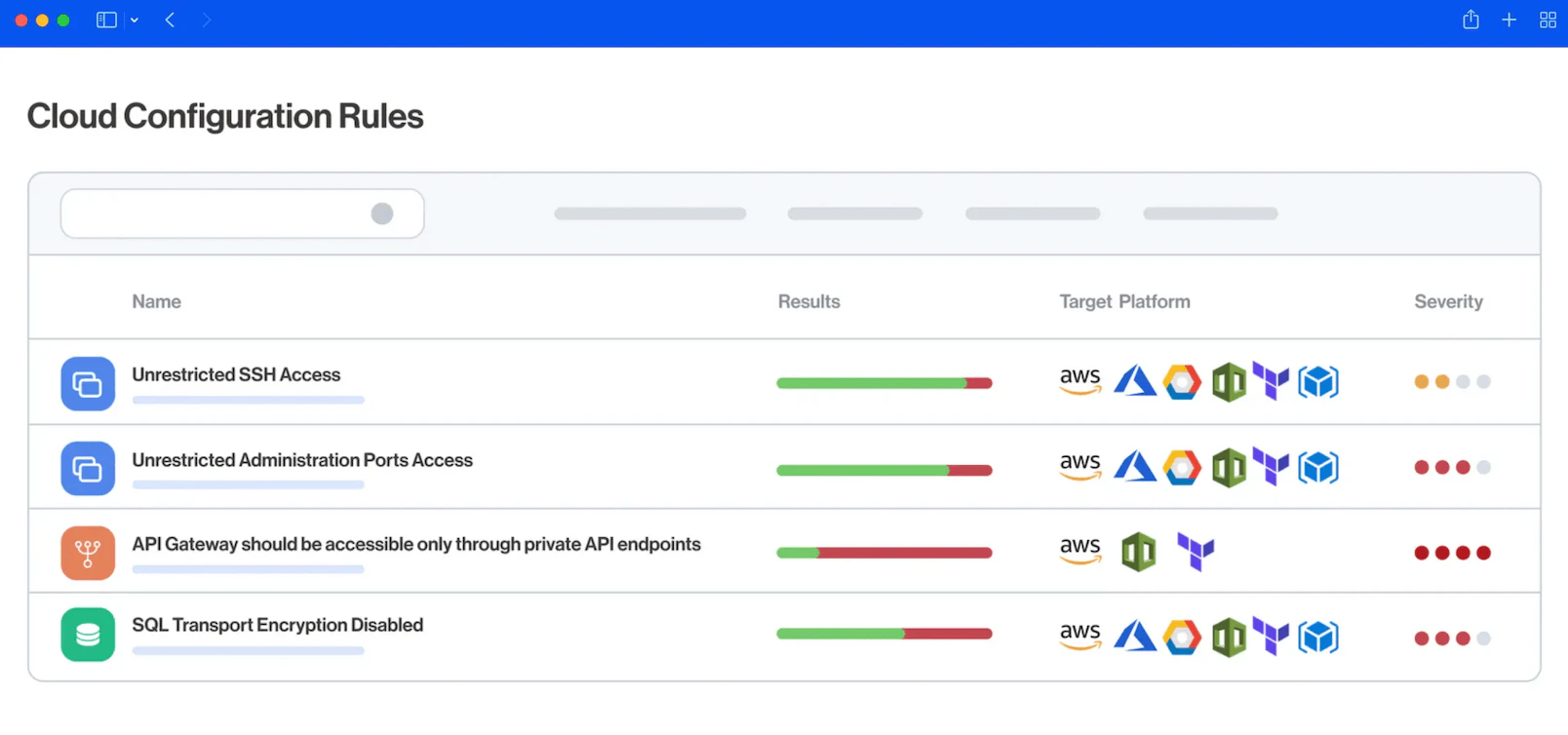
Context drives the effectiveness of this strategy. Instead of overwhelming teams with static alerts, DevSecOps platforms like Wiz provide prioritized insights based on real business risk. For example, a misconfiguration that exposes sensitive data surfaces as a high-priority issue, while the platform flags lower-risk findings without treating them as urgent. This focuses team effort where it matters most.
Automated policies also play a critical role. You can embed security and compliance checks directly into the CI/CD process so that builds fail automatically when violations occur. This shifts responsibility left while removing manual gates and review bottlenecks.
Equally important is cultural alignment. DevSecOps drives collaboration by giving developers, operations, and security teams access to the same data, tools, and language. The model promotes transparency, shared accountability, and faster resolution of security issues.
Why this distinction matters less over time
As DevSecOps practices mature, the separation between DevOps and DevSecOps diminishes. Instead of thinking in terms of different models, more teams are converging toward a shared accountability framework where speed and security operate in harmony.
This convergence reflects a broader trend: high-performing teams no longer view security and innovation as opposing forces. Instead, they build systems with security in mind from the start, use shared platforms for visibility and risk management, and continuously optimize both performance and protection.
Ultimately, the goal isn’t to choose between DevOps and DevSecOps—it’s to evolve the entire software delivery model to support secure, scalable, and reliable outcomes without tradeoffs.

What’s holding teams back from DevSecOps success?
Despite the clear benefits of DevSecOps, many organizations struggle to adopt and scale it effectively. Success requires more than the right tools. It demands that you tackle the structural, cultural, and architectural hurdles that often delay or derail progress. Here are some challenges that often stump teams:
Organizational and cultural barriers
In many organizations, security remains siloed from development and operations. This isolation leads to misaligned goals and unclear responsibilities. It also creates friction when security issues surface late in the process:
Developers often view security as a barrier to speed.
Meanwhile, security teams feel overwhelmed as they try to keep pace with the rapid release cadence.
True DevSecOps maturity requires a cultural shift. Teams must adopt a shared responsibility model that makes security everyone’s concern, not just the job of a single department. This means defining clear roles and creating tight feedback loops to build trust across functions. When teams collaborate on common goals—such as reducing time to remediation or improving compliance coverage—they build a foundation for long-term success.
A culture of blame slows adoption. If the focus centers on who introduced a vulnerability rather than on how to prevent it systemically, teams may resist security processes altogether. Successful DevSecOps cultures focus on accountability without blame. This approach promotes transparency and continuous improvement.
Tool and process complexity
Another common barrier is the overwhelming complexity of DevSecOps toolchains. Organizations often rely on a patchwork of scanners, dashboards, alerting platforms, and monitoring tools that designers never intended to work together. These systems may offer valuable insights individually but create confusion when teams can’t correlate findings across tools.
Disconnected data leads to alert fatigue, redundant work, and conflicting priorities. For example, one scanner may flag a vulnerability in an infrastructure template while another alerts on the same issue post-deployment without establishing a clear link between them. This disjointed visibility prevents teams from effectively prioritizing or assigning remediation tasks.
Identity management adds to this complexity. Fragmented systems leave teams blind to which AI bots, CI/CD tokens, or service keys remain active or over‑privileged, creating yet another layer of noise that inhibits reliable prioritization.
Architecture and visibility challenges
Cloud-native architectures also pose visibility challenges that many teams underestimate. With microservices, ephemeral workloads, and IaC, environments change constantly. Teams struggle to maintain an accurate inventory of assets, data flows, and user permissions, especially when these elements span multiple clouds, accounts, and regions.
Without a shared data model, different teams operate with different versions of the truth. Security teams rely on one set of metrics while developers reference another. Fragmentation slows collaboration, delays fixes, and increases the risk of missed exposures.
DevSecOps success requires centralized, real-time visibility that works across architectures and aligns all stakeholders.
Real-world example: In August 2025, attackers used stolen OAuth tokens via a third-party AI integration to breach Salesforce instances across hundreds of orgs. Because visibility was fragmented across SaaS and cloud layers, impact assessment was delayed, proving that siloed data is a security liability.
How can teams build and scale DevSecOps in 2026?
Scaling DevSecOps requires a structured, repeatable approach that aligns people, processes, and technology across the software delivery lifecycle. When teams emphasize shared ownership, continuous automation, and measurable progress, they create DevSecOps programs that adapt to modern threats and evolving architectures.
Scale DevSecOps for 2026 with the following step-by-step approach, a mini-framework of DevSecOps maturity, and a list of common pitfalls to avoid:
Step-by-step approach to implementation
Successful DevSecOps starts with clarity. Without a defined roadmap, security practices often feel like reactive patches as opposed to strategic enablers. Teams should follow a phased, step-by-step approach that embeds security at the right depth and pace:
Define ownership and shared goals: Establish clear responsibilities for each stakeholder across security, development, and operations. Next, align teams around common objectives like reducing security vulnerabilities, improving time to remediate, or achieving audit readiness. This step lays the groundwork for accountability and collaboration.
Integrate security early in CI/CD: Embed scanning tools into your pipeline from the start. For example, implement IaC scanning at commit, run secret detection during build, and enforce policy checks at deployment. Tools like Wiz make integration seamless by providing native integrations for Jenkins, GitHub Actions, and other pipeline components.
Automate policies and compliance: Deploy automated guardrails for compliance frameworks such as CIS, NIST, and PCI using policy as code. Configure your pipeline to fail builds when the system detects violations. These alerts provide developers with actionable feedback to resolve issues independently.
Deliver training in context, not on a schedule: Use tools that deliver targeted feedback at the moment of error instead of relying on quarterly security training that often gets ignored. IDE plugins, inline PR comments, and contextual CI/CD alerts help developers learn by doing. This bite-sized, just-in-time guidance reinforces secure practices without slowing velocity or requiring formal sessions.
Track and optimize performance: Track KPIs like average time to patch, the number of security vulnerabilities fixed pre-deployment, and CI/CD security test pass rates. Use these metrics to report progress and identify friction points and opportunities for process improvement.
This step-by-step implementation builds resilience while clearing the path for innovation. It helps organizations gradually transition to treating security as the default as opposed to an afterthought.
DevSecOps maturity mini-framework
To guide organizational growth, teams can use a simplified maturity framework that maps DevSecOps capabilities across five distinct stages of evolution:
Ad hoc: Security is manual and inconsistent. Teams integrate security sporadically into development workflows and rely on reactive fixes.
Initial automation: Teams start to automate scans and checks in CI/CD. Policies exist but lack standardization across projects or environments.
Integrated: Teams embed security processes across the pipeline. Stakeholders share metrics, operate from unified dashboards, and collaboratively resolve risks.
Optimized: Organizations shift to secure-by-default designs. Policy as code, runtime enforcement, and automated remediation become the norm. Security feedback is instant and contextual.
Proactive: DevSecOps becomes a strategic capability. Teams predict threats, simulate risks, and continuously improve based on metrics and threat intelligence. Security accelerates innovation rather than slows it down.
Benchmarking your DevSecOps maturity from ad hoc to proactive helps teams clarify their current state and define next steps without overextending their resources.
Common pitfalls to avoid
Even with the right strategy, DevSecOps efforts can stall. Avoid these common missteps to keep your program on track:
Over-engineering in the early stages: Avoid implementing enterprise-grade policies and full automation until you establish basic visibility and ownership. Start with foundational practices and scale gradually.
Treating DevSecOps as a security project: Avoid framing DevSecOps solely as a security-led initiative because this often leads to resistance from development and operations. Position DevSecOps as a cross-functional transformation that benefits all teams.
Neglecting measurement: Metrics are essential, but not all are equal. Tracking sheer vulnerability volume can create alert fatigue and distract from what’s critical. Focus on outcome-driven KPIs such as mean time to remediate critical issues, the percentage of vulnerabilities fixed before deployment, or the frequency of false positives that block releases. These insights help teams prioritize efforts, improve collaboration, and justify investments in DevSecOps.
Evading these pitfalls ensures your DevSecOps program evolves as a sustainable model that scales with your cloud maturity and business needs.
How to create a culture that sustains DevSecOps
DevSecOps is first and foremost a mindset. Sustaining it requires a cultural foundation of trust, collaboration, and shared accountability. Teams must believe security is essential, achievable, and a natural part of how they build and operate software. Here’s how to build the right culture:
Build shared accountability, not blame
Creating a culture of shared accountability starts with breaking down silos. When security issues arise, teams must focus on resolving the root cause and improving processes—not finger-pointing.
Security ownership must reflect the ability to fix an issue. If developers push code that introduces a vulnerability, they need the empowerment and support to resolve it. If an operations engineer deploys misconfigured infrastructure, they require access to insights that clarify the risk and how to remediate it. Accountability improves when teams understand that fixing issues early is faster, safer, and less expensive for everyone.
This mindset depends on a single source of truth. Developers, operations, and security professionals work best when they use the same data and align on the same goals. Shared visibility also reduces alert fatigue. When teams trust that alerts are accurate, prioritized, and within their scope of control, they engage more proactively with security guidance.
Empower security champions
Security champions embed DevSecOps values within teams. These engineers leverage their security expertise and serve as liaisons between dedicated security teams and development squads. Their role is to guide decisions, share best practices, and raise awareness of emerging threats, not just enforce rules.
By embedding security champions within development teams, organizations reduce the friction of top-down mandates. Champions provide context-specific guidance and accelerate the adoption of tools and practices. They also help foster a sense of ownership and pride in secure systems rather than viewing security as a compliance requirement.
To support this role, organizations must provide training, mentorship, and recognition for champion contributions. A well-supported champion network acts as a force multiplier for security across the organization.
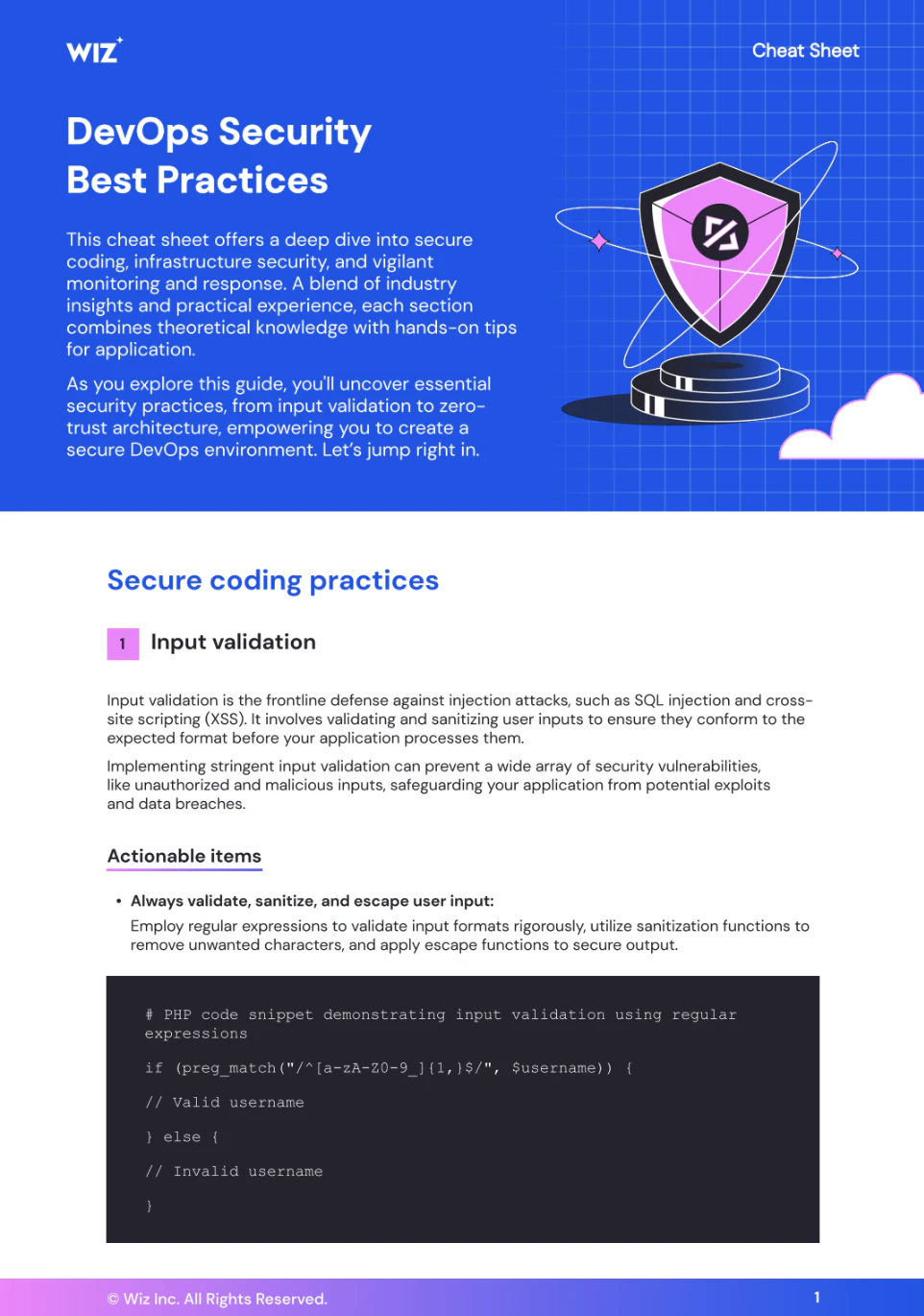
DevOps Security Best Practices [Cheat Sheet]
Download the DevOps Security Best Practices [Cheat Sheet] to help you with your roadmap.
Download now
Celebrate progress with metrics
Sustaining a DevSecOps culture requires making progress visible. Teams need to know when they’re performing well, not just when something goes wrong. Metrics offer an objective way to celebrate success and reinforce positive behaviors.
Track outcomes like reduced vulnerability age, improved policy compliance, and faster resolution times. You can also highlight wins such as meeting remediation SLAs, achieving zero criticals in a release cycle, or completing successful tabletop exercises. Finally, use dashboards, internal newsletters, or team retrospectives to showcase progress and reinforce the value of DevSecOps investments.
Celebrating progress creates momentum. When teams see that their efforts result in tangible improvements—and that leadership recognizes their work—they continue to invest in secure development practices.
Real-world example: How Mars advanced DevSecOps with visibility and trust
As Mars scaled its Azure environment to support a decentralized DevOps model, its security team needed a clearer view of its cloud assets and risks. Because its development teams operated independently and deployments had shifted away from centralized IT, security leaders prioritized these three outcomes:
Establish a complete asset inventory.
Build trust with DevOps.
Set practical cloud guardrails.
To reach those goals, Mars implemented Wiz and quickly gained visibility into previously unmonitored areas of the cloud. The agentless deployment accelerated onboarding while context-rich risk insights helped Mars reduce false positives and improve credibility with engineering teams. This visibility streamlined collaboration with DevOps and shifted conversations from abstract concerns to specific, actionable issues.
Over 8–12 months, Mars progressed from assessing exposure and access to addressing configuration and compliance risks. Recently, the team shifted security earlier in the development lifecycle by integrating image scanning into CI/CD pipelines. With greater clarity into its cloud posture, Mars developed new standards and workflows that empowered its operational teams to act more autonomously without compromising security.
What’s next for DevSecOps: AI and the evolving landscape
As DevSecOps matures, software supply chain security and cloud cost observability gain traction. With AI-assisted development and third-party integrations on the rise, teams must validate the provenance of code components, scan SBOMs for tampering, and assess the integrity of AI models. This protection extends beyond open-source packages to include full-stack dependencies and AI pipelines.
At the same time, metrics like cloud spend and AI token usage are becoming part of DevSecOps KPIs. Tracking these indicators helps teams identify inefficient workloads, insecure automation loops, or runaway model usage that can introduce both risk and unnecessary cost.
Organizations need DevSecOps platforms that combine continuous security, contextual intelligence, and native support for AI-era architectures, especially across multi-cloud environments, to keep pace.
How Wiz accelerates DevSecOps maturity
DevSecOps success demands technology that adapts to cloud-native realities and empowers teams to act with clarity and speed.
Wiz supports this shift toward integrated security by delivering unified, agentless security built for the scale, complexity, and velocity of modern development. Here’s how you can use Wiz to protect your pipeline:
Visibility without friction
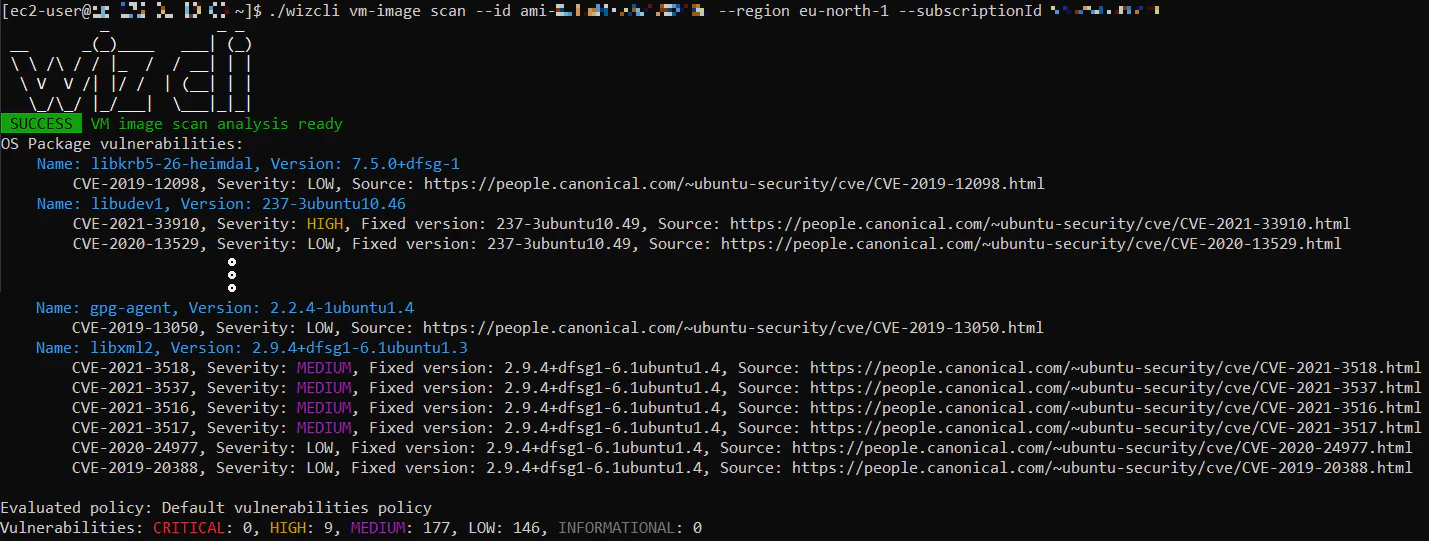
Wiz delivers deep visibility across your entire cloud environment without agents or complex deployments. The platform scans major cloud providers—including AWS, Azure, GCP, and OCI— and virtual machines, containers, and serverless workloads.
This agentless security model eliminates the operational overhead of maintaining sensors or endpoint instrumentation. It accelerates onboarding, automates asset discovery, and powers continuous scanning across environments. Whether workloads are ephemeral, distributed, or scaled across multiple regions, Wiz gives your teams a real-time, comprehensive inventory.
For organizations struggling with blind spots or inconsistent visibility, Wiz establishes a foundation for DevSecOps maturity by delivering accurate, frictionless insights from day one. Here’s what Wiz’s vulnerability scanning looks like:
Prioritization through context
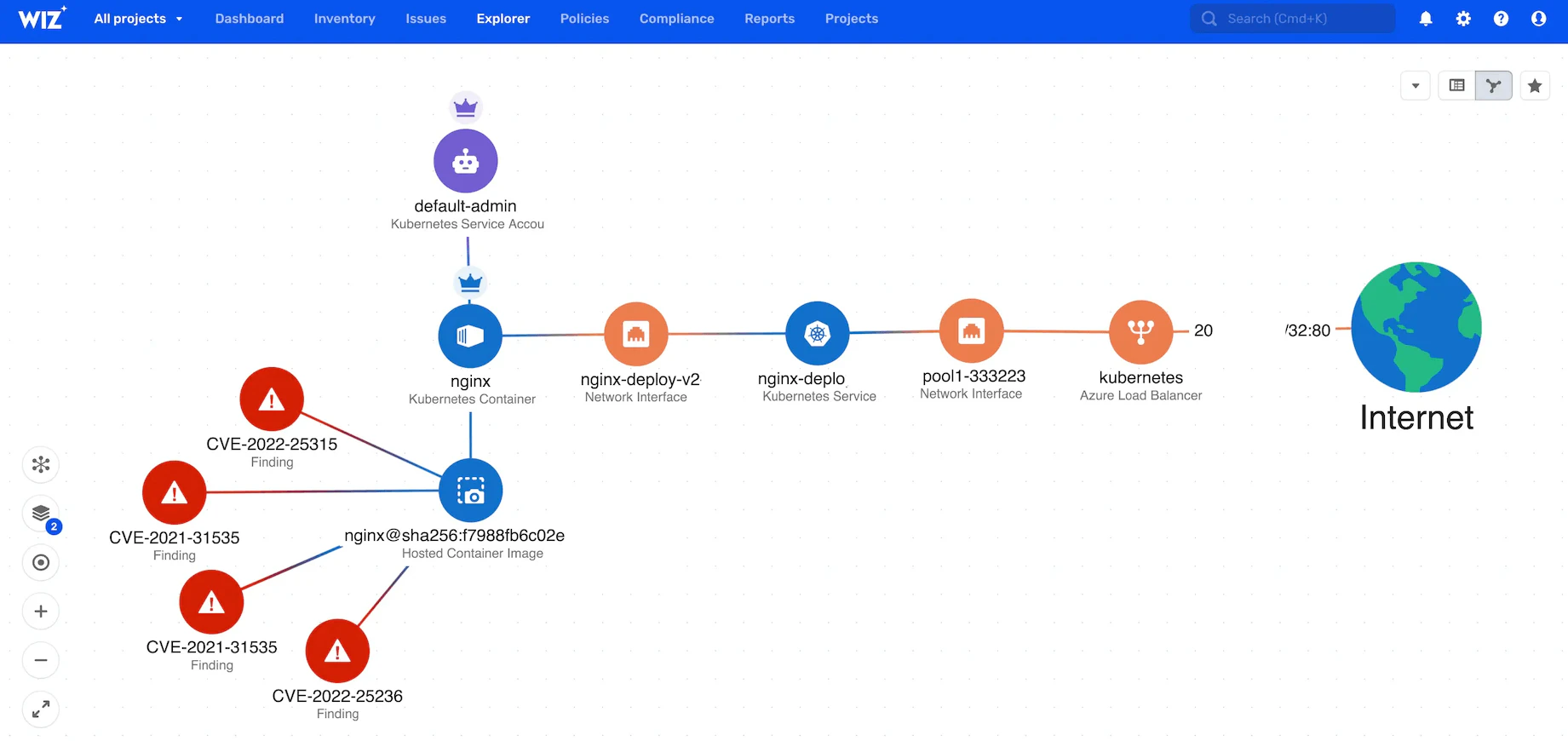
Most security platforms generate alerts, but Wiz delivers clarity. Instead of overwhelming users with thousands of disconnected findings, Wiz connects the dots using its Security Graph. This model correlates security vulnerabilities, misconfigurations, secrets, malware, exposed identities, and access paths into prioritized, context-driven risk views. The Security Graph enables teams to focus on toxic combinations—critical risks that represent multiple exposures.
For example, a workload with a high-severity vulnerability might not require immediate action unless it’s publicly exposed and connected to sensitive data. Wiz clearly reveals those attack paths, helping teams cut through the noise and act decisively.
Contextual prioritization also drives cross-team collaboration. Developers, platform engineers, and security teams all work from the same model, understand the same risks, and act based on impact rather than isolated alerts.
Policy as code and CI/CD integrations
To support continuous security, Wiz integrates directly into development pipelines and platforms. It supports native integrations with CI/CD tools like GitHub Actions, GitLab, Jenkins, Azure DevOps, and more. Teams run security checks at every stage—from code commits to deployments—and block risky changes before they reach production.
Wiz also supports policy as code, enabling organizations to define and enforce custom security policies in infrastructure as code repositories. Automated enforcement ensures teams apply consistent controls across environments, projects, and stakeholders without slowing development.
These integrations help developers unify fragmented toolchains, reduce alert fatigue, and turn compliance into a real-time, automated process. This approach embeds security within the tools teams already use, eliminating the need for context switching or separate platforms.
By delivering comprehensive visibility, contextual prioritization, and seamless automation, Wiz enables organizations to move faster, fix smarter, and scale security across teams. Wiz transforms DevSecOps from an ideal to an everyday reality.
Ready to make security seamless? Book a Wiz demo today to see how agentless scanning, CI/CD integration, and contextual risk insights can power your DevSecOps workflow.
Wiz provides end-to-end cloud security that streamlines processes, offers comprehensive visibility into security postures, and facilitates continuous compliance. With Wiz, your team can:
Secure code: Wiz for code security helps your team ensure the security of your codebase from the earliest stages of development. The platform makes it easy to integrate security directly into the development process.
Secure IaC: Wiz’s IaC security solutions enable you to secure your infrastructure provisioning by identifying and mitigating risks in IaC templates.
Secure supply chain: Wiz’s supply chain security solutions protect against vulnerabilities and threats across the software supply chain. The platform helps you maintain the integrity and security of third-party components and services.
By focusing on these key areas, Wiz supports a comprehensive approach to building a DevSecOps culture that prioritizes security at every stage of the software development life cycle.
Book a demo today to see how Wiz’s industry-leading platform can transform your cloud security.
Enable Your Team to Embrace DevSecOps
Learn why CISOs at the fastest growing companies choose Wiz to power their shift towards DevSecOps.
