



What is a data security policy?
A data security policy defines how your organization safeguards data throughout its lifecycle. That includes protecting data while it’s in use, stored, or moving between systems. The policy also outlines clear roles, responsibilities, and rules that guide teams in managing data based on its sensitivity.
Understanding the difference between this and other related policies is key to successful security. Here are the core characteristics of the following policies:
An information security policy covers your broader IT environment, including infrastructure and applications.
A data privacy policy focuses on meeting legal requirements for handling personal data.
A data security policy focuses specifically on how your organization protects its data assets.
Data security policy establishes a foundation for consistent data management by classifying data based on risk, assigning appropriate sensitivity levels (such as confidential or public), and implementing the necessary cybersecurity measures. It also defines how teams should access, share, and eventually dispose of data.
A well-designed policy, embedded with best practices like least-privilege access and data retention rules, not only protects critical information but also builds a culture of accountability and security awareness in how teams handle data.
The Data Security Best Practices [Cheat Sheet]
No time to sift through lengthy guides? Our Data Security Best Practices Cheat Sheet condenses expert-recommended tips into a handy, easy-to-use format. Get clear, actionable advice to secure your cloud data in minutes.

Why are data security policies important?
A robust cloud data security policy is essential for reducing risk, saving audit time, containing breach scope, maintaining compliance, and aligning your teams on shared responsibilities. It provides a consistent framework for protecting sensitive information across environments.
If you define clear rules and ownership, your policy will strengthen your governance and accountability. This is critical when navigating complex compliance requirements such as GDPR, HIPAA, and SOC 2, where demonstrating proper data-handling practices isn’t optional. A well-crafted policy helps you avoid penalties, pass audits, and maintain trust with customers and regulators.
Your policy must also support incident response and audit readiness by outlining data classification, access, storage, and protection. It ensures that teams, from security and engineering to legal and compliance, speak the same language and follow the same standards. That alignment creates a culture where security becomes a shared responsibility rather than a siloed task.
Real-world example: Why policies must account for third-party data risk
In October 2025, Discord disclosed that a third-party service provider for age verification had been breached, potentially exposing the government-issued ID photos, contact information, usernames, and personally identifiable information of almost 70,000 users. The attacker accessed this sensitive data from users who had submitted age-related appeals to regain platform access.
The Discord breach highlights the importance of extending data security policies to third-party vendors. Even when outsourcing, you're still responsible for ensuring partners handle sensitive data appropriately. Policies should define how third-party data is managed, reported, and assessed for risk. These requirements must scale as your cloud footprint grows.
Data security policy template
A data security policy brings clarity to how your organization protects information. To be effective, the policy must define what data needs protection, identify who is responsible, and outline how teams should implement and maintain necessary safeguards. It also helps you ensure consistency across teams and supports regulatory compliance.
Below is a high-level template outlining the key components every data security policy should cover. (The following section will explore each of these in more detail.)
Objectives: Define the purpose of the policy and your broader goals for data protection.
Scope: Specify which systems, data types, and teams the policy applies to.
Data classification: Establish how you categorize data based on its sensitivity and business impact.
Roles and responsibilities: Clarify who owns which parts of data security, from data access control to incident response.
Security tools and controls: List the technologies you use to protect data, such as encryption, MFA, or logging.
Inventory and mapping: Document your data landscape, showing where data lives and how it flows.
Training and awareness: Describe how your organization trains teams on secure practices.
Review and updates: Set a schedule for reviewing and updating the policy to keep pace with evolving risks and regulations.
Start with a sample policy or a policy template, such as those from SANS Institute or the Quick Start Guides from NIST, to save time and build upon successful plans.
How to create a strong data security policy
Here’s an overview of nine essential steps you’ll need to follow to put a data security policy in place at your organization:
1. Identify and classify your organization’s data
This process begins with a clear view of your data landscape. Understanding where data resides, how it moves, and who can access it, across both cloud and on-premises environments, lays the groundwork for your organization’s security. From there, classifying data based on sensitivity (e.g., public, internal, confidential, and restricted) helps you apply the right level of protection.
2. Conduct risk assessments and threat modeling
With your data mapped and categorized, the next step is to evaluate your organization’s exposure. This includes identifying vulnerabilities, entry points, and the potential consequences of a security breach. Threat modeling further clarifies how attackers might exploit weaknesses to gain unauthorized access. Together, these assessments guide the prioritization of your security controls.
3. Draft policy language and map to controls
As risk insights come into focus, they must inform clear, practical policy language throughout data management. A strong policy defines objectives, scope, and responsibilities without becoming overly technical. It’s most effective when linked to specific administrative, technical, and physical controls that teams can operationalize across systems.
4. Collaborate with stakeholders
Policy creation is most effective when it reflects a range of perspectives. Engaging stakeholders from legal, compliance, engineering, and IT ensures the policy is grounded in reality, making it feasible to implement. This collaboration builds ownership and promotes alignment across the organization.
5. Train employees and communicate policy
Once you finalize your policies, communicate them clearly and consistently. Different teams may need tailored guidance to understand their specific responsibilities. Ongoing training reinforces expectations, supports cultural adoption, and ensures that everyone follows security practices from onboarding through daily operations.
6. Implement technical and procedural controls
Choose controls based on your risk profile and compliance obligations. Use frameworks like NIST CSF or ISO 27001 as a guide. Controls turn your policy into action, and they fall into three main categories:
| Control type | Key examples | Purpose |
|---|---|---|
| Administrative | Access policies, data classification, incident response plans, and training | Define roles, processes, and governance. |
| Technical | MFA, encryption, RBAC, monitoring, secure data backups, and IDS/IPS | Apply protections throughout software or infrastructure. |
| Physical | Data center access, CCTV, hardware disposal, and locked data storage | Secure physical locations and hardware. |
7. Monitor, audit, and enforce
Security environments evolve, so your policy should evolve, too. To prepare for changes, continuously monitor compliance, conduct audits to identify gaps, and track and promptly respond to policy violations. Establish a regular review cycle to align with changes in technology, regulations, and business needs.
8. Plan incident response
It’s vital to define how your teams respond to data security incidents. Start by outlining roles, reporting procedures, escalation paths, and communication protocols. Conduct response drills to stay ready and routinely refine your plans.
9. Align with legal and regulatory requirements
Make sure your policy aligns with applicable laws and standards, including GDPR, HIPAA, SOC 2, and CCPA. To start, document how your controls support compliance and prepare audit artifacts in advance. Continuously update your policy to stay current as regulations evolve.
Cloud Data Security Snapshot: Current Exposure Trends
This report offers data-backed insights and practical steps to help cloud and security teams close gaps, strengthen posture, and build resilient environments.

The challenges of crafting and enforcing data security policies
Building and maintaining a data security policy presents real-world challenges, even with a strong framework in place. These challenges—ranging from cloud complexity to changing regulations—require thoughtful strategies and the right tools.
Here’s a look at the most common obstacles and how to address them:
Complexity
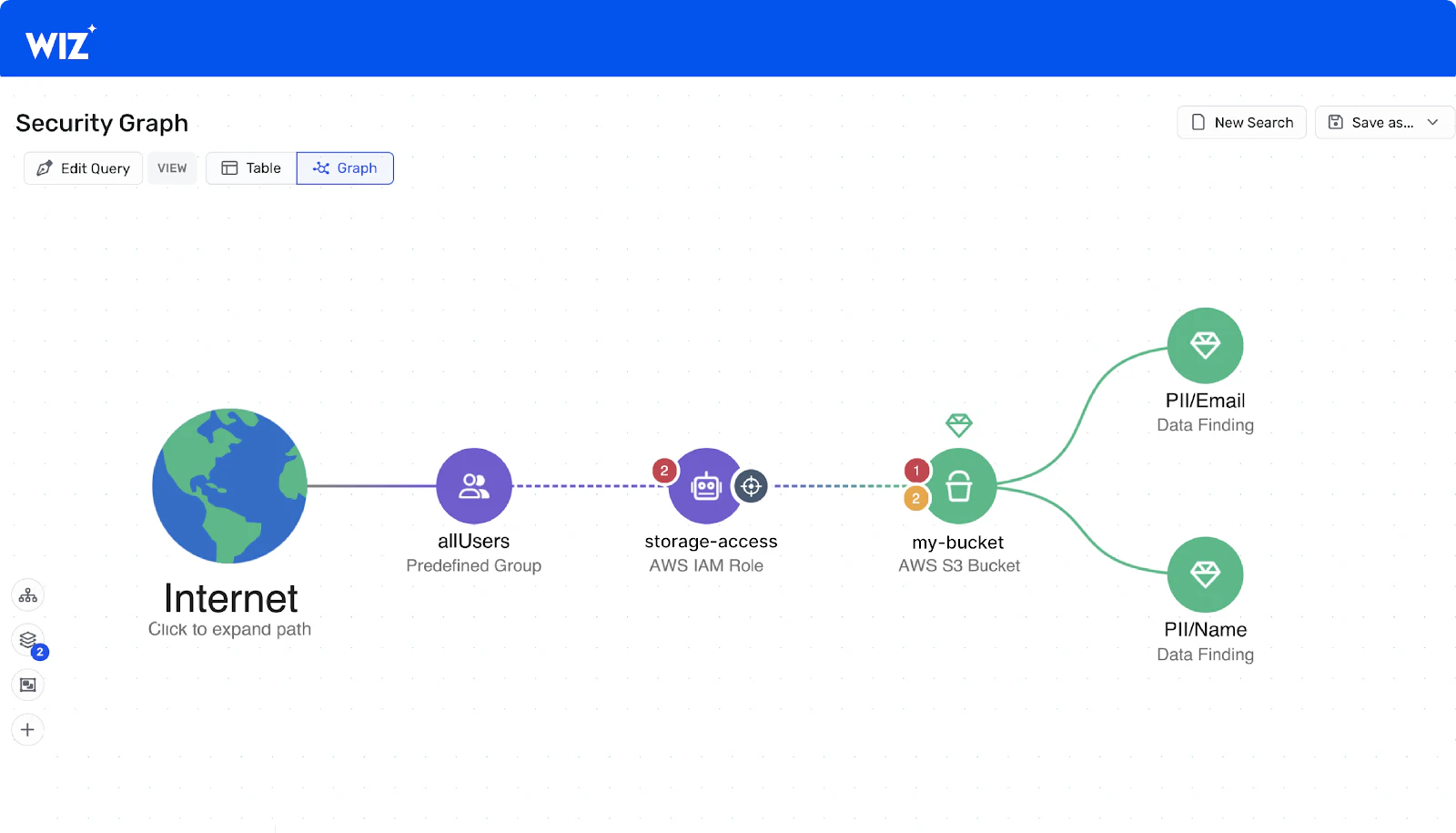
The challenge: Data sprawls across file shares, cloud applications, databases, personal devices, and third-party services—each introducing unique security risks (and it’s getting worse with AI pipelines). Shadow data and shared responsibility models add to the confusion, making it challenging to understand what data exists, who owns it, and how to protect it.
The solution: Use platforms to help you visualize where sensitive data lives, who can access it, and where excessive permissions or misconfigurations expose risk. Look for solutions that provide context and enable you to enforce policies automatically across environments.
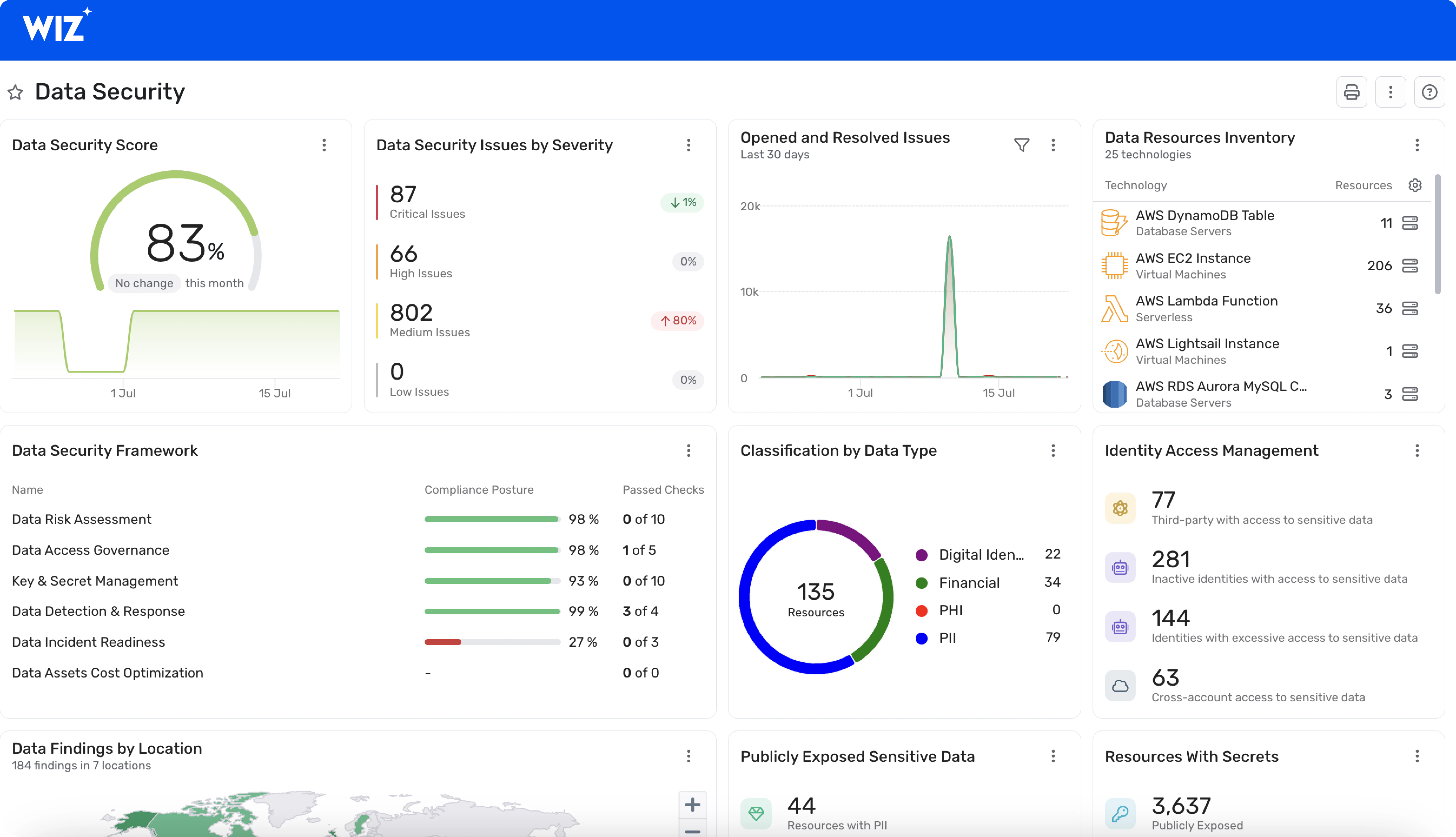
Choosing tools for the cloud, like data security posture management (DSPM) and cloud infrastructure entitlement management (CIEM), helps you achieve this granular visibility.
Evolving threat environments
The challenge: Threats evolve faster than most policies. New risks tied to AI, supply chains, and zero-day vulnerabilities require continuous updates to maintain protection. Relying on static policies leaves gaps.
The solution: Be proactive and adopt continuous monitoring to detect misconfigurations, vulnerabilities, and public exposures in real time. Solutions like AI security posture management (AI-SPM) can identify emerging risks within machine learning models and AI services. You should also regularly review and adjust your policies based on threat intelligence and evolving attack techniques.
Balancing security and usability
The challenge: Overly strict policies can frustrate teams and slow work, but lenient rules increase exposure and invite risk. Security teams often struggle to strike the right balance, particularly in fast-moving cloud environments.
The solution: Apply a risk-based approach, focusing on strong protections where they matter most (e.g., financial systems or sensitive data stores). You can leverage CNAPPs to prioritize risks and reduce alert fatigue. These platforms surface real attack paths so you can tighten controls without creating unnecessary roadblocks.
Policy enforcement and cultural buy-in
The challenge: A policy is only effective if teams follow it. Fragmented ownership, security fatigue, and resistance to change make consistent enforcement difficult, especially in large or rapidly scaling organizations.
The solution: Involve key stakeholders early in the policy design process. Provide clear, role-specific training and ensure managers reinforce policy expectations. To drive cultural adoption and enforcement at scale, delegate security champions within departments, tie adherence to measurable outcomes, and leverage tools that unify visibility and provide automated enforcement across the board.
Keeping pace with compliance and cross-jurisdiction rules
The challenge: Regulations like GDPR, HIPAA, and CCPA continue to evolve. As companies expand globally, they face overlapping and sometimes conflicting compliance requirements across jurisdictions. Because of this reality, manual approaches don’t scale.
The solution: Automate compliance mapping with tools that continuously assess your environment against built-in frameworks. Leverage solutions like Wiz to provide automated control mapping across dozens of regulatory standards, enabling you to prove compliance and respond to audits faster. Stay current with regulatory changes and review your policy as new obligations emerge.
Case in point: How Valiuz operationalized its data security policy with Wiz
Valiuz, a French data alliance that manages the information of over 57 million consumers, needed to secure its sensitive data across a growing multi-cloud environment while following the strict requirements of GDPR. But with a small security team and multiple disconnected tools, the company struggled to maintain visibility, enforce controls, and drive cross-team security adoption.
To address these challenges, Valiuz leveraged Wiz’s agentless CNAPP platform, gaining centralized visibility into risks across its Azure, GCP, and Kubernetes environments. Valiuz used Wiz’s DSPM to help detect personal data and ensure GDPR compliance. The organization launched remediation efforts that previously would have taken months within days.
Wiz also helped Valiuz improve collaboration between security and development. Using Wiz's Security Graph, the organization’s technical teams could visualize risks and understand their role in securing data. Weekly review sessions replaced siloed ticketing workflows, supporting policy enforcement and secure development practices.
This approach enabled Valiuz to operationalize key parts of its data security policy, including classification, access governance, compliance, and cross-team accountability. And it did all this without increasing staff or slowing innovation.
How Wiz supports your data security policy
Wiz aligns with every part of your data security policy and integrates into your existing workflows to reduce risk, enforce controls, and simplify compliance. Here’s how we can streamline your policy and protect your cloud environment:
Data classification and inventory: Automatically discovers and classifies sensitive data like PII, PHI, and PCI across cloud environments without agents.
Monitoring and alerting: Tracks access, detects threats, and alerts on suspicious activity using real-time monitoring and cloud detection and response.
Risk prioritization and enforcement: Surfaces real attack paths through the Wiz Security Graph, enabling targeted remediation and policy enforcement.
Audit trails and access control: Logs activity and supports RBAC to ensure accountability and meet audit requirements.
Compliance reporting: Maps to over 100 frameworks, including GDPR, HIPAA, SOC 2, and PCI, with drill-down views for easy reporting.
Workflow integration: Connects to SIEMs, ticketing systems, and CI/CD tools to embed security into your existing processes and security measures.
Ready to get started? Run a free data risk assessment to see how your security stacks up. Or, try Wiz's DSPM demo to enhance your security immediately.
Protect your most critical cloud data
Learn why CISOs at the fastest companies choose Wiz to secure their cloud environments.

FAQ
Below are frequently asked questions about data security policy: