

What is a CNAPP?
A cloud native application protection platform (CNAPP) is a unified cloud native security approach that delivers continuous visibility and risk management from code and configuration through runtime activity, identities, sensitive data, and AI workloads.
Cloud teams still add point tools as cloud infrastructure grows across AWS, Google Cloud, Kubernetes, containers, serverless functions, and now AI pipelines. Those tools do not share context. Misconfigurations sit in one console, vulnerabilities in another, identities in a third.
Rather than operating as isolated tools, modern CNAPPs connect the following into one contextual risk model:
Cloud workload protection platform (CWPP) coverage
Cloud infrastructure entitlement management (CIEM)
Data security posture management (DSPM)
Cloud detection and response (CDR)
AI workloads, models, and services
That model shows what is actually exploitable in production and most likely to cause impact, including risks introduced by AI-powered applications.
CNAPPs also integrate into DevOps and DevSecOps workflows so you can prevent risk earlier in the development lifecycle while you continuously monitor live multi-cloud environments.
Gartner, which coined the term, defines a CNAPP as a unified and tightly integrated set of security and compliance capabilities designed to protect cloud native infrastructure and applications across development and production. The 2024 Gartner Market Guide for Cloud Native Application Protection Platforms frames CNAPP as visibility, governance, and control from code creation to production runtime.
By 2029, 60% of enterprises that do not deploy a unified CNAPP solution within their cloud architecture will lack extensive visibility into the cloud attack surface and consequently fail to achieve their desired zero-trust goals.
-Gartner’s 2024 CNAPP Market Guide
2025 Gartner® Market Guide for CNAPP
The 2025 Gartner® Market Guide for Cloud-Native Application Protection Platforms (CNAPP) explores this shift and outlines what security leaders should consider as the market matures.

Cloud security challenges that a CNAPP solves
Cloud environments change on demand. Virtual machines, containers, Kubernetes clusters, and serverless functions appear and disappear. Identity and access management (IAM) sprawl grows with every new service. Point tools that cannot share context leave you with fragmented risk and slow incident response.
New AI-driven risks
AI is no longer an experiment on the side of the stack. Wiz’s State of AI in the Cloud 2026 report found that at least 81% of observed cloud environments use managed AI services and 90% run self-hosted AI models.
Agents and Model Context Protocol (MCP) servers now sit next to production data. Those systems introduce new identities, overprivileged control planes, and training or inference data that traditional CSPM and CWPP scans were not built to treat as first-class assets.
Wiz Research has already shown how quickly those surfaces fail in the open, including an exposed DeepSeek database that leaked chat history, secret keys, and backend log streamsA CNAPP that includes AI security posture management (AI-SPM) treats models, pipelines, and AI service configurations as part of the same attack surface as cloud infrastructure.
Visibility gaps and blind spots
Many teams still rely on agent-based scanners for workload visibility. Resources that never receive the agent receive no protection. Ephemeral containers and serverless functions make that gap worse. Critical issues sit unnoticed until an attacker finds them.
An agentless CNAPP uses cloud provider APIs to inventory AWS, GCP, Azure, and other environments, then layers runtime protection where you need behavioral signals. That combination reduces blind spots without forcing every workload to run a heavy agent.
Siloed tooling and alert fatigue
Standalone vulnerability management, DSPM, KSPM, CSPM, and CIEM tools each produce their own queue. Gartner has long warned that this lack of integration creates fragmented views of risk with limited context, which makes it hard to prioritize overall business risk.
Without shared context, a vulnerability scanner can flag a machine and miss that the same machine is internet-exposed and highly privileged. Those two facts together form an attack path. Apart, they are noise. Alert fatigue follows, and teams spend cycles on findings that never combine into real impact.
A CNAPP correlates those signals in one risk engine so you work a single prioritized queue instead of five dashboards.
Gaps between security and development teams
Security owns cloud risk. Developers spin up the resources.
When developers lack context, they cannot prioritize what to fix, and security reviews slow releases. CNAPPs close that gap by pushing findings into CI/CD pipelines and IaC templates, with ownership and fix guidance tied to the code that created the issue. That is how you shift left without turning every pull request into a blocker.
IDC MarketScape for CNAPP
Wiz was named a Leader in the IDC MarketScape: Worldwide Cloud-Native Application Protection Platforms (CNAPP) 2025 Vendor Assessment

CNAPP benefits
Adopting a CNAPP changes how you see and reduce cloud security risks.
Faster deployment: Agentless CNAPPs connect through cloud provider APIs and start inventorying multi-cloud environments in minutes. Time to value drops because you don’t stage agents across every virtual machine and container host first.
Lower operational drag: Agents are expensive to maintain and can slow workloads. DevOps teams often reject them on ephemeral workloads. Agentless visibility plus selective runtime protection reduces that overhead.
A unified risk engine: One platform covers vulnerabilities, network exposure, secrets, malware, identities, and sensitive data, plus real-time threat detection. The engine assesses criticality by how risks combine into attack paths so you stop manually stitching tickets across tools.
Graph-based context: A node-and-edge security graph makes relationships between resources, identities, and data readable at any skill level. Queries that represent toxic combinations become straightforward instead of tribal knowledge.
Risk prioritization: Integrated analytics surface the issues that sit on a path to critical assets. You spend less time on noise and more time on remediation that actually shrinks the attack surface.
Shift-left enablement: Once production risk is clear, the same policies apply in CI/CD pipelines and IaC scanning so issues never reach production.
Contextual detection and incident response: Correlating runtime signals, cloud events, and infrastructure risk helps you remove attack paths before an incident and limit blast radius after an incident.
How a CNAPP works
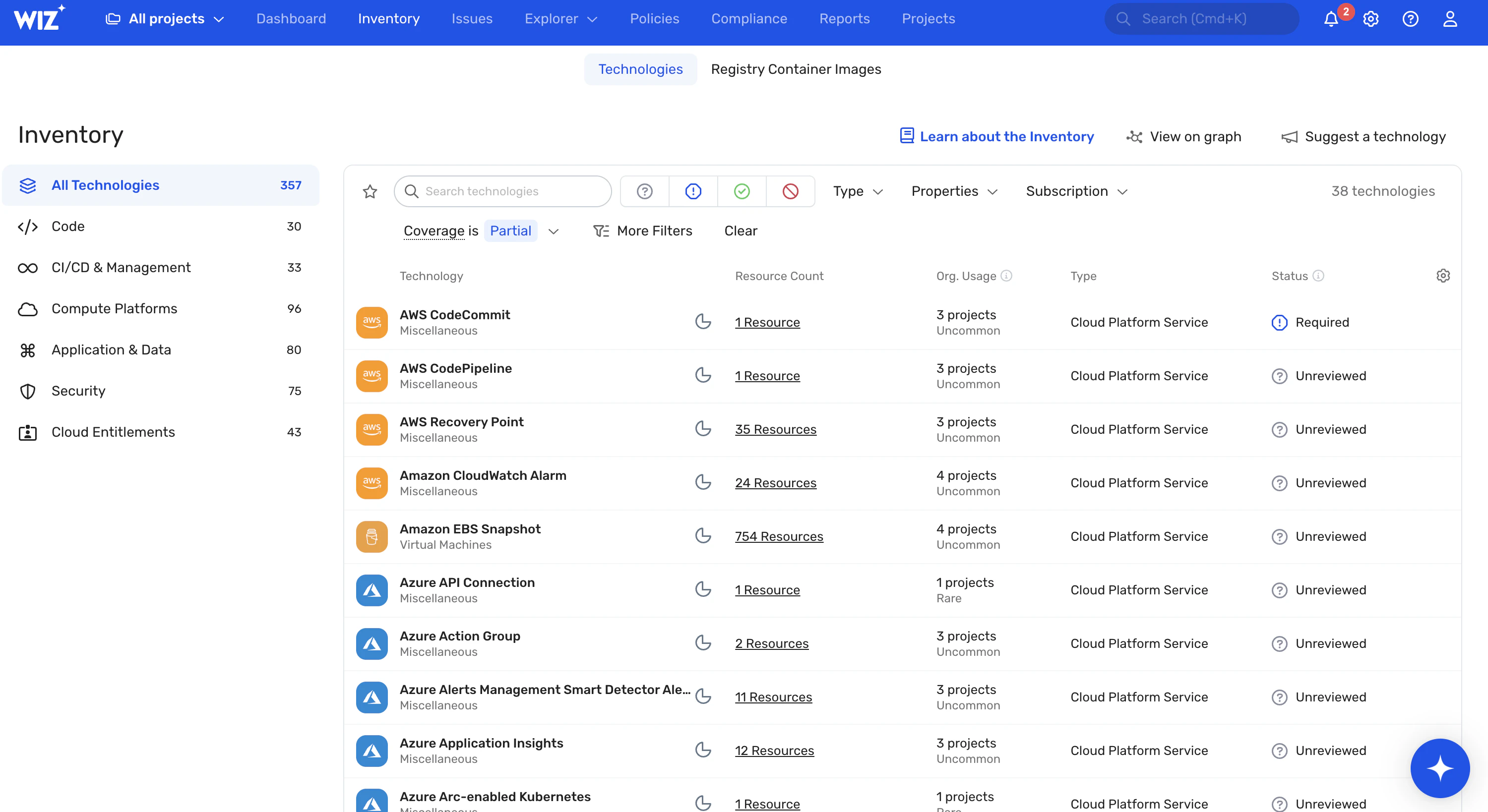
A CNAPP works by combining complete inventory, a unified data model, and prioritized context across prevention and detection.
Complete visibility into multi-cloud environments
The platform should see every workload you run, whether it lives in AWS, GCP, Azure, or another provider. Coverage includes virtual machines (VMs), serverless functions, containers, Kubernetes, databases, managed services, and the identities that touch them. Visibility has to span risk factors from misconfigurations and vulnerability scanning through secrets, malware, and sensitive data, including real-time threat detection.
Agentless discovery uses the cloud service provider’s APIs so you don’t leave unprotected pockets where agents never landed.
One unified platform instead of point tools
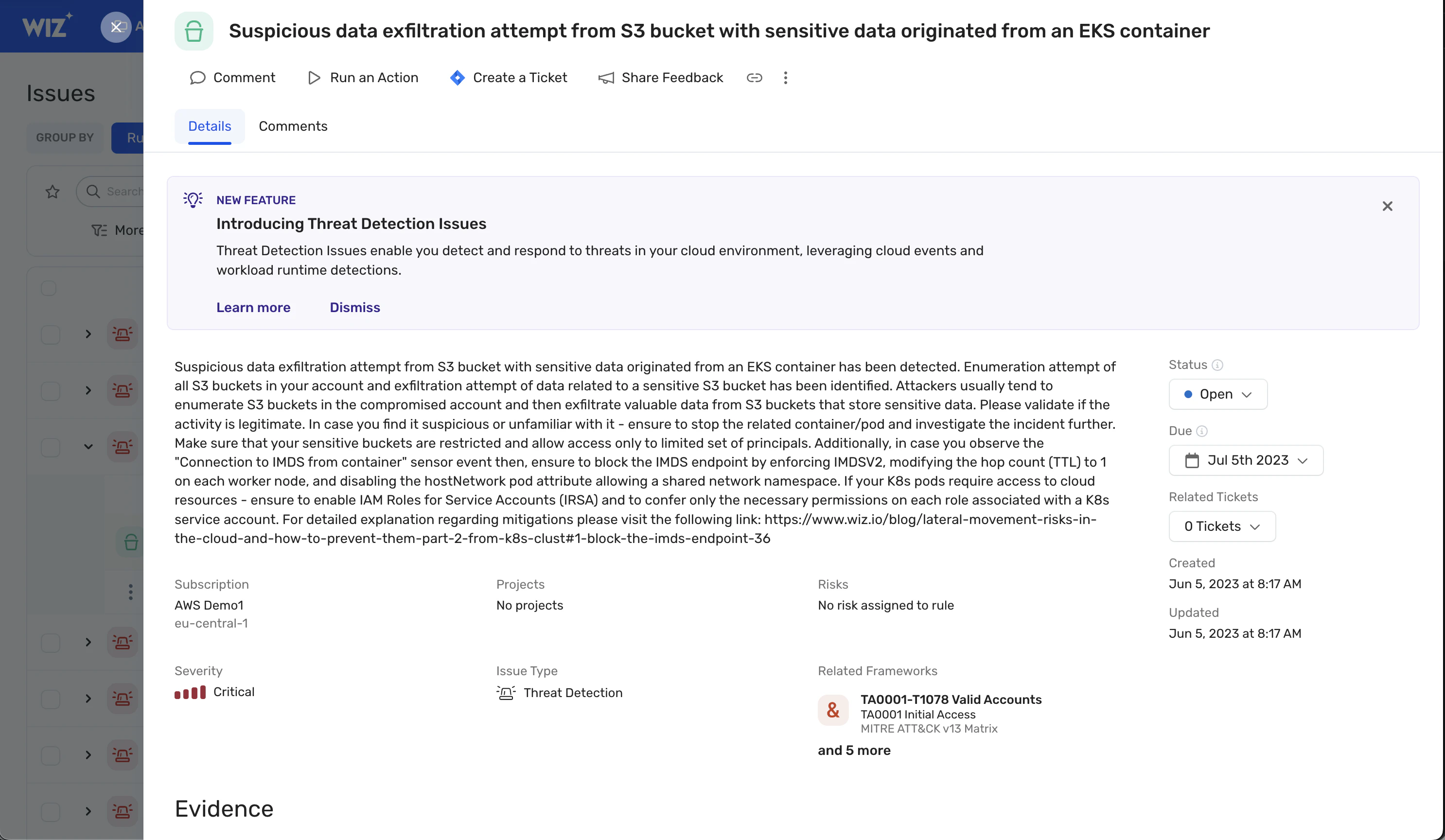
You get one platform, one process, and consistent controls. A unified CNAPP replaces a stack of point solutions with a unified risk engine that spans CSPM, CWPP, CIEM, KSPM, DSPM, CDR, and IaC scanning.
In its 2024 Market Guide for CNAPPs, Gartner recommends a front-end console paired with a unified back-end data model so teams stop switching consoles for every control domain.
Defense in depth still matters. Agentless risk reduction removes paths. A lightweight agent or eBPF sensor can add runtime protection when you need process-level signals.
Benchmark Your 2026 Security Budget
See how 300+ CISOs are planning, spending, and prioritizing for the year ahead. Compare your strategy against peers and identify emerging trends.
Get the report
Prioritized risks with context
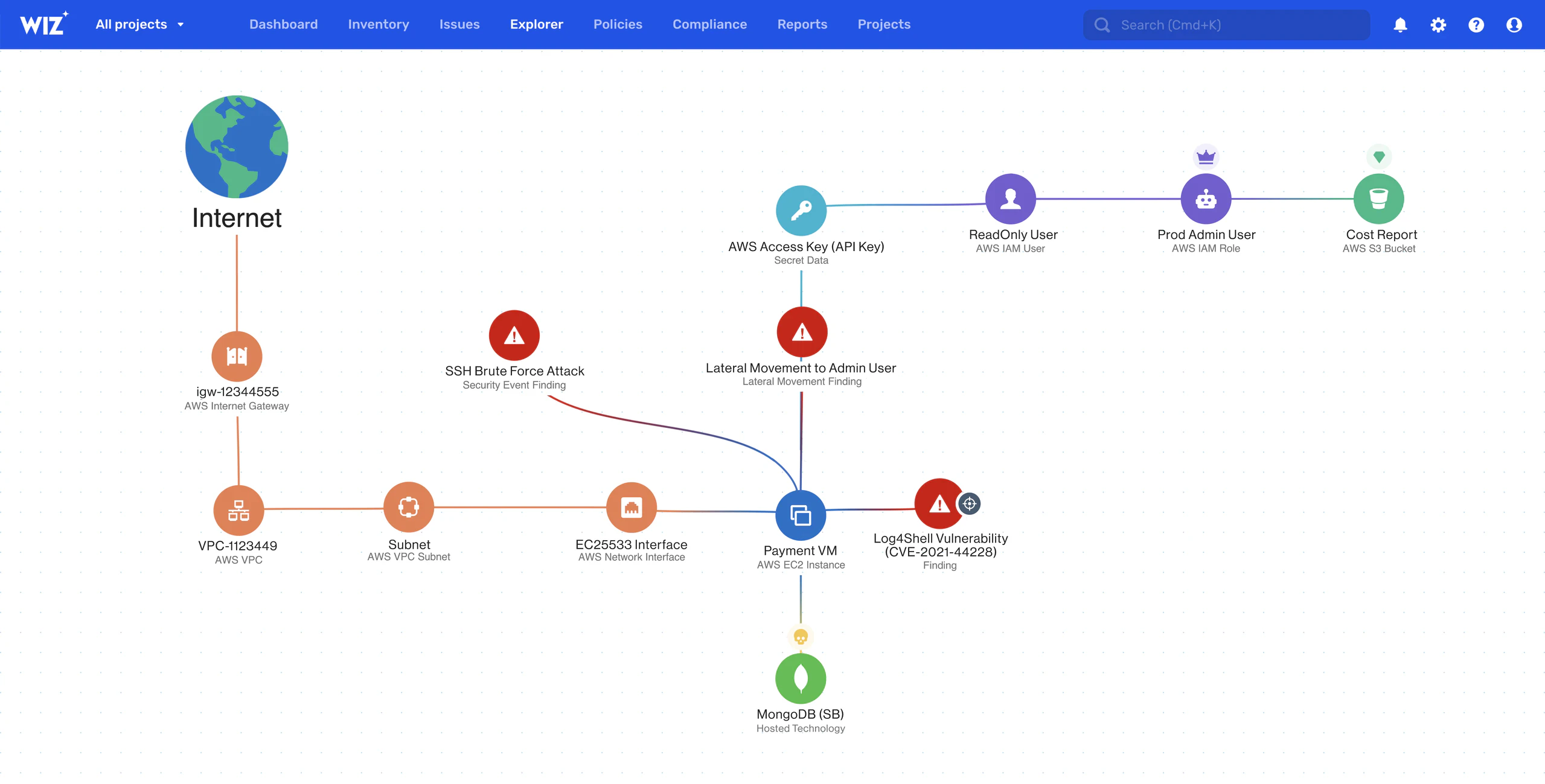
Context turns a finding into a decision. The graph shows how a public exposure, an overprivileged identity, and a vulnerable package connect. Gartner’s CNAPP Market Report also recommends integrated advanced analytics combined with those relationships so you risk-prioritize findings in development and at runtime.
A bridge between development and security teams
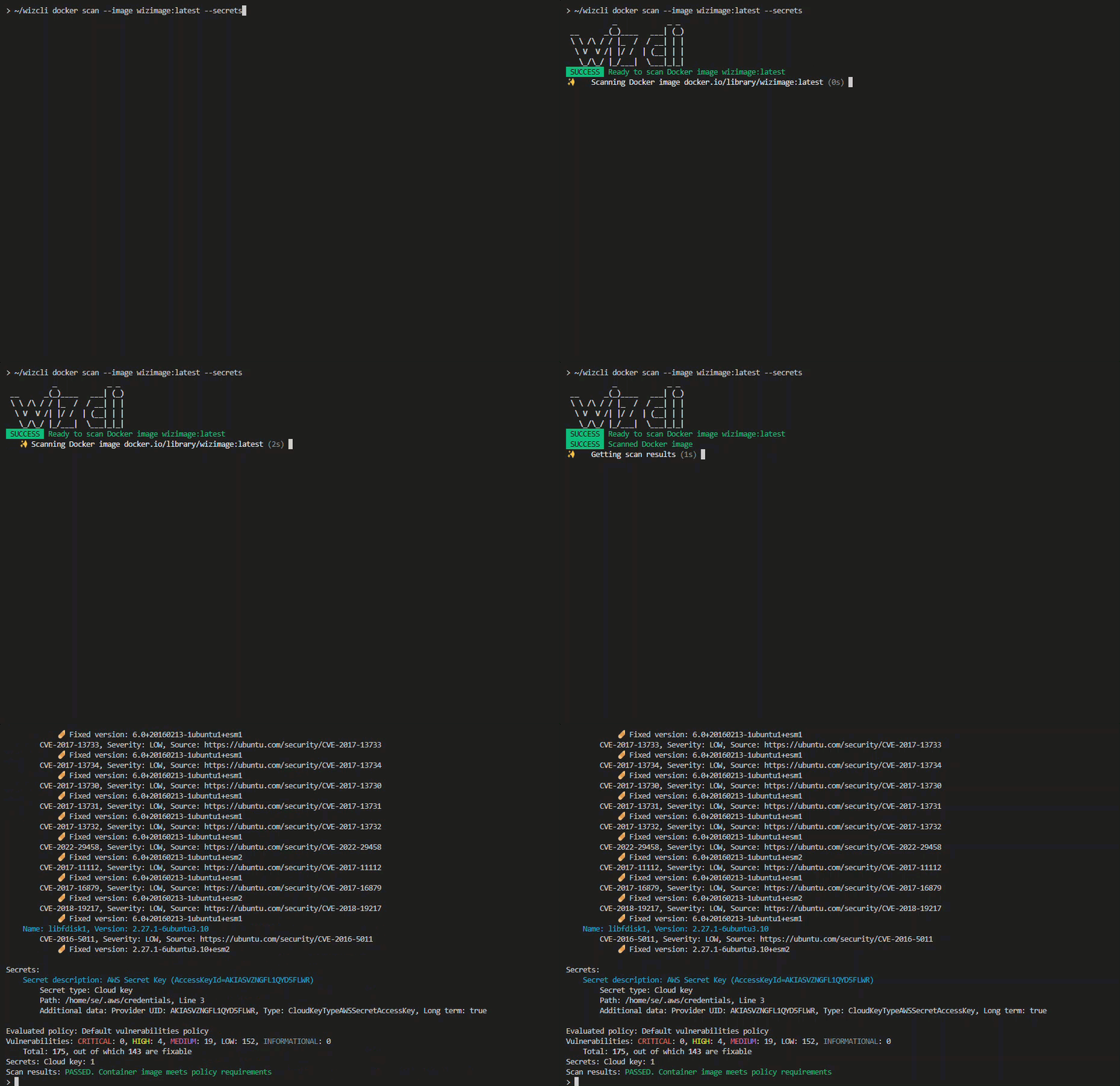
Security checks in CI/CD pipelines and IaC templates catch issues during the development pipeline. Unified policies across production and pre-production keep the same bar. Developers receive ownership, context, and specific remediation so they can ship faster without guessing which alert matters.
Core CNAPP features
A CNAPP consolidates the following capabilities in one platform rather than bolting them on after the fact.
| Feature | Description |
|---|---|
| CSPM | Offers insight into cloud resource configuration and continuous monitoring |
| CWPP | Ensures visibility into cloud workloads and risk mitigation across VMs, containers, and serverless functions without relying on agents |
| CIEM | Oversees entitlements within cloud setups and guides the least privilege permission implementation while optimizing access and entitlements across the environment |
| KSPM | Automates security and compliance for Kubernetes components to provide comprehensive visibility into containers, hosts, and clusters |
| DSPM | Safeguards sensitive data within the cloud environment |
| CDR | Enables detection and investigation of and response to cloud-based cyber threats by monitoring activity within the cloud environment and identifying suspicious events |
| Code security | Secures the SDLC by detecting risks in source code, IaC templates, and pipelines (with tools like Wiz Code) for proactive security and remediation before deployment |
Wiz Named a Leader in The Forrester Wave™
Forrester’s CNAPP evaluation rated Wiz with the highest Current Offering category score, which we believe reflects our commitment to protecting everything built and run in the cloud.

CSPM
CSPM assesses cloud resources against configuration rules, flags misconfigurations, and supports compliance monitoring against built-in and custom frameworks. Evaluating resources during development stops bad configurations from reaching production.
CWPP
A cloud workload protection platform scans workloads for vulnerabilities, secrets, malware, and insecure configurations without requiring an agent on every resource. As the last line of defense, CWPP can add a lightweight agent for real-time threat detection and enrich those signals with agentless inventory.
CIEM
CIEM analyzes effective permissions for principals and resources, guides least privilege, and spots credential leaks. It is the identity layer that IAM tools alone rarely map across multi-cloud environments.
KSPM
KSPM automates container security and cluster compliance. It correlates vulnerabilities, misconfigurations, permissions, secrets, and networking risks, and it supports shift left by catching Kubernetes issues in development.
DSPM
DSPM finds sensitive data, shows where it lives, and correlates it with exposure, identities, and workload risk. This way, you can prioritize attack paths that actually reach regulated or high-value data, including GDPR-relevant stores.
CDR
Cloud detection and response watches for remote code execution, malware, crypto-mining, lateral movement, privilege escalation, and container escape. It correlates real-time signals with cloud activity and audit logs so incident response can follow attacker movement instead of isolated alerts. Teams often still feed high-fidelity CNAPP events into SIEM or XDR for broader operations.
Code security
Code security covers the SDLC: source, IaC templates, and CI/CD pipelines. Findings land where developers already work, which is how application security becomes part of the same CNAPP risk story rather than a separate AST silo.
How to evaluate a CNAPP for your organization
Use criteria that test whether the platform actually unifies risk, not whether it markets every acronym.
Agentless versus agent-based coverage: Agentless API inventory should cover the estate quickly and without performance tax. Agent-based or eBPF runtime protection should be available where you need process-level detection, not required everywhere on day one.
Breadth in one graph: CSPM, CWPP, CIEM, KSPM, DSPM, CDR, and code security should share a data model. Bolted-together modules that still live in separate queues recreate the problem a CNAPP is supposed to solve.
Developer adoption: Findings must land in pull requests and IaC reviews with clear ownership and fix guidance. If the platform slows releases or dumps unprioritized tickets on DevSecOps, teams will route around it.
Risk prioritization quality: Ask how the product combines network exposure, identities, vulnerabilities, and sensitive data into attack paths. A long CVE list without runtime and identity context is not a CNAPP.
Multi-cloud and AI scope: Confirm coverage across AWS, Azure, GCP, Kubernetes, and the AI services and data your teams already run.
Where CNAPP is headed in 2027
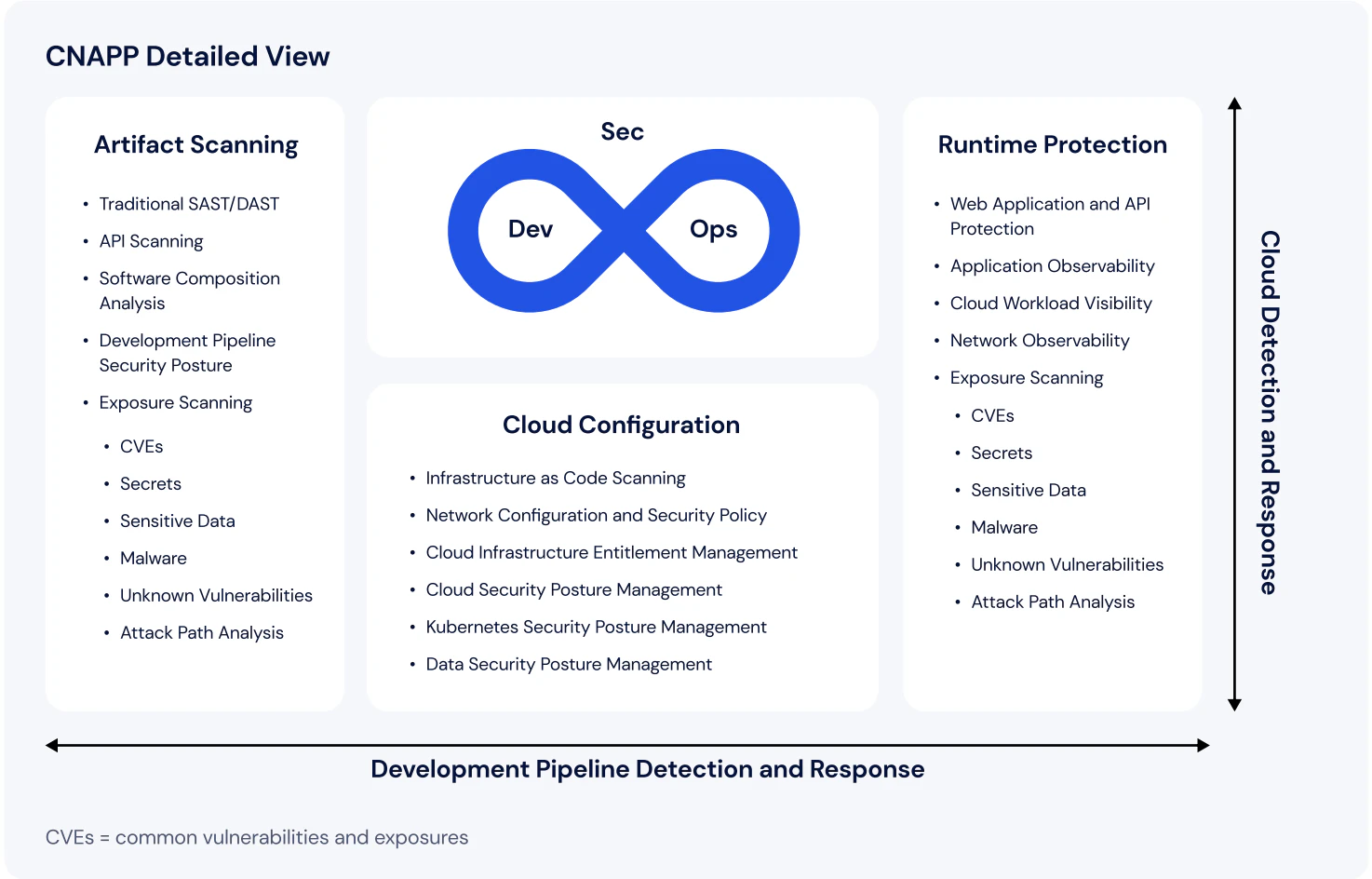
CNAPP is already the default platform for securing cloud infrastructure. The category is now expanding into the rest of the application and AI stack.
Application security continues to fold into CNAPP. Code vulnerabilities, cloud misconfigurations, identity risk, and runtime threats are one picture. In its Market Guide for CNAPPs, Gartner described CNAPP and application security offerings as increasingly converging for organizations that run primarily cloud native applications.
AI is accelerating that expansion. As teams deploy models, build pipelines, and connect agents to production systems, AI-SPM is becoming a native CNAPP capability: training data, model endpoints, permissions, and AI service configurations sit in the same workflow as infrastructure scanning and runtime protection.
The platform is also getting more automated. AI agents inside CNAPPs can correlate related risks, propose the fastest fix, clarify ownership, and help distinguish real threats from benign activity. The goal is a shorter loop between detection and resolution.
The operating model shifts with it. Early CNAPPs replaced multiple tools with one platform. The next generation replaces fragmented alert queues with a prioritized view of risk. Security teams gain confidence that what they are not working on is truly lower risk. Developers get context tied to the code they own.
CNAPP in the Wiz context

In a CNAPP-focused episode of the mnemonic security podcast, featuring Scott Piper, principal cloud security researcher at Wiz, and Håkon Sørum, host Robby Peralta asked a question that still frames the category: “How do we organize ourselves in a world where our assets are in the cloud but our procedures and thinking are still in the basement?”
Wiz is built as a CNAPP for this operating model: agentless architecture, comprehensive visibility, graph-based risk prioritization, and one platform across code, cloud, and runtime.
Agentless architecture: Wiz scans cloud resources through provider APIs so you can deploy quickly and avoid performance impact on workloads.
Comprehensive visibility: The platform is designed to show cloud resources and risks from infrastructure to data across providers and services, including AI workloads.
Graph-based security and risk prioritization: Wiz builds a graph of resources and relationships to surface complex attack paths so you focus on issues that combine into real impact.
Unified platform: Vulnerability management, misconfigurations, secrets, identity risk, data exposure, code findings, and detection sit in one place instead of in a stitched toolchain.
Wiz CNAPP supports security across our cloud environments in a single place. All of our security information is in one place, and the solution is flexible enough that different teams can focus on just the details they need.
Ralf Kleinfeld, Information Security Officer, OTTO
Point tools stitched together after the fact still leave the gaps a CNAPP is meant to close. Wiz’s platform brings posture, workload, identity, and data risk into one agentless, graph-based view, so your team sees how risks connect instead of triaging them one alert at a time.
Get a free cloud security assessment and see where those gaps sit in your own environment.
Get a CNAPP Demo
Watch how Wiz connects code, cloud, and runtime into a single risk story
