

What is dark AI?
Dark AI is the malicious use of artificial intelligence technologies to facilitate cyberattacks and data breaches. This includes both accidental and strategic weaponization of AI tools by threat actors.
Unlike legitimate AI that enhances automation and streamlines workflows, dark AI weaponizes these same capabilities against organizations. Cybercriminals leverage AI to compromise enterprise IT ecosystems and access sensitive data through sophisticated attack methods.
Primary dark AI objectives include accelerating traditional cyber threats like malware, ransomware, and phishing attacks. This creates new attack vectors that are faster, more targeted, and harder to detect than conventional methods.
According to Gartner, 8 out of 10 senior enterprise risk executives claimed that AI-powered cyberattacks were the top emerging risk in 2024.
Sixty-six percent claimed that AI-driven misinformation was 2024’s most potent threat. As AI continues to grow, develop, and disrupt diverse industries, enterprises must be aware of the looming threat of dark AI.
Get an AI-SPM Sample Assessment
In this Sample Assessment Report, you’ll get a peek behind the curtain to see what an AI Security Assessment should look like.

How does Dark AI Work?
Dark AI works by leveraging advanced machine learning and automation to carry out attacks that would be difficult or impossible for humans to execute at scale. Here are some of the most common ways dark AI operates:
AI-driven social engineering: Attackers use AI to craft highly personalized phishing emails, voice calls, or messages that are more likely to trick users into revealing sensitive information.
Automated malware generation: AI can create new malware variants that evade traditional detection tools by constantly changing their code and behavior.
Adversarial attacks: Attackers manipulate input data to fool machine learning models, causing them to make incorrect decisions or predictions.
Large-scale attack automation: AI enables attackers to scan for vulnerabilities, exploit weaknesses, and move laterally across networks much faster than manual methods.
Deepfakes and synthetic media: AI-generated audio, video, and images are used to impersonate individuals, spread misinformation, or bypass security controls. For example, scammers have used an AI-generated video conference to trick a victim into transferring USD 25 million.
These techniques make dark AI a powerful tool for cybercriminals, requiring organizations to rethink their security strategies and adopt solutions that can keep up with evolving threats.
Why is dark AI so dangerous?
Before delving into how and why dark AI threatens enterprises unlike any other security risk, let’s delve deeper into the business applications of AI.
AI plays a major role in contemporary cybersecurity. Many of today’s leading businesses include AI tools in their cybersecurity stack. According to IBM, in 2023 businesses with AI-powered cybersecurity capabilities resolved data breaches 108 days faster than businesses without. These businesses also saved $1.8 million in data breach costs.
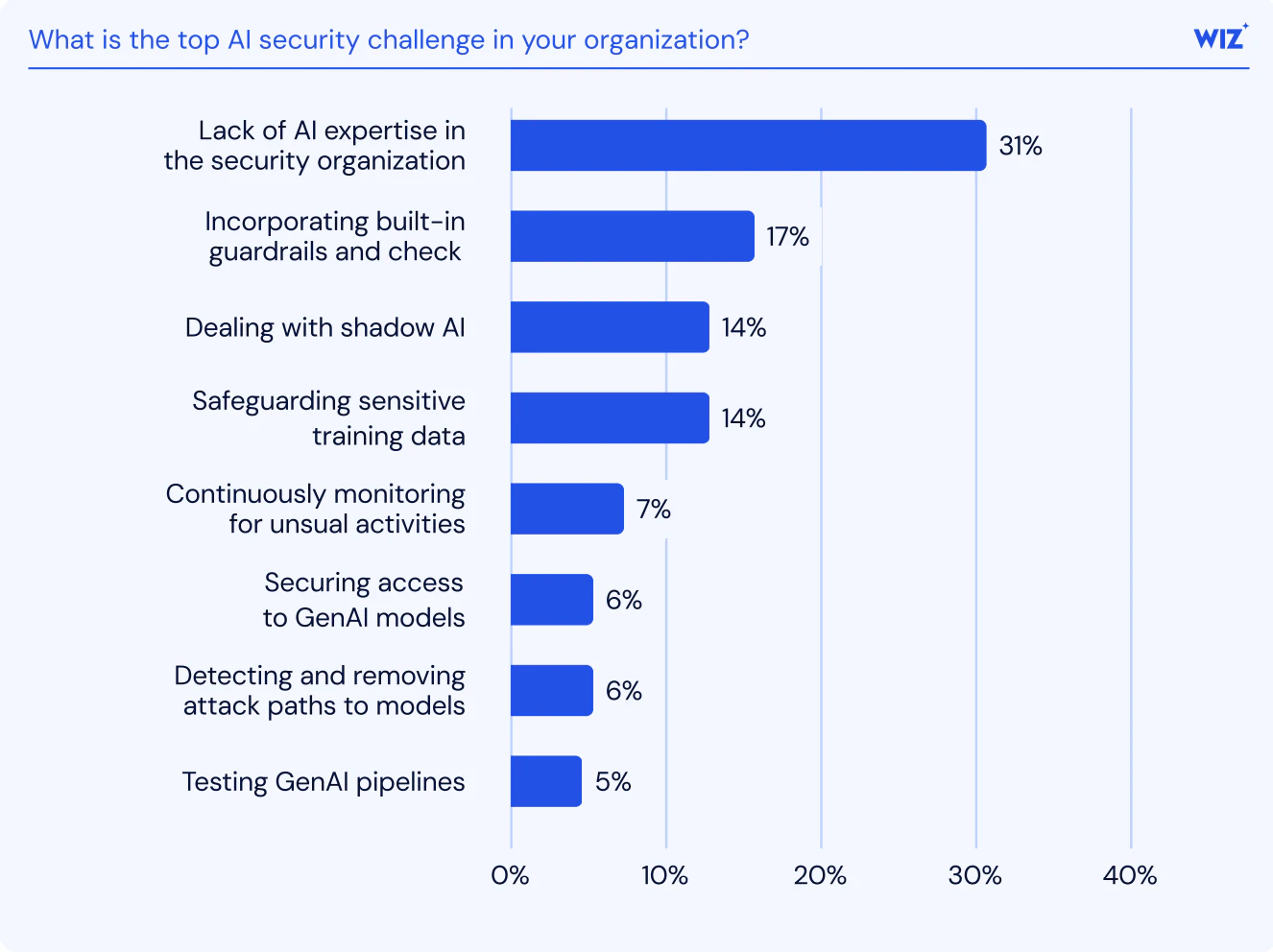
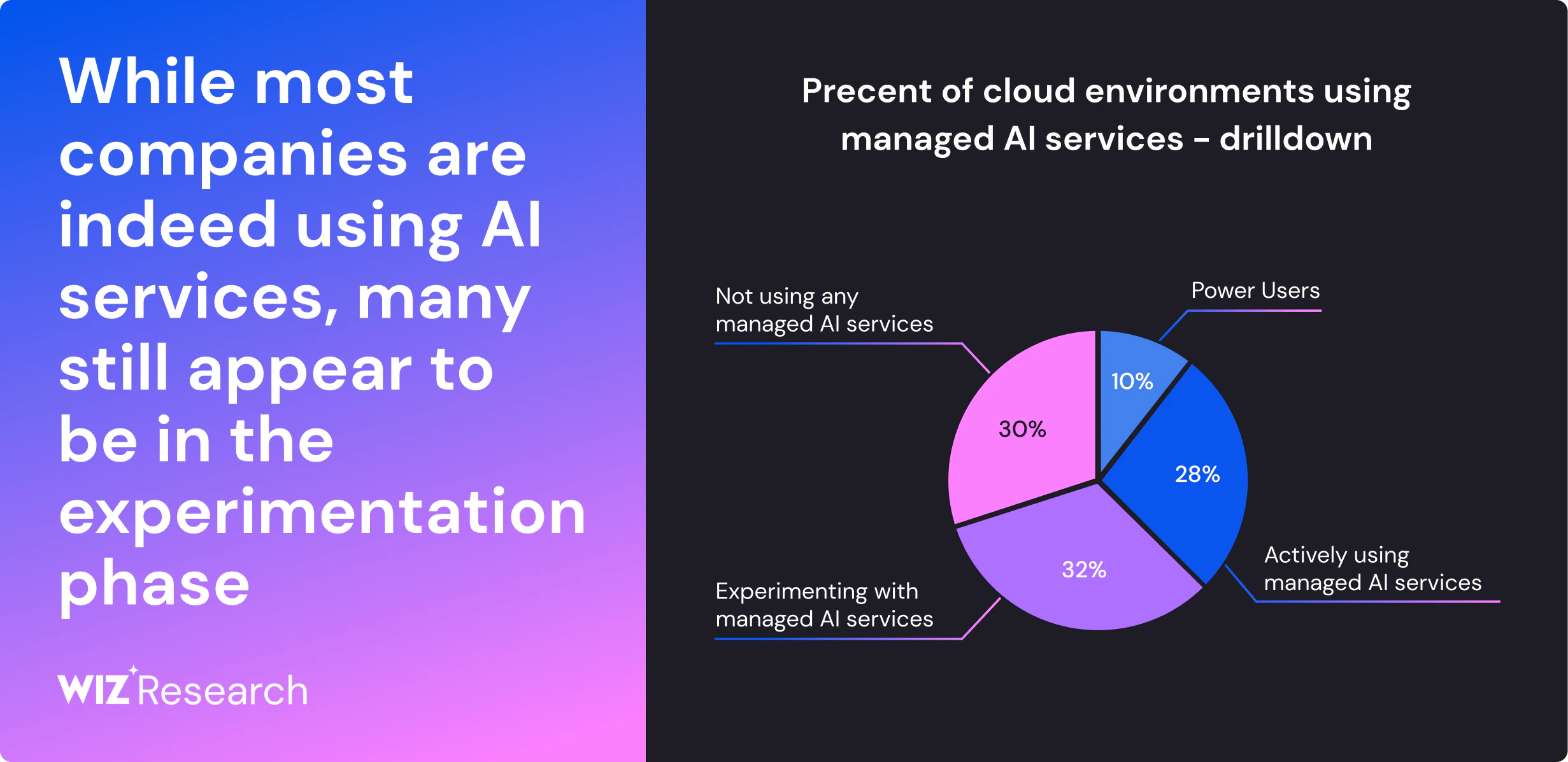
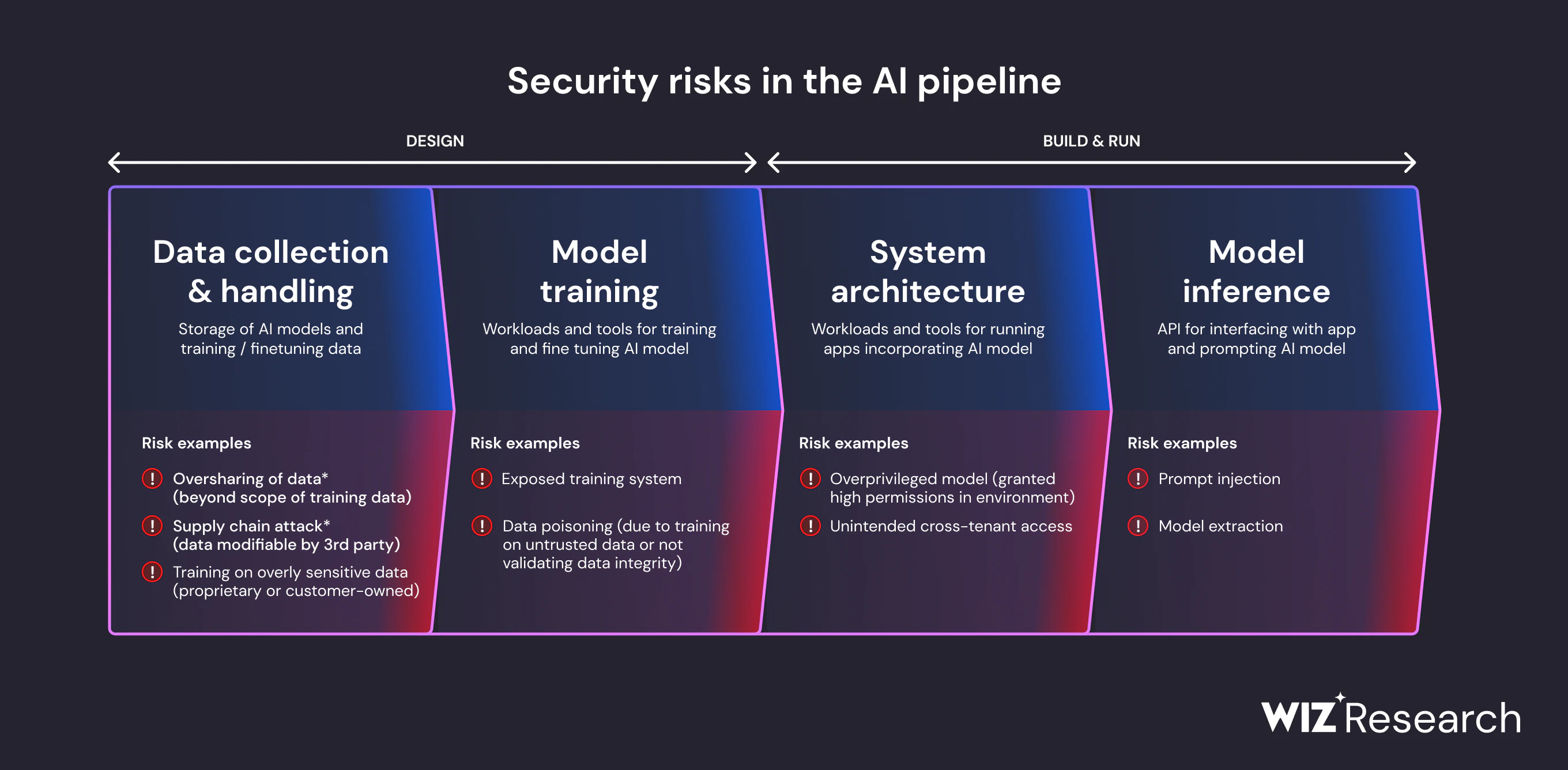
Aside from cybersecurity, businesses also use AI (especially GenAI) for various mission-critical cloud operations. Our research reveals that 70% of enterprises use cloud-based managed AI services such as Azure AI services, Azure OpenAI, Amazon SageMaker, the Azure ML studio, Google Cloud's Vertex AI, and GCP AI Platform. According to Wiz's State of AI in the Cloud 2025 report, 75% of organizations use self-hosted AI models in their cloud environments. All of these AI models, workflows, and pipelines are vulnerable to dark AI attacks.
Dark AI amplifies traditional cyber threats in ways that make conventional security measures insufficient:
Machine-speed attacks: Dark AI deploys malicious code at unprecedented speeds, overwhelming traditional defense mechanisms that rely on human response times.
Automated attack scaling: Threat actors can now launch bulk attacks without manual intervention, making previously resource-intensive operations accessible to any adversary.
Hyper-realistic social engineering: AI generates convincing emails and communications that bypass human detection, making traditional security awareness training less effective.
AI system manipulation: Adversaries corrupt training data in mission-critical AI applications through prompt injection attacks, potentially gaining control over enterprise systems.
Adaptive threat evasion: Dark AI continuously analyzes and adapts to security measures, creating a constant arms race that requires continuous defense evolution.
Multimedia deception: AI-generated deepfakes, voice clones, and synthetic media bypass authentication systems and damage organizational reputation. Real-life example: In April 2024, a hacker attempted to trick a LastPass employee by impersonating the company's CEO on a WhatsApp call. This was done by using an AI-generated audio deepfake, and this attack is just one of many examples where adversaries generate realistic audio (and/or photos) to bypass security mechanisms and trick employees.
Democratized cybercrime: Dark AI lowers the technical barrier for attacks, enabling anyone with basic resources to launch sophisticated cyber operations.
100 Experts Weigh In on AI Security
Learn what leading teams are doing today to reduce AI threats tomorrow.

Real-world tools for dark AI attacks
Dark AI tools fall into two categories: purpose-built malicious platforms and legitimate AI tools weaponized by threat actors. Understanding both types helps organizations recognize potential threats in their environment.
Most dark AI attacks repurpose existing legitimate tools rather than using custom-built malicious software. This makes detection more challenging since the underlying technology appears benign.
| Tool | Description |
|---|---|
| FraudGPT | FraudGPT is a malicious mirror of ChatGPT that’s available through dark web marketplaces and social media platforms like Telegram. FraudGPT can help adversaries write malicious code, compose phishing messages, design hacking tools, create undetectable malware, and identify the most viewed or used websites and services. |
| AutoGPT | AutoGPT is an open-source tool that hackers use for malicious purposes. While not inherently destructive, AutoGPT allows threat actors to establish malicious end goals and train models to self-learn to achieve those goals. With tools like AutoGPT, threat actors can attempt thousands of potentially destructive prompts that involve breaching an enterprise’s defenses, accessing sensitive data, or poisoning GenAI tools and training data. |
| WormGPT | Another nefarious cousin of ChatGPT, WormGPT has none of the guardrails and security measures that its GPT-3-based architecture originally featured. Hackers trained WormGPT with a vast amount of cyberattack- and hacker-related training data, making it a powerful weapon against unsuspecting enterprises. |
| PoisonGPT | PoisonGPT is a unique dark AI tool because threat actors didn’t create it. Instead, PoisonGPT was an educational initiative conducted by researchers to reveal the vulnerabilities of large language models (LLMs) and the potential repercussions of poisoned LLMs and a compromised AI supply chain. By poisoning the training data of LLMs leveraged by enterprises, governments, and other institutions with PoisonGPT-esque tools and techniques, threat actors can cause unimaginable damage. |
| FreedomGPT | FreedomGPT is an open-source tool that anyone can download and use offline. Because it doesn’t feature any of the guardrails or filters that its more mainstream cousins have, FreedomGPT is unique. Without these filters, threat actors can weaponize FreedomGPT with malicious training data. This makes it easy for threat actors to spread or inject misinformation, biases, dangerous prompts, or explicit content into an enterprise’s IT environment. |
Best practices to mitigate dark AI threats
Defending against dark AI requires a multi-layered approach that secures AI systems while maintaining their operational benefits. Effective protection combines specialized AI security tools with enhanced traditional cybersecurity measures.
Leverage MLSecOps tools
MLSecOps, also known as AISecOps, is a field of cybersecurity that involves securing AI and ML pipelines. While a unified cloud security platform is the ideal solution to battle dark AI and other cyber threats, businesses should also explore augmenting their security stack with MLSecOps tools like NB Defense, Adversarial Robustness Toolbox, Garak, Privacy Meter, and Audit AI.

Ensure that your DSPM solution includes AI security
For businesses that leverage data security posture management (DSPM), it’s vital to ensure the solution encompasses AI training data. Securing AI training data from dark AI tools keeps AI ecosystems like ChatGPT secure, uncorrupted, and efficient. Businesses that don’t have a DSPM solution must choose a solution that can protect their cloud-based AI training data.
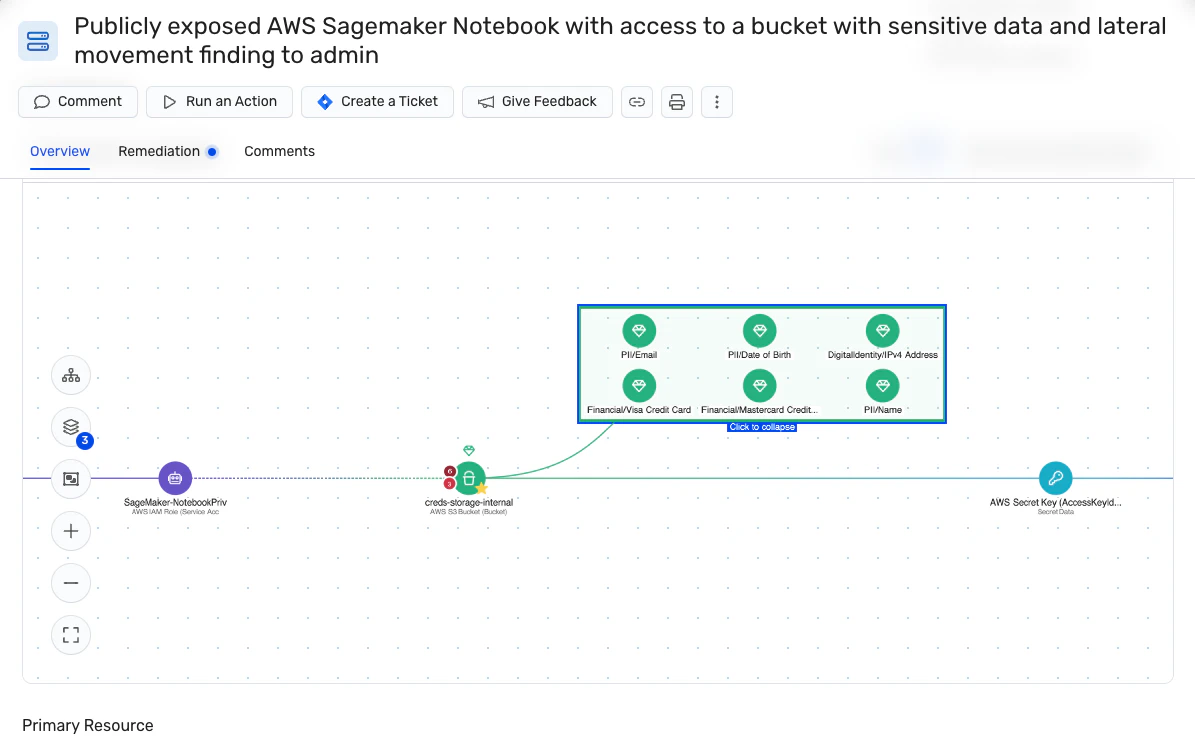
Empower developers with self-service AI security tools
Developer empowerment reduces security bottlenecks by giving development teams direct visibility into AI pipeline security. This distributed approach enables faster threat detection and remediation without waiting for centralized security team intervention.
Self-service AI security tools like dashboards and attack path analyzers allow developers to monitor, maintain, and optimize AI pipelines independently while maintaining security standards.


Optimize tenant architectures for GenAI services
Tenant architecture determines how AI services isolate data and processing between different users or applications. The right architecture prevents cross-tenant data exposure and limits attack blast radius.
Shared multi-tenant architectures work well for foundational models where data isolation is less critical. Dedicated tenant architectures provide stronger security for user-fine-tuned models that process sensitive data.
Shine a light on shadow AI
Shadow AI encompasses any AI tool operating in your environment without IT or security team knowledge. These unmanaged AI systems create security blind spots that threat actors can exploit without encountering protective controls.
Unmonitored AI tools present ideal targets for dark AI attacks since they lack security oversight, monitoring, or protective measures. Identifying and inventorying all AI systems becomes critical for comprehensive security coverage.
State of AI in the Cloud [2025]
Did you know that over 70% of organizations are using managed AI services in their cloud environments? That rivals the popularity of managed Kubernetes services, which we see in over 80% of organizations! See what else our research team uncovered about AI in their analysis of 150,000 cloud accounts.

Test AI applications in sandbox environments
Sandbox testing isolates AI applications from production systems while security teams analyze their behavior for malicious code or unexpected actions. This controlled environment reveals vulnerabilities before they can impact live systems.
AI-specific testing examines model behavior, data handling, and integration points that traditional application testing might miss. This comprehensive analysis identifies security gaps that threat actors could exploit in production environments.
Battle dark AI with a unified cloud security solution
There are countless security tools to choose from for protection against dark AI. However, the most comprehensive and efficient way enterprises can keep AI pipelines safe from dark AI threats is by commissioning a unified cloud security solution: A unified platform empowers you to view AI security and AI risk management from a larger cybersecurity perspective and unify your cybersecurity fortifications.

How Wiz can protect you from dark AI
Wiz AI-SPM (AI Security Posture Management) is a comprehensive security solution designed to help organizations manage and secure their AI environments. It provides full visibility into AI pipelines, identifies misconfigurations, and protects against various AI-related risks.
Wiz AI-SPM can help mitigate the threat of dark AI in several key ways:
Full-Stack Visibility: AI-SPM provides comprehensive visibility into AI pipelines through its AI-BOM (Bill of Materials) capabilities. This allows security teams to:
Identify all AI services, technologies, libraries, and SDKs in the environment without using agents.
Detect new AI services introduced into the environment immediately.
Flag different technologies as approved, unwanted, or unreviewed.
This visibility is crucial for uncovering shadow AI and potentially malicious AI systems that may be operating without authorization.
Misconfigurations Detection: Wiz AI-SPM helps enforce AI security baselines by identifying misconfigurations in AI services. It provides built-in configuration rules to assess AI services for security issues, such as:
SageMaker notebooks with excessive permissions
Vertex AI Workbench notebooks with public IP addresses
By detecting these misconfigurations, organizations can reduce vulnerabilities that could be exploited by dark AI.
Attack Path Analysis: Wiz extends its attack path analysis to AI, assessing risks across vulnerabilities, identities, internet exposures, data, misconfigurations, and secrets. This allows organizations to:
Proactively remove critical AI attack paths
Understand the full context of risks across cloud and workload
Prioritize and address the most critical AI security issues
Data Security: Wiz AI-SPM extends Data Security Posture Management (DSPM) capabilities to AI. This helps:
Automatically detect sensitive training data.
Ensure the security of AI training data with out-of-the-box DSPM AI controls
Identify and remove attack paths that could lead to data leakage or poisoning
AI Security Dashboard: Wiz offers an AI security dashboard that provides a prioritized queue of AI security issues. This helps AI developers and data scientists quickly understand their AI security posture and focus on the most critical risks.
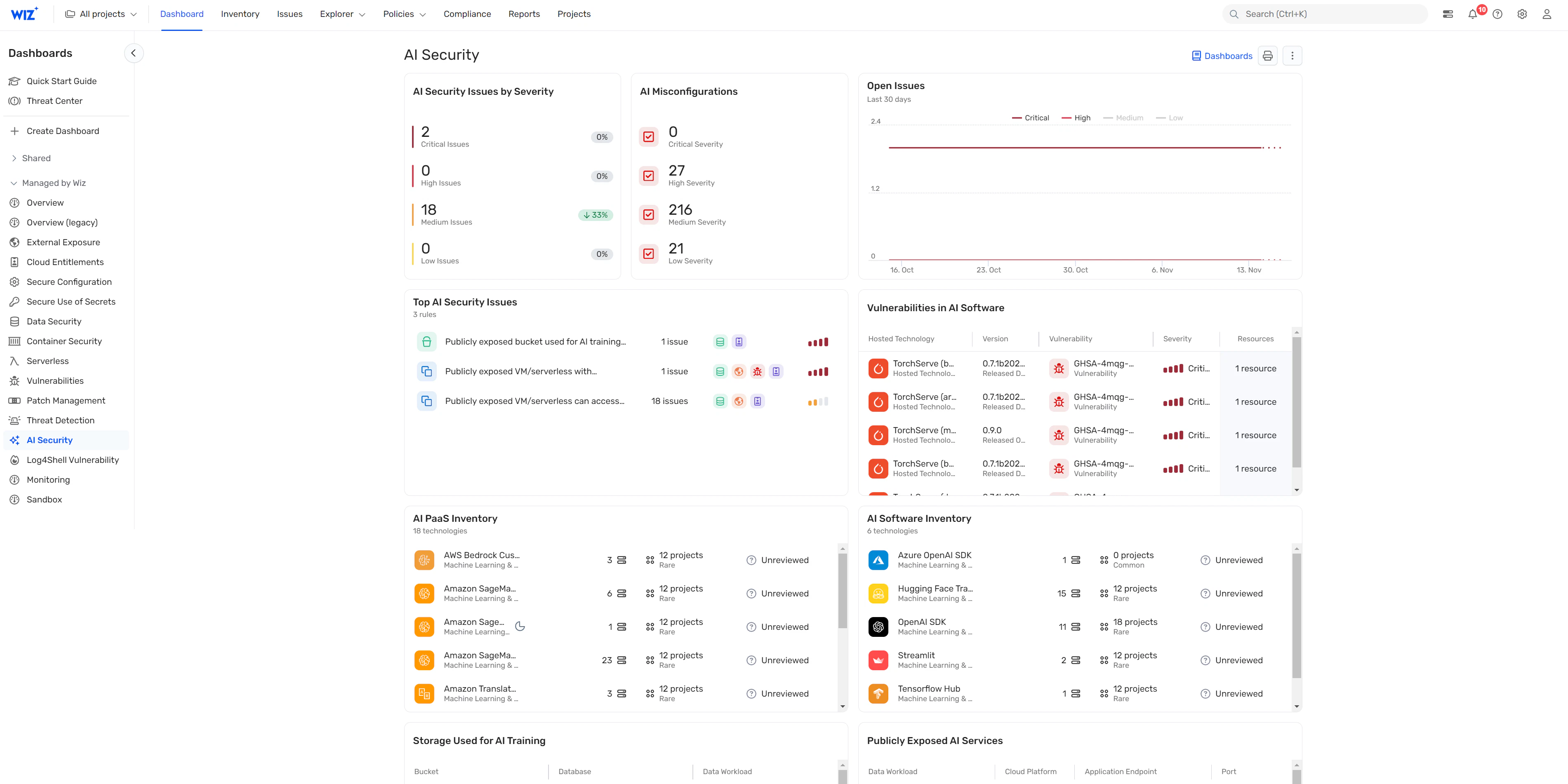
By implementing these capabilities, Wiz AI-SPM helps organizations maintain a strong security posture for their AI systems, making it much more difficult for dark AI to operate undetected within the environment. The comprehensive visibility, continuous monitoring, and proactive risk mitigation features work together to reduce the attack surface and minimize the potential for unauthorized or malicious AI activities.
Orange builds many Generative AI services using OpenAI. Wiz’s support for Azure OpenAI Service gives us significantly improved visibility into our AI pipelines and allows us to proactively identify and mitigate the risks facing our AI development teams.
Steve Jarrett, Chief AI Officer, Orange
Accelerate AI Innovation, Securely
Learn why CISOs at the fastest growing companies choose Wiz to secure their organization's AI infrastructure.
