
What is a Deputy CISO?
A Deputy CISO is a senior security leadership role that serves as the CISO's operational partner, typically owning day-to-day program execution while the CISO handles strategic and board-level responsibilities. This role exists because modern security programs have grown too complex for a single leader to manage effectively. Someone needs to run the machine while the CISO focuses on organizational influence and risk communication.
The Deputy CISO is not simply a backup or stand-in for the CISO. This is an active operational leader with distinct responsibilities, decision-making authority, and accountability for security program delivery. When the CISO is presenting to the board or negotiating with executive leadership, the Deputy CISO keeps programs moving forward and teams aligned.
Title variations exist across organizations. You might see Deputy Chief Information Security Officer, Associate CISO, or VP/Head of Security Operations (in organizations that don't use "Deputy" titles). Regardless of the specific title, the core function remains consistent: translating security strategy into operational reality across enterprise risk management and security program management.
The Board-Ready CISO Report Deck
Present your cloud security strategy like a business leader. This editable template helps you communicate risk, impact, and priorities in language your board will understand—so you can gain buy-in and drive action.

Why organizations are creating Deputy CISO roles
Legacy security structures assumed one CISO could oversee all security domains. That assumption no longer holds. Modern cloud-native environments have multiplied security touchpoints, increasing the number of control planes, identities, and services security teams must govern. Today's CISO owns application security, cloud security, security operations, AI governance, data security, and compliance simultaneously—domains that barely existed a decade ago. Cloud security posture management, container security, infrastructure-as-code scanning, and AI security governance (63% lack AI governance policies) have all emerged as distinct responsibilities requiring dedicated focus.
Regulatory pressure compounds this expansion. Maintaining compliance with SOC 2, HIPAA, PCI DSS, and GDPR requires continuous attention to evidence collection, control mapping, and audit coordination. Board communication has also intensified, with CISOs spending increasing time translating technical risk into business terms for executives and directors. The convergence of these responsibilities under one executive creates an impossible workload without operational lieutenants.
CISO burnout and turnover have driven this shift (66% say role is more stressful than five years ago). Organizations recognize that concentrating all security leadership in one person creates significant risk. Deputy CISOs provide business continuity insurance, serve as proving grounds for future CISO candidates, and maintain operational stability during leadership transitions. They fill execution gaps by managing programs, teams, and tools on a daily basis while enabling sustainable workloads for security leadership.
CISO Job Description Example
CISO job description: Duties, responsibilities, and skills for a Chief Information Security Officer, covering risk, GRC, incident response, and cloud security.
Read more

Core responsibilities of a Deputy CISO
Responsibilities vary by organization size, industry, and cloud maturity. Common domains include operational program management, cloud security oversight, compliance coordination, incident response, and cross-functional collaboration. The specific mix depends on what the CISO chooses to delegate versus retain.
In cloud-first organizations, this role succeeds when it can connect risk across cloud, identity, and application delivery into one shared view, so engineering teams can fix what matters without waiting on security to manually correlate findings across disconnected tools.
Operational program management
Deputy CISOs typically own day-to-day security operations, including vendor relationships, team management, and program execution. This means managing security tool portfolios, procurement decisions, and budgets that fund security initiatives.
Beyond tools and vendors, the role encompasses security awareness training and organizational security culture. Deputy CISOs track program metrics, measure security posture improvements, and report operational status to the CISO. They turn strategic objectives into measurable outcomes.
Cloud and application security oversight
Modern Deputy CISOs often own cloud security posture management, application security programs, and DevSecOps enablement. This includes bridging infrastructure and development teams to embed security into CI/CD pipelines without slowing delivery.
Container security, Kubernetes security, and infrastructure-as-code scanning programs fall under this umbrella. Vulnerability management across cloud workloads requires coordination with engineering teams to meet remediation SLAs while maintaining development velocity.
CISO interview questions - top questions for hiring managers
CISO interview questions for hiring leaders: Strategic, cloud, incident, and leadership prompts with red flags and what to look for for CEOs and boards.
Read more

Compliance and audit coordination
Deputy CISOs manage compliance frameworks like SOC 2, ISO 27001, HIPAA, and PCI DSS by translating audit findings into actionable remediation plans. This involves coordinating with GRC teams to maintain continuous compliance posture rather than scrambling before audits.
Preparing evidence and documentation for external audits consumes significant time. The Deputy CISO ensures security controls map to regulatory requirements across cloud environments and that documentation remains current as systems evolve.
Incident response leadership
When security events occur, the Deputy CISO often serves as incident commander or manages the operational response while the CISO handles executive communication. This includes coordinating cross-functional response teams and making tactical decisions under pressure.
Post-incident reviews and lessons learned implementation also fall to the Deputy CISO. Managing relationships with external incident response partners and forensics teams requires both technical understanding and vendor management skills.
How to write a chief information security officer (CISO) resume
CISO resume example with a modern executive summary, quantified wins, and ATS keywords for cloud, DevSecOps, CNAPP, AI security, and board reporting.
Read more

Cross-functional collaboration
Deputy CISOs bridge security, engineering, legal, and business units by translating technical risk into business impact. They work with development teams to implement security guardrails without creating friction that slows product delivery.
Communicating security priorities to non-technical stakeholders requires different skills than explaining vulnerabilities to engineers. The Deputy CISO aligns security initiatives with business objectives and growth plans, ensuring security enables rather than blocks the organization.

Deputy CISO vs. CISO: Key differences
Understanding the distinction between these roles helps organizations structure security leadership effectively. The CISO focuses on strategy, board communication, and enterprise risk, while the Deputy CISO focuses on execution, team management, and program delivery.
| Dimension | CISO | Deputy CISO |
|---|---|---|
| Primary focus | Strategy, board communication, enterprise risk | Operational execution, program management |
| Board exposure | Regular presentations | Limited or indirect |
| Budget authority | Final approval | Day-to-day management, recommendations |
| Team management | Leadership oversight | Direct team management |
| Incident role | Exec comms lead | Operational lead |
In some organizations, these roles overlap significantly. In others, they are clearly delineated with distinct responsibilities. The Deputy CISO typically reports to the CISO, though some organizations have the Deputy report to a CIO or CTO depending on security leadership structure.
Essential skills and qualifications for Deputy CISOs
Deputy CISOs need a blend of technical depth, leadership capability, and business communication skills that distinguish them from purely technical security roles.
Technical competencies
Cloud security architecture across major providers like AWS, Azure, and GCP forms the foundation. Deputy CISOs need fluency in identity and access management, including cloud entitlements, least privilege enforcement, and effective-permission analysis (often supported by CIEM capabilities).
Application security fundamentals matter, including secure SDLC practices and DevSecOps integration. Detection and response capabilities through SIEM, SOAR, and cloud-native threat detection round out the technical requirements. Modern Deputy CISOs need experience with unified cloud security platforms and graph-based risk analysis, not just traditional GRC tooling. AI security awareness has become increasingly important as organizations adopt AI workloads requiring governance frameworks.
Leadership and communication skills
Executive communication tops the list. Deputy CISOs must translate technical risk into business terms for leadership and board audiences who lack security backgrounds. Cross-functional influence means building relationships with engineering, legal, and business teams without direct authority over those groups.
Program management skills enable running complex, multi-workstream security initiatives across distributed teams. Team development involves hiring, mentoring, and retaining security talent in a competitive market with a global workforce gap of 4.76 million. Conflict resolution skills help mediate between security requirements and business velocity when priorities collide.
Certifications and experience
Common certifications include CISSP, CISM, CCSP, and cloud-specific credentials like AWS Security Specialty, Azure Security Engineer, or GCP Professional Cloud Security Engineer. The typical experience profile involves 10+ years in security with 5+ years in leadership or management roles.
Hands-on cloud security experience is increasingly valued over traditional certifications alone. M&A experience and multi-cloud expertise serve as differentiators for enterprise deputy CISO jobs.
Deputy CISO salary expectations
Compensation varies significantly by geography, industry, company size, and security scope. Financial services, healthcare, and technology sectors typically pay at the higher end due to regulatory burden and data sensitivity.
| Experience Level | Typical Salary Range (USD) |
|---|---|
| Entry-level Deputy CISO | $180K–$220K |
| Mid-career | $220K–$280K |
| Enterprise/Fortune 500 | $280K–$350K+ |
Total compensation often includes bonuses, equity, and benefits beyond base salary. Geographic location significantly impacts ranges, with major tech hubs commanding premiums.
Career path: How to become a Deputy CISO
There is no single path to Deputy CISO, but common routes share a combination of technical depth, leadership experience, and demonstrated program ownership.
Common entry routes
From Security Director: Natural progression after demonstrating enterprise-wide impact beyond a single domain.
From VP of Engineering Security: Transitioning from development-focused security to broader enterprise scope.
From Head of GRC: Expanding from compliance focus to operational security leadership.
From Principal Security Architect: Moving from technical design to program leadership and team management.
Internal promotion is common, but external hires bring fresh perspectives and diverse experience that organizations value.
Skills to develop
Strategic thinking connects security initiatives to business outcomes rather than treating security as a cost center. Board-level communication means presenting risk in terms executives understand without oversimplifying technical realities.
Cross-domain security fluency involves understanding cloud, application, identity, and data security holistically rather than as isolated specialties. Unified platform expertise demonstrates ability to consolidate tooling and reduce complexity. Financial acumen enables managing budgets and demonstrating security ROI.
Career progression
CISO promotion represents the most common path, either at the current organization or by moving to a smaller company as first CISO. Lateral moves to larger organizations offer another route, stepping into Deputy CISO at a more complex enterprise.
Consulting and vCISO work allows experienced Deputy CISOs to advise multiple organizations. Board advisory roles provide opportunities to serve on boards or advisory committees for security-focused companies.
Deputy CISO can also be a destination role, not just a stepping stone. Some practitioners prefer operational leadership over strategic and board responsibilities, finding satisfaction in program execution rather than executive communication.
Wiz's approach to enabling security leadership
Wiz can serve as an operational backbone for Deputy CISOs executing across cloud, code, and runtime, especially when the goal is to replace manual correlation with shared context. The unified CNAPP consolidates CSPM, CWPP, CIEM, DSPM, and CDR into a single platform, eliminating the tool sprawl that creates operational burden.
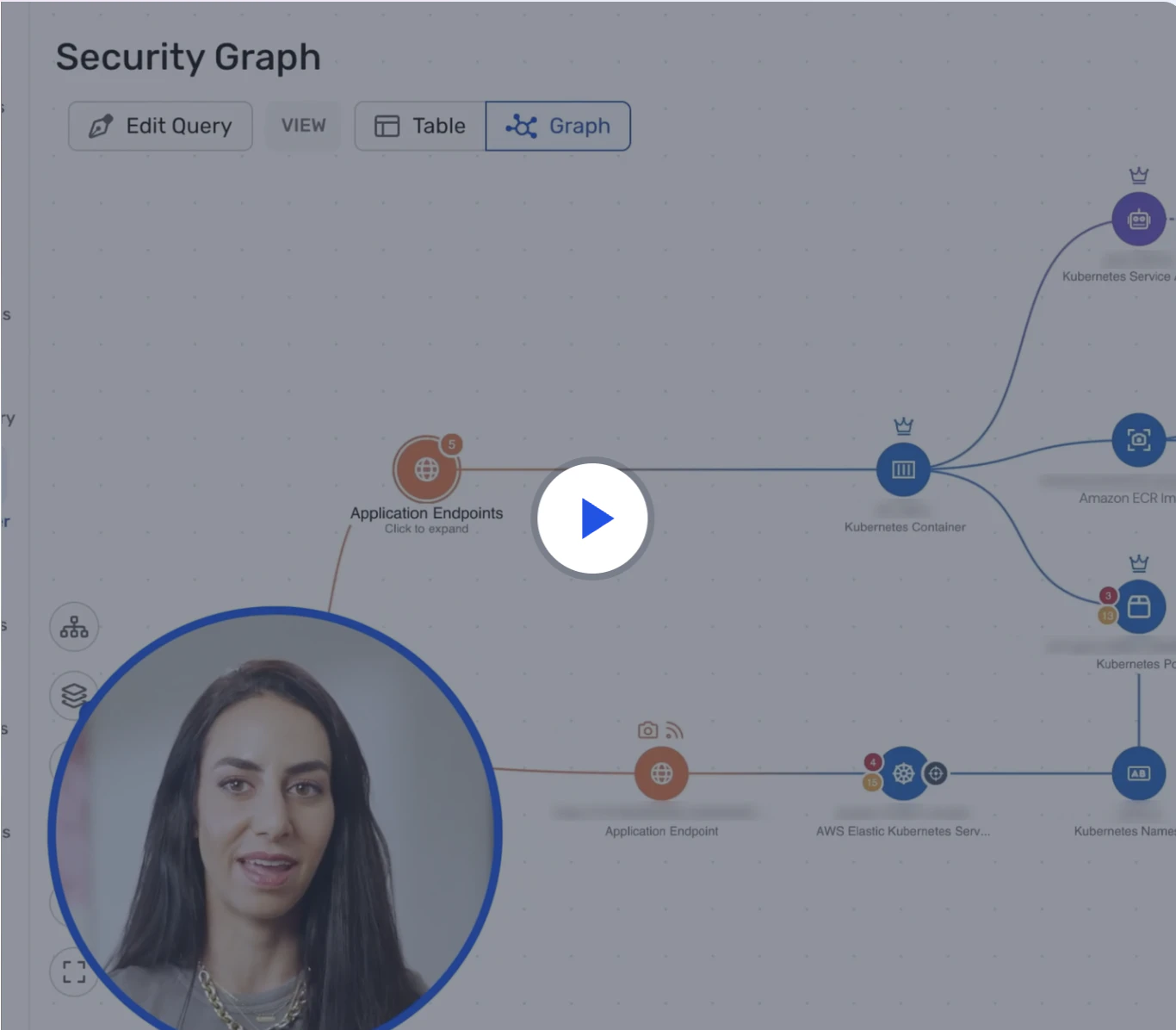
The Security Graph provides executive-ready visibility. Deputy CISOs can show CISOs and boards exactly where risk exists and why it matters through visual attack path analysis. Risk-based prioritization through toxic combinations identifies where vulnerabilities, exposures, identity risks, and sensitive data intersect to create exploitable paths.
Coverage spans AppSec through Wiz Code, CloudSec through Wiz Cloud, AI-SPM for emerging AI workloads, and detection and response through Wiz Defend. This matches the expanded scope of modern Deputy CISO responsibilities across security domains.
Wiz helps Deputy CISOs bridge teams effectively. Developers see their own risks and can remediate directly while security maintains oversight without creating bottlenecks. This self-service model accelerates remediation while preserving accountability.
Wiz has helped build credibility for risk remediation, because it has such a low level of false positives. I don’t think we’ve ever had a false positive for a critical or high-risk. That’s not true for other CSPM solutions, even though they have access to the same data.
Alex Shuchman, CISO, Colgate-Palmolive
Get a demo to see how unified cloud, code, and runtime context can help security leaders operationalize strategy and prioritize real risk.
A single platform for everything cloud security
Learn why CISOs at the fastest companies choose Wiz to secure their cloud environments.
