
What to look for in a CISO interview?
Hiring an effective CISO requires looking beyond technical credentials. The role has evolved from a technical gatekeeper who says "no" to a business risk advisor who enables innovation. You want candidates who understand that their job is to help the company move fast safely, balancing security requirements with the need for speed and agility in a digital-first world.
Look for leaders who translate complex security concepts into clear business language. A strong candidate explains risk in terms of revenue, reputation, and resilience rather than vulnerabilities and patches. They should demonstrate the ability to connect security investments to tangible business outcomes, ensuring that every dollar spent on defense supports the company's broader goals.
Strong CISOs understand the context their programs operate in, including business objectives, risk tolerance, and the competitive landscape. This business-aware mindset distinguishes leaders who build sustainable security programs from those who simply enforce compliance frameworks.
The Board-Ready CISO Report Deck
Present your cloud security strategy like a business leader. This editable template helps you communicate risk, impact, and priorities in language your board will understand—so you can gain buy-in and drive action.

Strategic vision and business alignment questions
These questions reveal whether a candidate thinks like a business leader who specializes in risk, or purely as a technical practitioner isolated from the company's mission.
1. "How would you align our security strategy with business objectives?"
What you learn: Tests understanding of revenue drivers, risk tolerance, and competitive landscape.
Strong answers include: Discusses how security supports specific business initiatives, such as entering new markets or launching new digital products. Articulates a strategy where security acts as a differentiator that builds customer trust, rather than just a cost center.Asks clarifying questions about the company's upcoming product roadmap or financial goals before answering.
Red flags: Focuses exclusively on compliance frameworks like ISO 27001 or SOC 2 without mentioning the specific business context. While frameworks are important, they are tools, not strategies.
2. "What would your first 90 days look like, and how would you prioritize?"
What you learn: Reveals structured thinking and ability to balance relationship-building with technical assessment.
Strong answers include: Outlines a plan to map stakeholders, understand the current threat landscape, and identify "quick wins" that demonstrate value without disrupting ongoing operations. Focuses on understanding the "ground truth" of the environment rather than promising to fix everything immediately.
Red flags: Leads with specific tool purchases or technology overhauls before assessing the organization's specific needs. This often indicates a reliance on a "playbook" rather than a tailored strategy.
3. "How do you make the case for security investments to a skeptical board?"
What you learn: Tests communication skills and business acumen.
Strong answers include: References risk quantification, framing security gaps in terms of potential financial loss, citing figures from the FBI's annual Internet Crime Report showing cybercrime losses in the billions annually, or operational downtime. Discusses using peer benchmarking to show how the organization compares to competitors, making the abstract concept of "risk" concrete for financial decision-makers.
Red flags: Complains about boards "not getting it" or relies on Fear, Uncertainty, and Doubt (FUD) to scare executives into spending. Effective leaders adapt their communication style to their audience, using data and business logic to build a compelling narrative for investment.

4. "How do you measure the success of a security program?"
What you learn: Reveals ability to connect security metrics to business outcomes.
Strong answers include: Discusses leading indicators that show proactive improvement, such as mean time to remediate vulnerabilities (MTTR), the percentage of coverage gaps closed, or the rate of developer adoption of secure coding practices. Connects these metrics to business outcomes, such as how reducing security review time helps engineering ship features faster.
Red flags: Focuses exclusively on compliance checkboxes without discussing operational health or business impact.
How to write a chief information security officer (CISO) resume
CISO resume example with a modern executive summary, quantified wins, and ATS keywords for cloud, DevSecOps, CNAPP, AI security, and board reporting.
Read more

Cloud security and architecture questions
Cloud-native fluency is now table stakes for CISOs, not a nice-to-have specialty. These questions separate leaders who understand the dynamic nature of modern infrastructure from those still applying perimeter-based thinking to distributed cloud environments.
5. "How would you approach security in a multi-cloud environment?"
What you learn: Tests understanding of unified visibility and consistent policy enforcement.
Strong answers include: Emphasizes the need for unified visibility and consistent policy enforcement across all platforms. Discusses the complexity of the shared responsibility model and how they ensure that security standards are applied whether a workload runs in AWS, Azure, or Google Cloud. Addresses the challenge of tool sprawl and siloed security data.
Red flags: Treats each cloud as a separate security domain without a strategy for integration. This approach leads to operational inefficiencies and blind spots that attackers can exploit.
6. "What is your philosophy on risk prioritization when you have hundreds of findings?"
What you learn: Assesses understanding of risk-based prioritization and attack path thinking.
Strong answers include: Moves beyond simple CVSS scores and discusses "attack path" thinking, evaluating whether a vulnerability is actually exposed to the internet and whether the identity associated with it has high privileges. Explains that not all vulnerabilities are created equal; a critical vulnerability on a private, disconnected test server is less urgent than a medium vulnerability on an exposed production database. In practice, CISOs should expect teams to evaluate exploitability context: Is the vulnerable resource exposed to the internet? What sensitive data can it access? What effective permissions does the associated identity have? Does an actual attack path exist from external exposure to crown-jewel data? Strong candidates describe prioritization frameworks that combine these factors rather than relying solely on CVSS severity scores.
Red flags: Treats all alerts equally or cannot articulate how they help teams focus on the critical few issues that matter.
CISO Job Description Example
CISO job description: Duties, responsibilities, and skills for a Chief Information Security Officer, covering risk, GRC, incident response, and cloud security.
Read more

7. "How do you handle the security challenges of infrastructure as code and CI/CD pipelines?"
What you learn: Tests understanding of shift-left security and modern developer workflows.
Strong answers include: Discusses embedding security checks directly into the CI/CD pipeline so that misconfigurations are caught before deployment. Emphasizes that security must run at the speed of code, ensuring that checks do not block deployment velocity. Describes a single policy standard carried from code to pipeline to cloud runtime. When security policies fragment across different tools and stages, exceptions proliferate and enforcement becomes inconsistent. Strong candidates articulate how they maintain policy coherence so that a misconfiguration blocked in the pipeline doesn't somehow appear in production through a different deployment path.
Red flags: Views CI/CD security as someone else's problem or focuses entirely on post-deployment scanning. A modern CISO understands that securing the software supply chain and the build pipeline is just as critical as securing the runtime environment.
8. "What is your approach to identity and access management in the cloud?"
What you learn: Assesses understanding of identity and entitlement management as the new perimeter.
Strong answers include: Describes the importance of least privilege, rigorous service account management, and cross-cloud identity correlation. Discusses remediation approaches that reduce permissions based on actual usage rather than theoretical roles.
Red flags: Lacks practical experience with the challenges of overprivileged access or cannot articulate concrete remediation strategies.
9. "How do you validate logging and telemetry coverage across cloud accounts and Kubernetes clusters?"
What you learn: Tests understanding of observability as a security foundation.
Strong answers include: Discusses audit logging requirements (CloudTrail, Azure Activity Logs, GCP Audit Logs), Kubernetes audit policies, and methods for detecting coverage gaps. Articulates how incomplete logging creates blind spots during incident investigation.Describes systematic approaches: automated coverage checks, baseline requirements for new accounts/clusters, and integration with security monitoring.
Red flags: Treats logging as an infrastructure team responsibility without security oversight.
10. "What is your stance on agentless versus agent-based security coverage, and where do you draw the line?"
What you learn: Tests nuanced understanding of security architecture tradeoffs.
Strong answers include: Recognizes that agentless approaches provide rapid deployment and broad coverage without operational overhead, while agent-based solutions offer deeper runtime visibility and real-time protection. Articulates a risk-based framework: agentless for broad posture management and vulnerability assessment, agent-based for high-value workloads requiring runtime protection.
Red flags: Dogmatic answers that dismiss either approach entirely.
11. "How do you prevent identity sprawl and long-lived credentials in CI/CD pipelines?"
What you learn: Assesses understanding of pipeline security as a critical attack vector.
Strong answers include: Discusses workload identity federation, short-lived tokens, secrets management integration (HashiCorp Vault, AWS Secrets Manager, Azure Key Vault), and automated credential rotation. Understands that long-lived service account keys in repositories represent significant breach risk.Describes practical experience implementing OIDC federation for GitHub Actions, GitLab CI, or similar platforms.
Red flags: Unfamiliar with modern identity patterns or relies solely on secrets scanning as a control.

Incident response and crisis management questions
Incident handling reveals how a leader performs under pressure and how effectively they communicate. Past behavior during crises is often the best predictor of future performance.
12. "Walk me through how you would handle a major breach notification."
What you learn: Tests crisis leadership and cross-functional coordination.
Strong answers include: Covers the full spectrum of incident response: technical containment, legal consultation, stakeholder management, and public communication. Demonstrates calm decision-making and clear ownership of the process. Balances the need for transparency with the need to verify facts before communicating.
Red flags: Focuses solely on the technical aspects of containment without addressing the business and reputational fallout. A CISO must lead the coordination between legal, PR, and executive teams, ensuring that the organization speaks with one voice during a crisis.
13. "Describe a security incident you managed. What would you do differently?"
What you learn: Tests self-awareness and continuous improvement mindset.
Strong answers include: Owns mistakes and articulates specific lessons learned that improved their program. Focuses on systemic fixes rather than just the immediate resolution of the event.
Red flags: Blame-shifting to other teams or vendors. A leader who claims they would do "nothing" differently likely lacks the ability to critically reflect on their performance.
14. "How do you communicate with executives and the board during a crisis?"
What you learn: Assesses ability to manage up and communicate clearly under pressure.
Strong answers include: Discusses the frequency of updates, the format of communication, and the specific information executives need to make decisions. Focuses on impacts, timelines, and required actions rather than technical minutiae.
Red flags: Speaking theoretically rather than from experience. Experienced leaders know that executives need confidence and clarity, not a lecture on malware types.

Team leadership and developer collaboration questions
Modern CISOs must build bridges with engineering, not gates. Since security teams are vastly outnumbered by developers, a CISO's success depends on their ability to influence culture rather than just enforce control.
15. "How do you build a security-conscious culture without creating friction?"
What you learn: Tests commitment to enablement over enforcement.
Strong answers include: Discusses meeting developers where they work by integrating tools into IDEs and repositories, rather than forcing them into separate security portals. Articulates how they measure culture change through metrics like the reduction of recurring vulnerability types.
Red flags: Positions security as the "Department of No." A CISO who relies solely on mandates and punishment will likely face resistance and "shadow IT."
16. "How do you recruit and retain security talent in a competitive market?"
What you learn: Reveals understanding of team building and talent development.
Strong answers include: Discusses career development, meaningful work, and avoiding burnout. Explains how they mentor junior talent and create clear growth paths within the organization. Addresses the high stress of security roles and strategies for maintaining team morale.
Red flags: Only managed inherited teams without experience building teams from the ground up.
17. "How do you ensure security does not slow down development velocity?"
What you learn: Tests commitment to DevSecOps principles.
Strong answers include: Discusses automation, self-service security tooling, and "paved road" concepts where the secure way of doing things is also the easiest way. Explains that security should be embedded into workflows rather than bolted on at the end. When security reviews happen continuously, they don't become a bottleneck before launch.
Red flags: Views security and speed as inherently opposed rather than complementary.
AI and emerging technology questions
AI security is a current requirement, not a future consideration. Organizations are rapidly adopting AI services, creating new attack surfaces that CISOs must address immediately.
18. "How would you approach security governance for AI and machine learning systems?"
What you learn: Tests awareness of AI-specific security risks.
Strong answers include: Discusses the need for visibility into AI pipelines, protection of training data, and security for the models themselves. Understands unique risks such as data poisoning, model extraction, and the potential for sensitive data leakage through public AI services.
Red flags: Dismisses AI security as hype or claims it is too early to address. A forward-thinking CISO acknowledges that employees are likely already using AI tools and that governance must catch up to usage. IBM has reported that many organizations still lack formal AI governance programs, making it essential to address shadow AI risks proactively.
19. "What do you see as the biggest security challenges in the next three years?"
What you learn: Assesses strategic foresight and ability to balance emerging threats with fundamentals.
Strong answers include: Discusses the implications of AI-driven attacks, supply chain vulnerabilities, or the evolving regulatory landscape. Balances this with the knowledge that basic hygiene remains the primary defense. Explains why a trend matters to the specific business context, linking emerging tech to practical risk management strategies.
Red flags: Simply reads headlines without understanding the operational implications.
Governance, risk, and compliance questions
Compliance is necessary but insufficient for security. CISOs must balance regulatory requirements with actual risk reduction, ensuring that the organization is not just compliant on paper but secure in practice.
20. "How do you ensure compliance without letting it become a checkbox exercise?"
What you learn: Tests ability to integrate compliance into daily operations.
Strong answers include: Discusses using compliance frameworks as a baseline while focusing on actual security outcomes. Articulates how they automate evidence collection and continuous monitoring to reduce the manual burden of audits. This allows the team to focus on real risk reduction.
Red flags: Treats compliance and security as completely separate programs. A good CISO integrates compliance controls into daily operations so that the organization is "always audit-ready," rather than scrambling before an assessment.
21. "What is your approach to third-party and vendor risk management?"
What you learn: Assesses understanding of supply chain security.
Strong answers include: Discusses how they prioritize vendor reviews based on data access and business criticality, rather than applying a one-size-fits-all approach. Acknowledges that third-party risk is dynamic and requires continuous assessment.
Red flags: Relies solely on theoretical frameworks without practical experience.
22. "How do you handle conflicts between security requirements and business priorities?"
What you learn: Tests negotiation skills and business judgment.
Strong answers include: Discusses finding a middle ground and accepting calculated risks when appropriate. Understands that the business exists to make money, not just to be secure, and that sometimes risk acceptance is the correct business decision.
Red flags: Always defers to the business without explaining the risk, or conversely, insists on absolute security without compromise. A successful CISO acts as a consultant, ensuring leadership makes informed decisions about risk.
How unified cloud security platforms support CISO success
Modern CISOs need platforms that deliver the strategic outcomes these interview questions evaluate. To answer questions about prioritizing risk effectively, CISOs require risk-based prioritization that separates critical exposure from noise. To demonstrate comprehensive understanding of their environment, they need agentless cloud-native visibility that eliminates blind spots.
Developer collaboration is built on shared context. Platforms that integrate into developer workflows help CISOs build the security culture that interviewers look for. Furthermore, addressing the challenges of multi-cloud complexity and incident response requires a unified data model that correlates information across the entire estate.
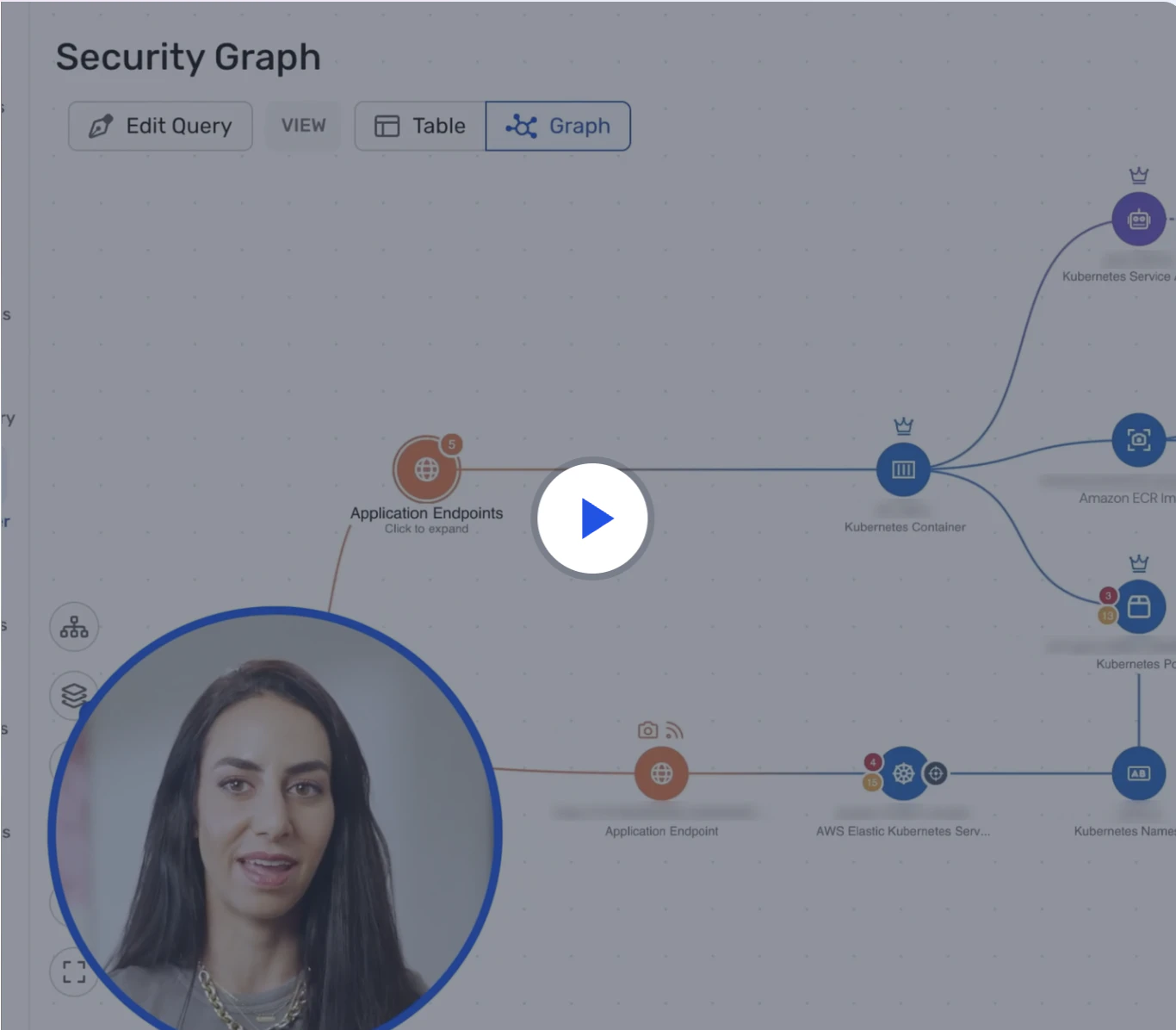
Wiz delivers a unified CNAPP that supports the outcomes these interview questions assess: contextual risk prioritization through the Wiz Security Graph, agentless cloud visibility that deploys in minutes, and developer-friendly workflows through Wiz Code. For AI workloads, Wiz AI-SPM extends the same visibility and governance principles to AI pipelines and training data.
If you're evaluating CISOs on their ability to deliver speed-to-clarity (understanding what's exposed, what's exploitable, and who owns the fix), ensure your security operating model can answer those questions continuously, not only during audits or incidents.
Get a demo to see how Wiz supports the strategic security outcomes boards expect from their CISO.
See Wiz in Action
Learn why CISOs at the fastest growing organizations choose Wiz to secure their cloud environments.
