



What is identity and access management security?
Identity and access management (IAM) security ensures that the right principals (users, services, and workloads) have the minimum necessary access to the right resources at the right time.
In the cloud, IAM replaces traditional perimeter-based assumptions. You continuously authenticate, authorize, and re-evaluate access based on context and least privilege, helping teams stay agile while reducing risk.
With attacks on access rising and vulnerability exploitation up by 34% last year, according to Verizon, organizations must continually improve their IAM practices. Modern identity security helps reduce risk by enforcing least privilege and detecting suspicious access patterns before any damage is done.
Watch 12-min Wiz Cloud demo
See how Wiz Cloud finds toxic combinations across misconfigurations, identities, data exposure, and vulnerabilities, without agents.

What are the importance and benefits of IAM security?
IAM plays a crucial role in securing sensitive data, strengthening overall security, ensuring regulatory compliance, and simplifying access management. Here's why it’s so important:
Protecting digital identities
A digital identity is the unique footprint a user or entity leaves across systems, including login credentials, permissions, attributes, and activity history. In cloud and hybrid environments, these identities act as keys to sensitive services, data, and infrastructure. Without strong IAM controls, your organization is vulnerable to identity theft, privilege escalation, lateral movement, and costly breaches.
Example: A financial services firm deploys IAM with risk-based adaptive multi-factor authentication (MFA). When a user signs in from a known device and office network, they only enter a password. But if that same user attempts to log in from a foreign IP address or at an unusual time, the system triggers a biometric verification (like a fingerprint scan) or a one-time push to a secure app. This approach reduces friction for normal usage while hardening defenses under risky conditions.
Enhancing organizational security
IAM reinforces security by ensuring that only authenticated and authorized users can access resources. Well-designed IAM limits the blast radius in the event of compromised credentials and guards against malicious insiders, accidental misuse, or excessive privilege.
Example: A healthcare provider implements just-in-time privileged access for sensitive systems, like a PHI database. In this case, administrators don’t hold standing superuser privileges. They request elevated access for a limited period and scope. If an attacker somehow hijacks their session, the provider limits the exposure window. By combining least privilege principles with continuous session monitoring and alerting, the system automatically terminates sessions when it detects anomalous behavior.
Ensuring compliance and standards
Many regulatory bodies and compliance frameworks, such as GDPR, HIPAA, PCI DSS, and SOX, require strict controls over who can access sensitive data, audit trails, and proof of effective access governance. IAM enables organizations to meet those obligations through controlled access, logging, role management, and periodic access reviews.
Example: A SaaS company handling European customer data implements role-based access control (RBAC) tied to job functions, such as support engineers or database admins. The company schedules automated quarterly reviews, where access rights must be certified by managers. Additionally, air-gapped audit logs are published to an immutable ledger for external auditors to validate compliance. If a user’s role changes, IAM ensures the immediate revocation or adjustment of access to satisfy the GDPR’s least privilege and right to erasure mandates.
Streamlining access and management
IAM centralizes access control and unifies identity repositories, authorizations, and lifecycle workflows. This reduces administrative overhead, simplifies audits, and enhances the user experience through single sign-on (SSO), self-service password reset, and delegated access request workflows.
Example: An enterprise employee uses an IAM platform that federates identity across dozens of SaaS apps, internal APIs, and cloud platforms. In this scenario, the employee logs in once via SSO and gains access to email, CRM, internal dashboards, and dev environments with centrally managed permissions. When the employee leaves the firm, deactivating their central account instantly revokes access everywhere. Administrators can view a single dashboard that shows which users have access to which resources, identifies orphan accounts, and conducts bulk access modifications.
Take the Cloud Security Self-Assessment
Get a quick gauge of cloudsec posture to assess your security posture across 9 focus areas and see where you can do better.
Begin assessment
What are the components of IAM security?
IAM security consists of key components that manage digital identities and enforce access controls. These elements work together to ensure users and systems access only what they’re authorized to, reducing risk and protecting sensitive data.
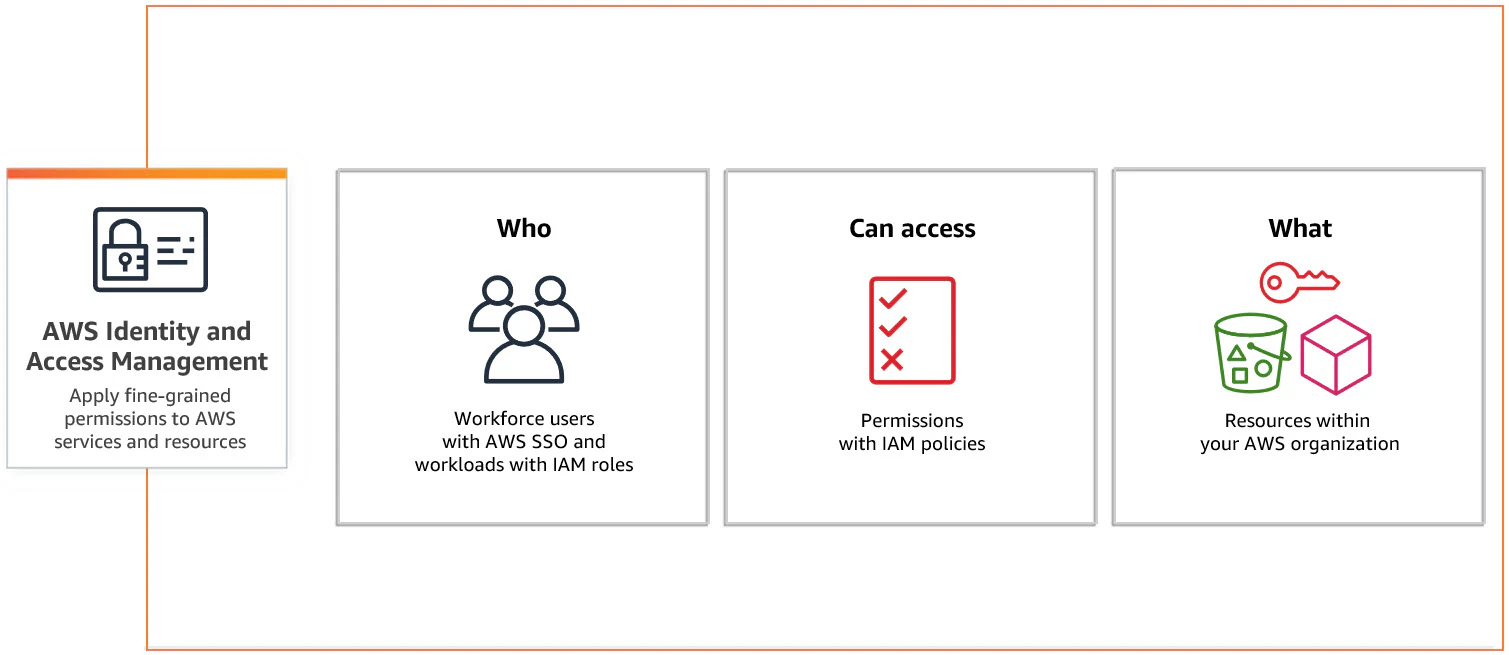
Below are key components of IAM security.
| Component | Description |
|---|---|
| Identity providers (IdPs) | Authenticate and verify user credentials, acting as trusted authorities for digital identities. They centralize user management across systems, ensuring consistency and control in distributed environments. |
| Directories | Store and maintain identity data, providing attributes for IAM decisions and ensuring that identity information is reliable, standardized, and accessible across both cloud and on-prem environments. |
| Access management tools | Enforce policies on login, session management, and resource access. Coordinate interactions between users, apps, and services to align access with organizational requirements. |
| Authentication mechanisms | Validate user identities using methods like passwords, biometrics, or tokens. These mechanisms reduce risk by preventing unauthorized account use. |
| Authorization policies | Define what authenticated identities can do, using roles, attributes, or org structures. Enforce least privilege and fine-grained access control. |
| Monitoring and auditing | Provide visibility into identity and access activity. Monitoring detects anomalies in real time, while auditing ensures accountability and compliance through historical records. |
Real-world example: Preventing IAM misconfigurations
IAM security challenges aren’t theoretical. They frequently show up in real-world cloud environments.
In 2023, Wiz researchers uncovered a common misconfiguration in AWS IAM role trust policies when integrating with GitHub Actions. Missing conditions in the policy meant that roles intended for specific repositories could, in some cases, be assumed by any GitHub repo, exposing AWS accounts to unauthorized access.
While AWS and HashiCorp have since updated their tooling and guidance to reduce the likelihood of this issue, the incident highlights how easily IAM misconfigurations can creep into production environments through defaults, copied and pasted code, or overlooked policy details.
Wiz automatically detects these types of IAM misconfigurations in customer environments. By mapping relationships across roles, permissions, and cloud resources, our platform identifies risks, such as over-permissive trust policies, before exploitation.
Key features of an identity and access management solution
To reduce identity risk and enforce least privilege in cloud environments, your IAM solution must go beyond the basics. Look for capabilities that support continuous improvement, scale with your footprint, and strengthen security posture.
Authentication and access control
Authentication and access control ensure that users are who they claim to be and that access attempts are consistently validated. You can implement the following critical controls:
Configure SSO to simplify user logins and eliminate credential sprawl across cloud applications.
Require MFA on all high-value accounts and access points to block common attack vectors.
Deploy risk-based authentication that adapts verification steps based on real-time context like IP, device, and behavior.
Implement zero trust access by continuously validating user and device trust before granting or maintaining access.
Set up federated identity to securely extend access to third parties without duplicating user accounts.
Authorization and role management
Authorization ensures that authenticated users can only access what they’re permitted to. You can strengthen this layer by adopting the following authorization controls:
Assign permissions with RBAC to enforce least privilege by default and streamline access management.
Secure privileged accounts with PAM to limit exposure, enforce session controls, and monitor sensitive activity.
Use CIEM to map real usage and automatically remove excessive or unused permissions.
Enable entitlement drift detection to surface and correct risky deviations from policy due to exceptions or misconfigurations.
Monitoring, compliance, and automation
Ongoing oversight and automation ensure that IAM systems remain effective, compliant, and scalable as organizations grow. You can enhance your security posture with these essential controls:
Run continuous access reviews using tools like AWS IAM Access Analyzer or Microsoft Entra to identify and address risky changes fast.
Log and monitor access in real time to detect anomalies and generate reports for audit readiness.
Integrate with directory services to unify user data and apply consistent policies across hybrid and multi-cloud environments.
Automate account provisioning and deprovisioning to reduce manual effort and eliminate lag in permission changes.
Build approval workflows into access requests for sensitive systems to enforce separation of duties and meet compliance requirements.
Best practices in IAM security
Strong IAM security practices protect sensitive resources, maintain compliance, and reduce organizational risk. Without the ability to enforce access controls, security efforts would fall through the cracks, compromising your cloud environment.
Following these best practices helps your team make sure that IAM remains a proactive defense rather than a reactive measure:
Conduct regular IAM audits
Periodic audits validate that IAM policies remain aligned with security objectives and adapt to organizational or regulatory changes. They also surface high-risk accounts, privilege creep, and unused access rights that attackers could exploit.
To perform effective IAM audits, consider the following practices:
Automate the process using audit tools, like AWS IAM Access Analyzer or Microsoft Entra ID’s access reviews, to detect overly broad permissions. Here’s an example of how to set up AWS IAM Access Analyzer:
# Example: Setting up AWS IAM Access Analyzer
import boto3

client = boto3.client('access-analyzer')

analyzer = client.create_analyzer(
    analyzerName='MyIAMAnalyzer',
    type='ACCOUNT'
)
Combine automated scanning with manual validation of privileged accounts to ensure that no exceptions bypass security policies.
Schedule monthly or quarterly reviews and export IAM policies via scripts to flag unused or unnecessary privileges.
Train users and create awareness campaigns
Human error is one of the largest contributors to identity-related breaches. To avoid such errors, training employees to recognize risks and follow secure practices strengthens IAM at its weakest link: the end user.
To implement effective training and awareness campaigns, take the following actions:
Integrate IAM awareness into onboarding processes to ensure employees understand password hygiene, MFA usage, and data access rules from day one.
Conduct phishing simulations or red-team exercises with penetration testing firms to measure vulnerability to social engineering.
Launch recurring awareness campaigns (like monthly security tips or quarterly workshops) to reinforce best practices.
Enforce authentication mechanisms
Strong authentication is the foundation of modern IAM. Without layered defenses, stolen or weak credentials become open doors for attackers.
To enforce strong authentication methods, try these actions:
Implement password complexity policies and expiration rules using IdPs, like Okta or Microsoft Entra ID. Here’s an example of how you can add an expiration:
# Example: Configuring Password Policy in Entra ID
Set-AzureADPasswordPolicy -ValidityPeriod "90" -NotificationDays "14"
Require MFA for all accounts, especially privileged ones, using apps like Google Authenticator, Authy, or hardware tokens.
Where possible, adopt passwordless authentication methods (such as biometrics or FIDO2 keys) to eliminate reliance on passwords.
Set up proactive monitoring and response plans
Continuous monitoring and well-rehearsed response plans minimize damage by making sure you quickly detect and contain suspicious access attempts.
To implement effective monitoring and response plans, consider these options:
Use real-time monitoring tools like Wiz to track and detect anomalous behavior, such as repeated failed logins or logins from unusual geographic locations.
Configure automated alerts and dashboards that surface IAM anomalies to both your security and operations teams.
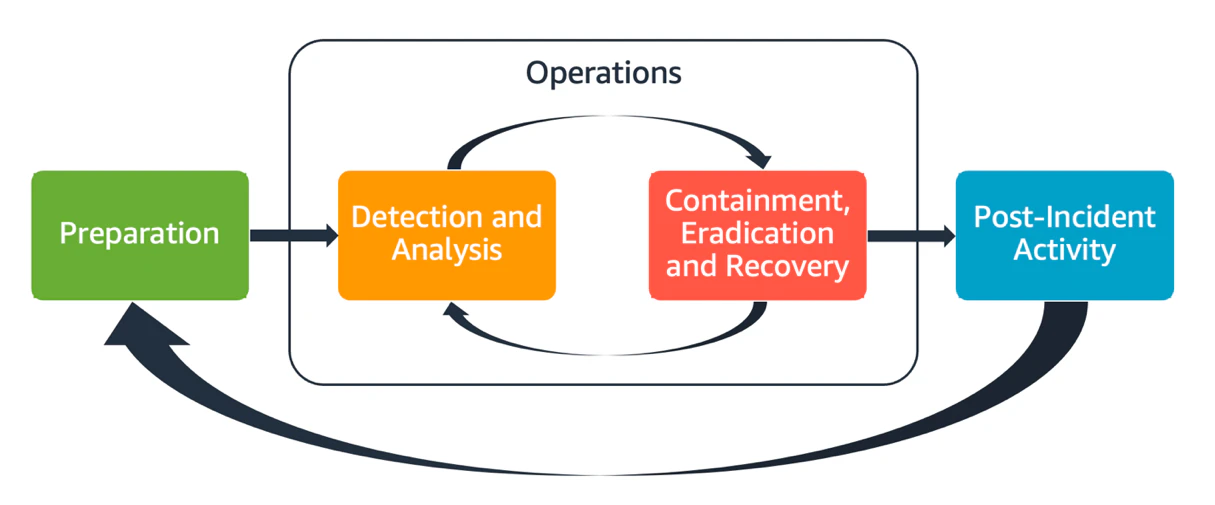
Develop documented response runbooks for common scenarios (like compromised accounts or privilege escalation). Then, conduct regular incident response drills to ensure teams can act quickly under pressure.
Modernizing access security management
Not only are multi-cloud environments at risk of breach due to attackers trying to gain access, but the threat landscape is also rapidly evolving. AI technologies make it much harder for companies to protect themselves against bad actors when they rely on traditional, siloed security tools.
In its “Identity-first security maximizes cybersecurity effectiveness” report, Gartner warns that “by 2026, 70% of identity-first security strategies will fail unless organizations adopt context-based access policies that are continuous and consistent.”
As Gartner predicts, context and consistency will make all the difference. Achieving this requires a unified, all-in-one approach to multi-cloud security, like a cloud-native application protection platform (CNAPP). In addition to CIEM to protect identity access, a CNAPP provides the necessary security in a holistic, context- and priority-based system. With this unified approach, you can protect yourself from unauthorized user access and achieve robust protection.
How Wiz enhances IAM security
Wiz offers comprehensive IAM security across the cloud security landscape. Our unified platform extends beyond traditional IAM security measures to provide a holistic approach to CIEM. Wiz’s innovative IAM security features include the following capabilities:
Least privilege policy auto-generation: Wiz analyzes cloud entitlements and effective permissions to automatically generate least privilege policies. This ensures that users and services get only the access they need, which minimizes the attack surface. Teams can also use Wiz to easily visualize identity-related risks, detect misconfigurations, and prioritize remediation efforts to strengthen their cloud security posture.
Risk detection and prioritization: Our platform creates a detailed map of access relationships between all principals and resources, factoring in advanced cloud-native controls, like access control lists. By highlighting actual permissions in use, Wiz helps teams identify risks, potential attack paths, and areas that require immediate attention.
Detection of leaked secrets and credentials: Wiz’s Security Graph identifies exposed secrets and credentials by analyzing the relationships between internet-facing APIs and cloud assets. This proactive detection reduces the risk of credential-based attacks and unauthorized access.
Agentless detection: An agentless approach provides fast, seamless integration that doesn’t impact existing operations.
Cross-platform security coverage: Wiz integrates with leading cloud platforms, including AWS, Azure, GCP, Oracle Cloud Infrastructure, Alibaba Cloud, VMware vSphere, Kubernetes, and Red Hat OpenShift. This comprehensive compatibility ensures consistent IAM security across multi-cloud and hybrid environments.
Comprehensive cloud stack security: Our platform secures the entire cloud stack, providing visibility and protection across your infrastructure. From access controls to cloud-native entitlements, Wiz fortifies your architecture against threats at every level.
By providing unparalleled visibility into cloud entitlements and effective permissions, Wiz empowers organizations to stay ahead of threats and maintain a strong security posture.
Schedule a demo today to see firsthand how Wiz can transform your organization's approach to IAM security.
Watch 12-min Wiz Cloud demo
See how Wiz Cloud finds toxic combinations across misconfigurations, identities, data exposure, and vulnerabilities, without agents.
FAQ
Below are some common questions about IAM security:
Take Control of Your Cloud Entitlements
Learn why CISOs at the fastest growing companies secure their cloud environments with Wiz.
