

What are incident response services?
Incident response services are specialized teams and tools that help you detect, contain, and recover from cyberattacks. They combine expert knowledge with advanced technology to minimize damage when security breaches happen – and that damage adds up fast, with breaches now costing companies $4.44 million on average globally (or $10.22 million if you're in the U.S.).
Cloud incident response services handle these unique challenges by providing visibility across all your cloud environments, understanding how attackers target cloud systems, and using automation to stop threats fast.
You can work with incident response services in two main ways. Emergency response gives you immediate help during an active attack, while retainer agreements provide ongoing preparation and guaranteed response times when incidents occur.
Cloud-Native Incident Response
Learn why security operations team rely on Wiz to help them proactively detect and respond to unfolding cloud threats.

Key capabilities to evaluate in incident response services
When evaluating incident response services for cloud environments, it’s important to focus on capabilities that align with modern threat models and cloud operating realities. Many organizations look for services that can support investigation and response across development, infrastructure, and production environments. Key capabilities to consider include:
Cloud-native forensics and investigation
Incident response services should support forensic investigation across cloud resources, including memory analysis, disk snapshots, and log correlation from native cloud services. In cloud environments, this often involves handling short-lived resources such as containers or serverless functions, while maintaining evidence integrity and documented chain-of-custody practices where required.Automated response and containment workflows
Some incident response services provide automation to help isolate affected resources or limit blast radius during common attack scenarios. This may include predefined or customer-approved playbooks integrated with tools such as CI/CD pipelines, infrastructure-as-code workflows, SIEM, or SOAR platforms. Automation can help teams respond consistently and reduce manual effort during high-pressure incidents.Threat intelligence integration
Effective incident response services typically incorporate threat intelligence to help analysts understand relevant attacker techniques, indicators, and trends. This context can support faster investigation and more informed response decisions, particularly when dealing with targeted or emerging threats.Multi-cloud and hybrid environment support
For organizations operating across multiple cloud providers or hybrid environments, incident response services should be able to investigate and respond consistently across platforms such as AWS, Azure, GCP, and on-premises infrastructure, with unified visibility where possible.Availability and response coverage
Many organizations evaluate incident response services based on availability, response commitments, and escalation models. Reviewing coverage hours, response objectives, geographic support, and communication processes can help ensure the service aligns with business and operational requirements.
Incident response services compared
Different incident response services are designed to address different organizational needs, operating models, and cloud environments. The right option depends on factors such as internal expertise, cloud footprint, regulatory requirements, and the level of hands-on support required during an incident.
The following services are presented in no particular order and reflect common approaches organizations consider when evaluating incident response support.
1. Wiz Incident Response Services
Wiz Incident Response combines agentless cloud visibility with dedicated security expertise to accelerate investigation and response across cloud infrastructure, identities, data, and workloads. Unlike some IR services that require agent deployment or manual evidence collection, Wiz IR leverages existing cloud connectivity to provide immediate context.
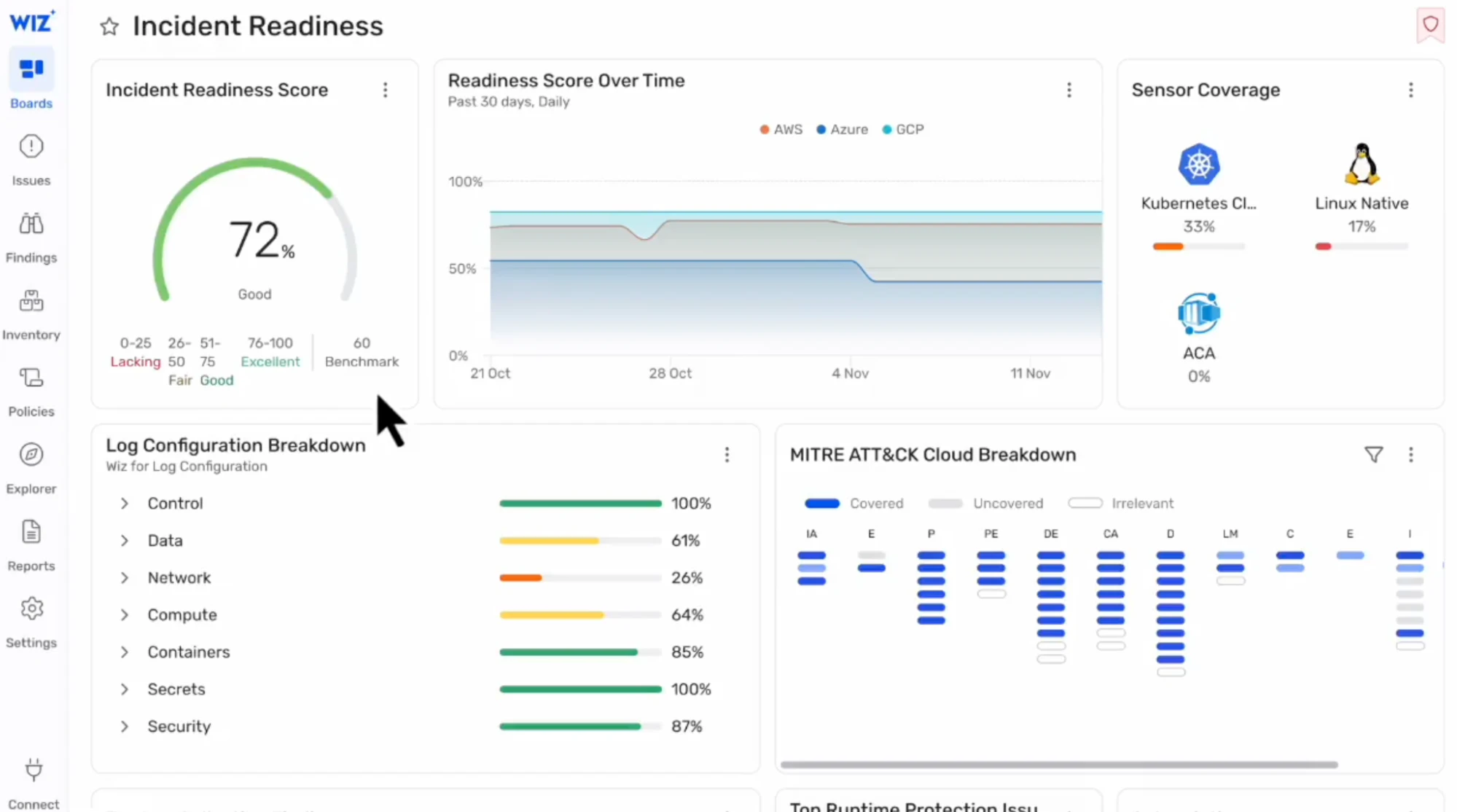
Wiz IR delivers instant, agentless visibility across AWS, Azure, GCP, and Kubernetes with no deployment delays or coverage gaps. For deeper runtime investigation, Wiz Defend includes a lightweight sensor that captures process execution, network connections, and file activity across workloads, providing the runtime telemetry responders need during active incidents without the overhead of traditional agents.
The Wiz Security Graph automatically correlates vulnerabilities, misconfigurations, exposed secrets, permissions, and real-time threat activity. This surfaces the true blast radius and attack path in seconds rather than days, enabling teams to understand what happened, what's at risk, and what to do next from a single view.
Key capabilities include:
Cloud-wide visibility using agentless access: Wiz scans cloud configurations, identities, and data exposure across AWS, Azure, GCP, Kubernetes, and serverless environments without requiring agent deployment.
Runtime sensor for active investigation: The Wiz Defend sensor provides process-level telemetry, network activity, and file access logs when deeper forensic evidence is needed during incident response.
Context-driven investigation: A graph-based model correlates configurations, identities, permissions, data exposure, and runtime activity.
Forensic evidence collection and timeline reconstruction: Supports short-lived resources such as containers and serverless workloads.
Response workflows and playbooks: Integrates with existing security and remediation processes.
Access to dedicated incident response specialists: Provides guidance during triage, containment, remediation, and post-incident review.
Wiz Incident Response is designed for organizations that demand fast, informed action in the cloud. With cloud-to-code traceability, automated investigation, and a team of experts by your side, Wiz IR helps you cut response times from hours to minutes and turn every incident into an opportunity to harden your defenses.
2. CrowdStrike Incident Response
CrowdStrike provides incident response services built around its endpoint detection and response capabilities, supported by its global threat intelligence and analyst teams.
Key capabilities include:
Endpoint Detection and Response (EDR) with near real‑time visibility and real‑time containment
Threat hunting led by experienced analysts using the CrowdStrike Threat Graph
Advanced forensic analysis capabilities for Windows, Mac, and Linux systems
Falcon Complete managed detection and response for 24/7 monitoring
CrowdStrike’s incident response services are commonly used by organizations with strong endpoint security requirements or hybrid environments where endpoint visibility plays a central role.
3. Mandiant (Google Cloud)
Mandiant offers intelligence-led incident response services with a long-standing focus on advanced threats and complex investigations. Following its acquisition by Google Cloud, Mandiant increasingly integrates with Google Cloud security services.
Key offerings include:
Incident response retainers with guaranteed SLAs and flexible service options
Advanced threat actor intelligence from their frontline investigations
Digital forensics capabilities for both on-premises and cloud environments
Specialized expertise in nation-state attacks and critical infrastructure
Mandiant is often selected by organizations facing sophisticated attacks, regulatory scrutiny, or complex investigative requirements, particularly where deep human expertise is a priority.
4. IBM X-Force
IBM X-Force delivers global incident response with enterprise-grade integration capabilities across hybrid environments. Their service combines human expertise with the Watson for Cyber Security AI platform to accelerate investigation and response.
Key features include:
Global response team with 24/7 coverage across major regions
AI-powered investigation assistance through Watson for Cyber Security
Integration with IBM Security QRadar SIEM and SOAR platforms
Specialized OT/ICS incident response capabilities for industrial environments
IBM X-Force is commonly used by large enterprises that already leverage IBM security technologies and require globally distributed response capabilities.
5. Palo Alto Networks Unit 42
Unit 42, Palo Alto Networks' threat intelligence and incident response team, specializes in ransomware response and cloud security investigations. Their service leverages Palo Alto's broad security portfolio while providing specialized expertise in critical incident types.
Key capabilities include:
Ransomware response and negotiation by specialized experts
Cloud incident response leveraging Prisma Cloud's capabilities
Advanced threat hunting across network, endpoint, and cloud
Integration with Cortex XDR for unified detection and response
Unit 42 is often considered by organizations already using Palo Alto Networks technologies or seeking specialized expertise in ransomware and cloud incident response.
6. Microsoft Incident Response
Microsoft’s Detection and Response Team (DART) provides incident response services optimized for Microsoft environments, with deep integration across Microsoft security products.
Key offerings include:
Native integration with Microsoft Defender XDR and Sentinel SIEM
Specialized Microsoft 365 investigation capabilities for email and identity threats
Azure-focused cloud incident response with direct platform access
Access to Microsoft's global threat intelligence network
Microsoft Incident Response is commonly used by organizations with significant investments in Microsoft 365 and Azure environments.
An Actionable Incident Response Plan Template
A quickstart guide to creating a powerful incident response plan - designed specifically for organizations with cloud-based deployments.

Best practices for implementing incident response services in cloud environments
Cloud incident response depends on preparation, not just emergency capabilities. Organizations that establish clear processes, integrate IR services with their security stack, and conduct regular exercises resolve incidents faster when they occur.
The following best practices help maximize the value of your IR service investment:
Define clear roles and handoffs with your IR provider. Map how your internal team and external IR service will collaborate during incidents, including escalation paths, communication channels, and decision-making protocols. Establishing these before an incident eliminates confusion during high-pressure response.
Integrate your IR service with your cloud and security stack. Enable your IR provider to access the data and visibility they need, including cloud logging, SIEM alerts, and cloud-native forensics tooling. The most effective IR services plug directly into your existing workflows, so evidence collection and investigation start instantly.
Leverage pre-built, cloud-specific playbooks. Work with your IR partner to develop and customize automated response playbooks for your unique cloud footprint. These should address scenarios like credential compromise, misconfiguration exploits, and lateral movement across multi-cloud environments.
Test your combined response with joint exercises. Run tabletop exercises and simulated attacks that involve your IR service, validate communication, and ensure everyone understands their roles before a real breach occurs.
Maintain ongoing readiness with proactive services. Use retainer hours for compromise assessments, playbook tuning, and readiness reviews tailored to your cloud stack. Proactive engagement helps you close gaps before attackers can exploit them.
Establish clear SLAs and reporting expectations. Make sure your retainer or service agreement specifies response time commitments, evidence handling procedures, and post-incident reporting deliverables, as typically only what's explicitly stated in the contract will be covered.
By embedding your IR service into your day-to-day cloud operations, you build a faster, more resilient response capability that adapts as your environment evolves.
How Wiz IR redefines incident response services for the cloud
Wiz IR approaches incident response differently by connecting investigation workflows directly to cloud security posture data. Rather than investigating signals in isolation, Wiz IR correlates findings across infrastructure, identities, data, and runtime activity to provide complete attack context.
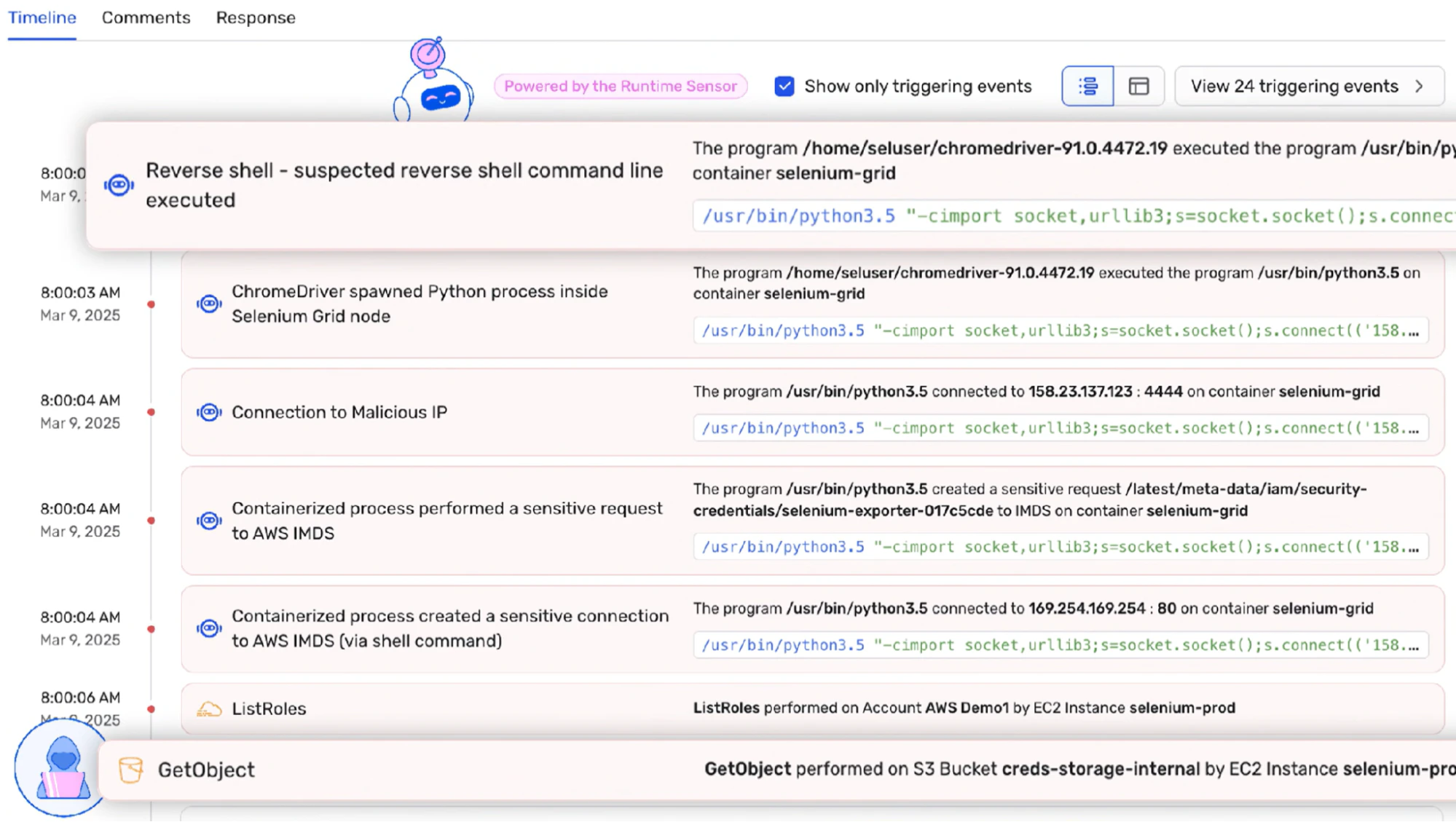
The Wiz Security Graph provides the foundation for this approach, automatically correlating posture data with real-time threat activity to surface blast radius and attack paths immediately. This context enables faster, more accurate response than traditional approaches that require manual evidence correlation.
Wiz IR includes investigation workflows that assist with evidence collection, timeline reconstruction, and activity analysis across cloud resources, including short-lived workloads such as containers and serverless functions. By connecting runtime findings back to configuration and infrastructure context, Wiz IR helps teams identify contributing factors and address underlying causes as part of remediation efforts.
Wiz IR is designed to integrate with existing security tools and operating models. It can enrich alerts from SIEM platforms with cloud context, support response automation through SOAR tools, and align with established incident response processes. This allows organizations to extend current investments rather than replace them, while adding cloud-specific insight to response workflows.
With access to incident response specialists, customizable response playbooks, and cloud-to-code context, Wiz IR supports organizations throughout the incident lifecycle. Ready to see how cloud-native incident response works in practice? Get a demo to explore how Wiz IR delivers the visibility and context your team needs to respond faster.
Cloud-Native Incident Response
Learn why security operations team rely on Wiz to help them proactively detect and respond to unfolding cloud threats.