
What is an incident response team?
An incident response team is a cross-functional group of security professionals responsible for detecting, investigating, and resolving cybersecurity incidents. When a breach occurs, this team coordinates containment, determines root cause, and restores normal operations while preserving evidence for future prevention.
Automated detection tools identify threats, but humans drive the investigation, decision-making, and recovery that determine whether an incident becomes a minor disruption or a major breach. Effective IR teams reduce downtime, contain damage, and prevent the same attack from succeeding twice.
Regardless of which framework you follow, IR teams share the same core responsibilities: identify the root cause, assess the blast radius, contain and remediate the threat, and implement controls to prevent recurrence. How you structure these phases may vary based on the NIST CSF 2.0 Community Profile, CIS Controls, or your organization's specific infrastructure and compliance requirements.
The volume and sophistication of attacks continue to outpace most organizations' defensive capabilities. IR teams bridge this gap by ensuring that when prevention fails, the organization can respond fast enough to limit damage, maintain operations, and satisfy regulatory disclosure requirements.
An Actionable Incident Response Plan Template
A quickstart guide to creating a powerful incident response plan - designed specifically for organizations with cloud-based deployments.

What are the common roles on an incident response team?
Effective IR teams combine deep technical skills with cross-functional representation from legal, communications, and compliance. Not every organization needs every role listed below, and smaller teams often consolidate responsibilities. The key is ensuring that each critical function has a designated owner before an incident occurs.
Incident response manager (IR manager)
Objectives:
Lead the IR team from detection through resolution, serving as the single point of accountability for incident outcomes
Bridge technical response activities with executive stakeholder communication and decision-making
Actions:
Own the incident response plan and ensure all team members understand their roles before incidents occur
Make real-time decisions on escalation, resource allocation, and containment strategies
Communicate incident status to senior leadership and coordinate cross-functional response efforts
Drive post-incident reviews to capture lessons learned and improve future response
Education, Experience, and Certifications:
Education: Bachelor's degree in Computer Science, Information Security, or a related field
Experience: 7-10 years in IT security roles, with at least 3-5 years in incident response
Certifications: Certified Information Systems Security Professional (CISSP), Certified Incident Handler (GCIH), Certified Information Security Manager (CISM)
Security analyst
Objectives:
Detect, analyze, and respond to security incidents.
Ensure the organization's security posture by monitoring for threats and vulnerabilities, a vital function as employment for these analysts is projected to grow 29 percent from 2024 to 2034.
Actions Performed:
Monitors security alerts and logs for signs of incidents.
Performs triage on alerts to identify the severity and impact.
Analyzes compromised systems to determine the extent of the breach.
Recommends containment and remediation strategies.
Creates and updates incident documentation.
Education, Experience, and Certifications:
Education: Bachelor's degree in cybersecurity, computer science, or information systems
Experience: 2-5 years in cybersecurity, with experience in security monitoring and analysis
Certifications: CEH (Certified Ethical Hacker), CompTIA Security+, GIAC Certified Incident Handler (GCIH)
Forensic analyst
Objectives:
To collect, preserve, and analyze digital evidence related to the incident.
To support legal and compliance requirements during the investigation.
Actions:
Acquires and preserves evidence from systems, networks, and devices.
Analyzes digital evidence to determine the extent and impact of the incident.
Creates detailed forensic reports and maintains the chain of custody.
Supports law enforcement or legal teams in case of legal proceedings.
Education, Experience, and Certifications:
Education: Bachelor's degree in Computer Forensics, Cybersecurity, or a related field
Experience: 3-7 years of experience in digital forensics or related fields
Certifications: Certified Computer Forensics Examiner (CCFE), GIAC Certified Forensic Analyst (GCFA), EnCase Certified Examiner (EnCE)
Threat hunter
Objectives:
Proactively seek out and identify threats that have bypassed existing security controls.
Enhance the organization's ability to detect and respond to advanced threats.
Actions Performed:
Conducts threat hunting exercises using advanced tools and techniques.
Analyzes threat intelligence to identify indicators of compromise (IOCs).
Develops hypotheses on potential threats and tests them.
Creates custom detection rules and alerts.
Collaborates with security analysts to respond to identified threats.
Education, Experience, and Certifications:
Education: Bachelor's degree in cybersecurity, information systems, or computer science
Experience: 3-5 years in cybersecurity, with experience in penetration testing or security analysis
Certifications: GCIA (GIAC Certified Intrusion Analyst), OSCP (Offensive Security Certified Professional)
IT support/systems administrator
Objectives:
Support the incident response team by implementing containment, eradication, and recovery measures.
Ensure that IT systems are restored to normal operation post-incident.
Actions Performed:
Implements isolation of affected systems.
Applies patches and updates to systems as part of remediation.
Restores systems from backups as needed.
Ensures the integrity of system configurations during recovery.
Assists in the implementation of security tools and controls.
Education, Experience, and Certifications:
Education: Associate's or Bachelor's degree in information technology, computer science, or a related field.
Experience: 2-5 years in IT support or systems administration.
Certifications: CompTIA A+, Microsoft Certified: Windows Server Fundamentals, or similar certifications.
Communications officer
Objectives:
To manage internal and external communications during and after a security incident.
To ensure consistent and accurate messaging is delivered to all stakeholders, including employees, customers, partners, and the media.
Actions:
Drafts and disseminates communications about the incident to internal teams, senior management, and external stakeholders.
Coordinates with the IR Manager to ensure all communications are aligned with the organization's incident response plan.
Manages media inquiries and public statements.
Prepares post-incident communication, including lessons learned and preventive measures.
Education, Experience, and Certifications:
Education: Bachelor's degree in Communications, Public Relations, or a related field
Experience: 5-7 years in corporate communications or public relations, preferably with experience in crisis communications
Certifications: Accredited in Public Relations (APR), Crisis Communication Specialist (CCS)
Watch Wiz Defend in Action
See how correlated runtime signals, cloud logs, and automated attack timelines help IR teams move from detection to containment in minutes

Legal advisor
Objectives:
To provide legal guidance and ensure that the incident response process complies with relevant laws and regulations.
To protect the organization from potential legal liabilities related to the incident.
Actions:
Reviews the incident response process to ensure compliance with laws, regulations, and internal policies.
Advises on the legal implications of actions taken during the incident response.
Coordinates with external legal counsel, law enforcement, or regulatory bodies if necessary.
Reviews and approves public statements or communications from a legal perspective.
Education, Experience, and Certifications:
Education: Juris Doctor (JD) degree with a focus on cybersecurity law, data protection, or privacy law.
Experience: 7-10 years of legal experience, with 3-5 years in cybersecurity or data protection law.
Certifications: Certified Information Privacy Professional (CIPP)
What are the different kinds of incident response teams?
Organizations typically structure IR teams in one of three ways: fully internal, fully outsourced, or hybrid. The right model depends on your organization's size, budget, risk tolerance, and the speed at which you need to respond to incidents in cloud environments where evidence disappears quickly.
Internal incident response teams
Internal teams consist of in-house security professionals who know your environment, tools, and business context intimately. This familiarity enables faster initial response and reduces the time spent explaining systems during a crisis.
The trade-off is capacity and specialization. Internal teams may lack deep expertise in forensics, cloud-native attacks, or emerging threat techniques. They also carry the risk of institutional blind spots when investigating incidents involving familiar systems or colleagues.
External incident response teams
An external incident response team is made up of outsourced IT and cybersecurity professionals. In this model, businesses use the services of a third-party provider to respond to cyber incidents.
External incident response teams provide many unique benefits, including rich and diverse cybersecurity knowledge, vast cross-industry experience, easier scalability with access to 1,300+ professionals, and a more objective approach to complex cyber challenges. However, external incident response teams may lack knowledge of an organization's goals and tech stack. Depending on the scale and needs of an enterprise, this model can also be quite expensive.
Hybrid incident response teams
A hybrid incident response team features both internal and external team members. In this model, businesses may assign certain incident response roles and responsibilities to in-house employees, and outsource others to third parties.
With a hybrid incident response team, businesses can potentially unlock the best of both worlds. A hybrid incident response approach can leverage the domain-specific knowledge of in-house professionals and address knowledge and skills gaps with the help of external experts. With powerful leadership and meticulous execution, hybrid incident response teams can be an effective and affordable solution for many enterprises.


Best practices for building an incident response team
1. Start building your team before the incident
Assembling your team during an active incident guarantees a slow, chaotic response. Define roles, establish communication channels, and run tabletop exercises before you need them, ensuring you follow a comprehensive planning process that moves from gathering data to evaluating risks.
For organizations using external IR services, establish retainer agreements that include environment familiarization. In cloud environments, evidence can disappear within seconds as containers terminate and logs rotate. External teams unfamiliar with your architecture will lose critical investigation time.
2. Evaluate existing IT and cybersecurity capabilities
When building an incident response team, businesses must have a clear picture of what IT and cybersecurity capabilities already exist within their ranks. To do so, enterprises should conduct a thorough cybersecurity skills and capabilities assessment to uncover existing incident response strengths and weaknesses.
3. Define critical roles and responsibilities
It's crucial that all critical roles and responsibilities (discussed above) are staffed and integrated into incident response teams. Businesses must clearly define and differentiate the scope and objectives of each of these roles. If particular in-house skills are lacking, it's a good idea to consider augmenting with a third-party cybersecurity expert.
4. Ensure around-the-clock availability
Attackers don't respect business hours, and neither should your IR coverage model. Options include on-call rotations with clear escalation paths, follow-the-sun staffing across geographic regions, or hybrid arrangements where internal teams handle business hours while external partners cover nights and weekends.
5. Nurture a positive and healthy security culture
To establish a robust incident response team, it's essential to create a vibrant cybersecurity culture that replaces blame with respect and accountability. Furthermore, no one can expect overworked cybersecurity professionals to keep their perimeters safe. That's why it's best practice to make sure that roles and responsibilities are proportionately and fairly distributed amongst team members and that job satisfaction and morale are healthy at all times.
6. Focus on cloud skills and capabilities
Traditional IR skills built for on-premises environments don't translate directly to cloud investigations. Your team needs practitioners who understand IAM policies, cloud audit logs, container orchestration, and the ephemeral nature of serverless workloads. When a compromised container terminates before you can capture its memory state, cloud-native forensic skills become the difference between a successful investigation and a dead end.
7. Identify the right tools for incident response teams
Tools determine how fast your team can move from alert to resolution. Prioritize platforms that provide unified visibility across cloud environments, automate forensic evidence collection before ephemeral resources disappear, and correlate runtime signals with identity and configuration context. The goal is reducing the manual log hunting that consumes the first hours of most cloud investigations.


How Wiz can augment incident response teams
Even the best-staffed IR team struggles without the right platform. Cloud environments generate massive volumes of signals across multiple providers, and traditional SIEM-based approaches can't keep pace with ephemeral workloads. IR teams need a platform that provides complete visibility, automates evidence capture, and delivers the context required to understand attack paths across identity, data, and infrastructure layers.
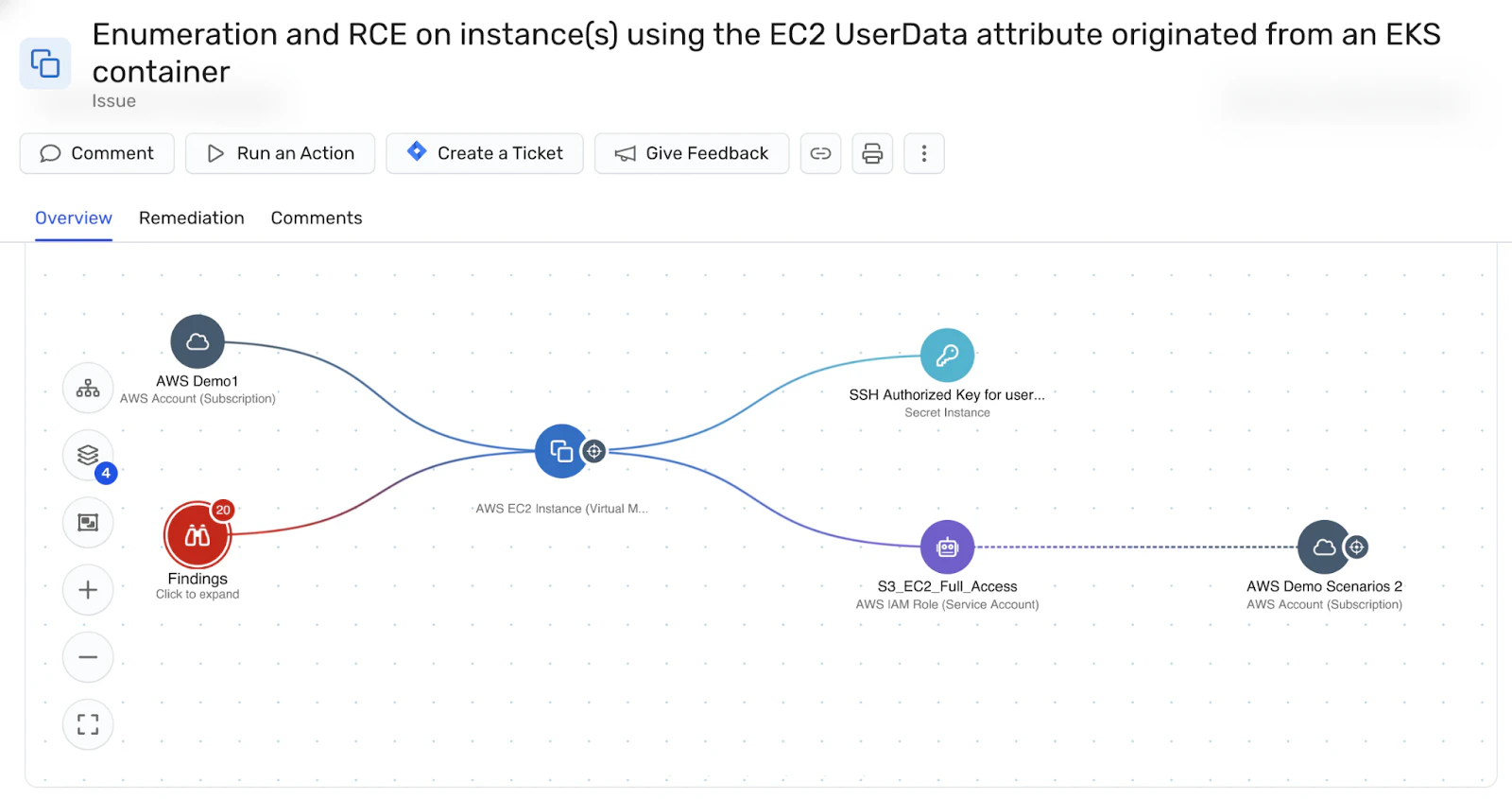
Wiz provides IR teams with complete visibility across cloud environments, automated forensic evidence collection that captures container state before termination, and a security graph that correlates runtime signals with identity and data exposure. This context transforms hours of manual investigation into immediate understanding of attack scope and blast radius.
Get a demo to see how Wiz supports incident response teams investigating cloud-native threats.
See How Wiz Responds to Cloud Threats in Real Time
Walk through how Wiz Defend correlates runtime signals, cloud logs, and identity activity to surface real attacks.
