

What is AI security?
AI security is the practice of defending systems using AI-powered capabilities while simultaneously protecting AI assets from emerging threats. This dual discipline means your security team must both leverage AI for detection and response and treat every model, pipeline, and vector store as a potential attack surface.
The defensive side uses AI for anomaly detection, log triage, and pattern recognition. The protective side secures large language models, training data, inference endpoints, and the cloud infrastructure that powers them. As AI adoption accelerates, creating a stand-alone market segment projected to reach $255 million by 2027, these two responsibilities have become inseparable.
AI Security Starter Pack
Build a practical foundation for discovering AI assets, assessing exposure, and applying security guardrails.

Using AI to enhance your security posture
AI-powered security tools accelerate threat detection and response in ways traditional methods cannot match. The core capabilities that matter most include:
Behavioral analysis: Identifies anomalies in user and system behavior that signature-based tools miss
Automated threat detection: Correlates signals across logs, endpoints, and cloud events in real time (scaling to 65 trillion signals daily for major providers)
Predictive threat intelligence: Surfaces emerging risks before they escalate into incidents
Real-time incident response: Neutralizes threats faster than manual triage allows
The challenge is vendor noise. The market is flooded with AI security tools, each claiming cutting-edge capabilities. This makes it harder to identify solutions that deliver genuine value versus those that simply rebrand existing features with an "AI" label.
What to look for in AI-based security tools
Traditional security tools were not designed for non-deterministic systems. They cannot account for models that hallucinate, APIs that execute natural language commands, or data pipelines that ingest unstructured content from public sources. When evaluating AI security platforms, the first question to ask is whether the tool can see, analyze, and defend across the entire AI lifecycle.
Genpact's case is a great example of the benefits of using AI-based security tools. The company was able to accelerate remediation, reduce manual work and unnecessary alerts, and enhance its security posture by taking advantage of some key AI-powered features. These include the following:
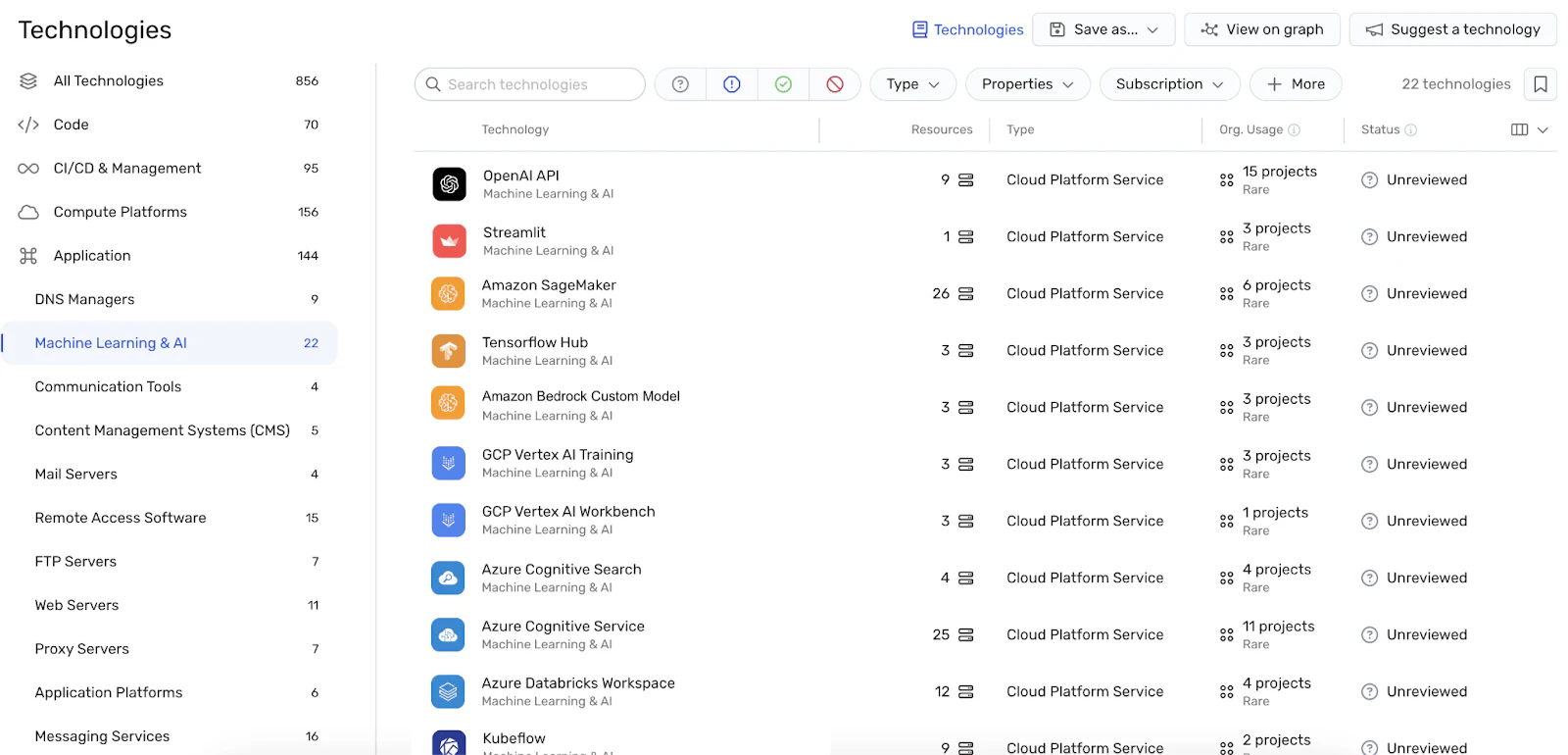
Contextual risk correlation: Correlates risks across cloud workloads, LLMs, code libraries, configurations, and identities
Automated attack path detection: Identifies critical attack paths and automates remediation recommendations
Continuous AI model monitoring: Detects misconfigurations and vulnerabilities within AI models, training data, and AI services in real time
LLM and AI model discovery: Provides full visibility into deployed LLMs and AI models so exposures and vulnerabilities are far less likely to go unnoticed
Risk-based prioritization: Reduces alert fatigue and the need to manually triage low-severity or low-business-impact issues
According to Genpact's deputy chief information security officer, leveraging these AI-powered solutions ultimately helped the company “accelerate the pace of AI application development and deployment while enforcing AI security best practices. As a result, [they] can deploy AI applications that are secure by design and build trust with key stakeholders.”
You can do the same if you have a tool in your arsenal that offers the above features.
[Pro Tip] Grammarly used AI and MCP to cut SOC triage time by over 90% – dropping from 30–45 minutes to just four minutes per ticket – and scale faster, more consistent investigations.
Grammarly used AI and MCP to cut SOC triage time by over 90% – dropping from 30–45 minutes to just four minutes per ticket – and scale faster, more consistent investigations.
AI systems are a new attack surface
Every AI system you deploy expands your attack surface. Customer service chatbots, code assistants, and internal automation tools all introduce vectors that traditional security controls were never designed to address.
Cloud providers like Azure Cognitive Services, Amazon Bedrock, and Vertex AI make it easy for teams to spin up AI services quickly. But managed services are not inherently secure. Misconfigurations, overprivileged identities, and exposed endpoints can turn a productivity tool into a breach pathway.
The importance of securing AI systems
AI vulnerabilities have become a common breach vector, and the problem compounds in complex cloud environments. Wiz research found that only 22% of organizations operate in a single cloud. The rest manage multi-cloud or hybrid architectures, which multiplies the number of AI services, identities, and configurations that security teams must track.
GenAI introduces additional risks, with tests showing AI agents can now exploit 13% of vulnerabilities without prior knowledge. Agent orchestration opens the door to lateral movement. And tools like WormGPT and FraudGPT demonstrate that attackers are weaponizing the same capabilities organizations use for productivity. These AI-powered attack tools can generate phishing content, malicious code, and social engineering scripts at scale.
Luckily, AI in cybersecurity helps you ward off various types of threats. But it's important to remember that AI isn't inherently secure, so it's up to you to secure it.
AI security risks
Understanding the threat landscape—which researchers have categorized into 38 distinct attack vectors ranging from opportunistic to nation-state operations—is the first step toward securing AI systems. These are the risks that matter most:
Increased attack surface: Every AI integration adds new entry points. Models, APIs, training pipelines, and inference endpoints all require visibility and controls that traditional tools do not provide.
Higher likelihood of data breaches and leaks: Only 24% of GenAI projects are secure, and that doesn't even account for broader AI projects. Less emphasis on security than on adoption means a higher risk of breaches. Besides consequences like disruption, profit losses, and reputational damage, companies are also facing more pressure to comply with emerging AI governance regulations like the EU AI Act.
Chatbot credential theft: Stolen credentials from ChatGPT and other chatbots are the new hot commodity in illegal marketplaces on the dark web. For instance, there were more than 100,000 ChatGPT account compromises between 2022 and 2023, which highlights a dangerous AI security risk that's likely to increase. These breaches expose organizations to intellectual property theft, and of course, they're a competitive disadvantage anytime proprietary business info falls into the hands of threat actors and competitors.
Data poisoning: The Trojan Puzzle is one example of how threat actors can influence and infect datasets to choreograph malicious payloads. This type of attack, data poisoning, can lead to harmful or discriminatory outcomes that violate anti-bias regulations and increase the risk of costly litigation.
Direct prompt injections: Direct prompt injections involve threat actors deliberately designing LLM prompts to compromise or exfiltrate sensitive data. Among the risks of this type of attack are malicious code execution and sensitive data exposure.
Indirect prompt injections: Threat actors can also guide a GenAI model toward an untrusted data source to influence or manipulate its actions and payloads. Repercussions of indirect prompt injections include malicious code execution, data leaks, misinformation, and malicious information making it to end users. These attacks can also trigger compliance violations, fines, and breach notifications under data protection frameworks like GDPR and CCPA.
Hallucination abuse: AI has always been prone to hallucinating certain information, so threat actors often try to capitalize on this weakness. They do so by registering and "legitimizing" potential AI hallucinations so malicious and illegitimate datasets influence the information that end users receive. This is especially important to avoid in heavily regulated, sensitive industries like healthcare and financial services to keep operations running without interruption.
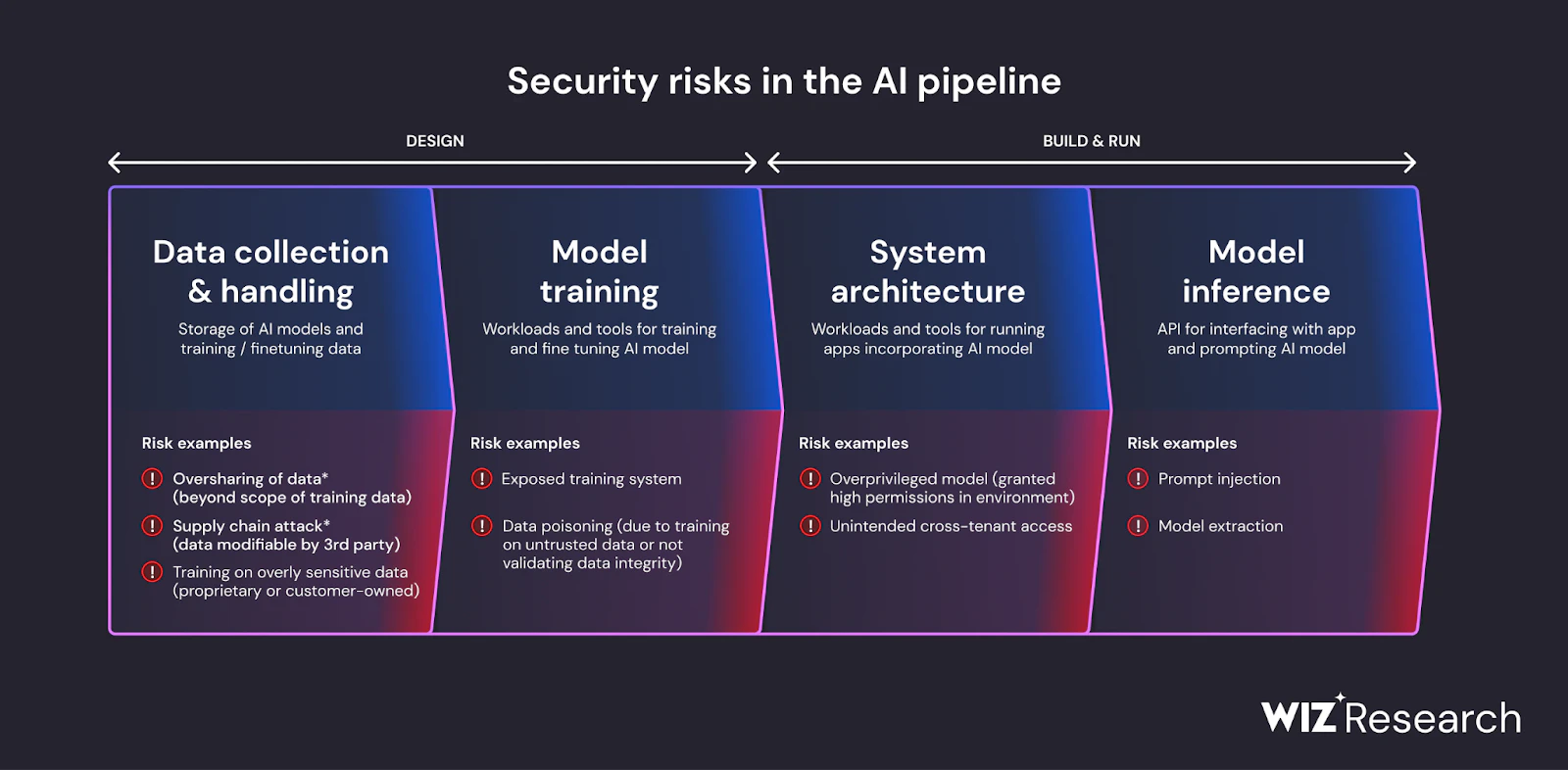
Vulnerable development pipelines: AI pipelines broaden the vulnerability spectrum, particularly in areas like data science operations that extend beyond traditional development boundaries and thus require robust security protocols to protect against breaches, IP theft, and data poisoning. To avoid software liability issues and regulatory non-compliance across the product lifecycle, it's crucial to mitigate the supply chain risks that stem from unsecured AI development environments.
Inside MCP Security: A Field Guide
Examine how MCP changes trust boundaries across AI tools, data sources, and cloud identities.

Top AI security challenges
Beyond technical risks, organizations face structural challenges that slow AI security adoption. Wiz research highlights three persistent gaps:
| Challenge | Supporting research |
|---|---|
| Lack of AI security expertise | 31% of respondents cite this as their top challenge |
| Shadow AI and lack of visibility | 25% do not know what AI services are running in their environment |
| Reliance on traditional security tools | Only 13% have adopted AI-specific posture management |
These gaps explain why AI adoption consistently outpaces security controls. Closing them requires dedicated investment in AI-aware tooling and cross-functional training.
8 AI security recommendations and best practices
Mitigating AI risks requires controls that span frameworks, architecture, and operational hygiene. These eight practices address the most common gaps:
1. Use AI security frameworks and standards
Established frameworks translate AI security principles into actionable controls. Three are particularly relevant:
NIST's Artificial Intelligence Risk Management Framework (updated in 2024 with a Generative AI Profile) breaks down AI security into four primary functions: govern, map, measure, and manage.
The OWASP Top 10 for LLMs identifies and proposes standards to protect the most critical LLM vulnerabilities, such as prompt injections, supply chain vulnerabilities, and model theft.
Wiz's PEACH framework emphasizes tenant isolation via privilege hardening, encryption hardening, authentication hardening, connectivity hardening, and hygiene (P.E.A.C.H.). Tenant isolation is a design principle that breaks down your cloud environments into granular segments with tight boundaries and stringent access controls.
Implementing any of these frameworks will require two things: First is cross-functional collaboration between security, IT, data science, and business leadership teams to ensure that your chosen framework aligns with both technical requirements and regulatory mandates. Second is clarity on the owners of each framework component so you can adapt as AI technologies and threat landscapes evolve.
2. Choose a tenant isolation framework and do regular reviews
While PEACH tenant isolation is specifically for cloud applications, the same principles apply to AI security. When you're dealing with AI systems that serve multiple users or departments, you're essentially managing a multi-tenant environment. Without proper isolation, one user's interactions could potentially access another's data, or a compromised AI session could spread across your entire system.
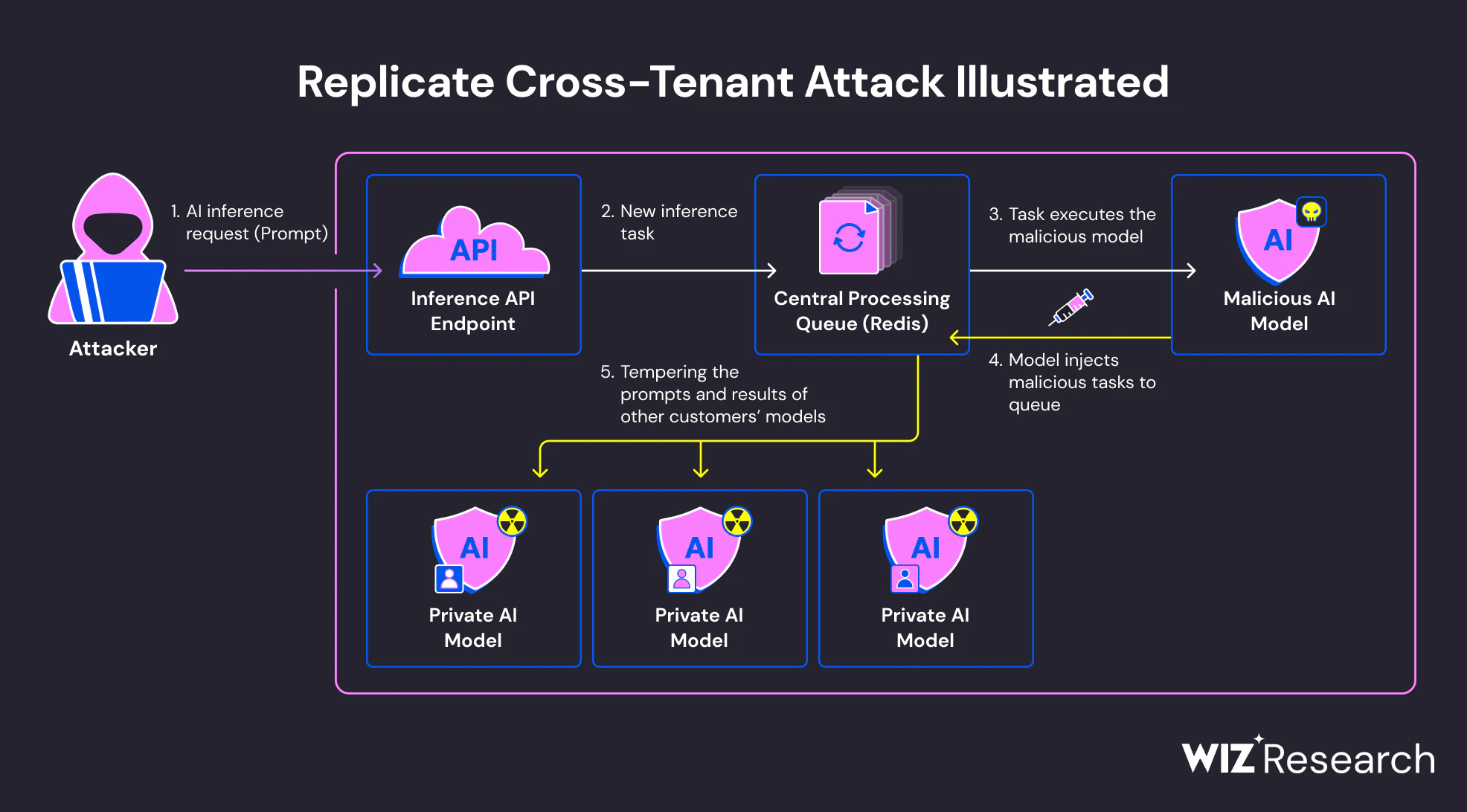
To prevent this, audit current AI user access patterns and identify where shared resources increase the risk of cross-contamination. Then, separate not just the data but also the computational resources, model access, and conversation histories between different users or business units. From there, set up automated monitoring to detect any unusual cross-tenant access attempts and put together an incident response plan for tenant boundary violations.
3. Customize your GenAI architecture
Design security boundaries that match how your AI components are used. Not every component needs the same level of isolation.
Key considerations:
Shared boundaries: LLMs can be shared across users to optimize cost and performance
Dedicated boundaries: Customer conversation data and financial info require strict isolation
Context-dependent boundaries: Some components need flexible controls based on data sensitivity and regulatory requirements
Action steps: Build a boundary decision matrix that weighs data sensitivity, compliance needs, performance, and cost for each AI component. Assign owners to monitor and update configurations as yoursystems scale.
4. Evaluate GenAI contours and complexities
Map how GenAI integration affects your entire organization—not just the technical stack. Look beyond the AI model itself to understand ripple effects across data flows, user touchpoints, and compliance requirements.
Conduct stakeholder interviews across departments to identify:
Workflow impacts from GenAI integration
Technical dependencies that create new risks
Regulatory implications and compliance gaps
This cross-functional assessment surfaces both opportunities and risks before deployment, ensuring alignment between technical capabilities and business requirements.
5. Ensure effective and efficient sandboxing
Test AI applications in isolated environments that mirror production closely enough to catch realvulnerabilities without risking actual breaches.
Effective sandboxing requires:
Realistic test scenarios: Edge cases, malformed inputs, and prompt injection techniques
Automated testing pipelines: Run security tests against every model update
Continuous updates: Refresh test scenarios as new threats emerge
Your sandbox should stress-test your AI system's boundaries before any code reaches production.
6. Prioritize input sanitization
Limit what users can input to block prompt injections, data leaks, and model manipulation. Use layered controls like character limits, keyword filtering, and format validation.
Balance security with usability:
Block suspicious phrases ("ignore previous instructions") and unusual character patterns
Provide helpful error messages without revealing security measures
Track rejected inputs to distinguish legitimate users from malicious attempts
Monitor patterns over time to refine sanitization rules and reduce friction for real users.
7. Optimize prompt handling
Monitor and log all prompts while flagging suspicious activity in real time.
Implement a prompt logging system that:
Automates prompt analysis using pattern recognition
Assigns threat levels based on unusual syntax or restricted access attempts
Escalates high-risk prompts for human review
Combine continuous monitoring with prompt pre-processing to sanitize inputs before they reach your models—without losing the user's intent.
8. Don't neglect traditional cloud-agnostic vulnerabilities
GenAI systems still need the same foundational security controls as any cloud application.
The basics still matter:
AI endpoints: Require proper authentication and rate limiting
Data storage: Encrypt data in transit and at rest
Network connections: Maintain secure configurations and monitoring
Don't let AI-specific risks distract from core cloud security hygiene.Both layers are essential.
How Wiz uses AI to more effectively secure your AI systems
Securing AI means connecting what happens in code, pipelines, models, data, and cloud infrastructure. Most organizations lose that thread because AI assets sit across repos, services, accounts, and deployment stages. With over 85% of organizations now using either managed or self-hosted AI services according to Wiz's State of AI in the Cloud 2025 report, that shared view has become essential.
Wiz AI-APP connects code, cloud, runtime, and AI assets into one risk model. That lets security teams trace how a prompt-handling bug in code relates to a misconfigured training bucket, an overprivileged service account, and an exposed inference endpoint. Atlas extends that coverage by acting as an autonomous AI vulnerability-research engine that validates AI code findings with working exploits at scale.
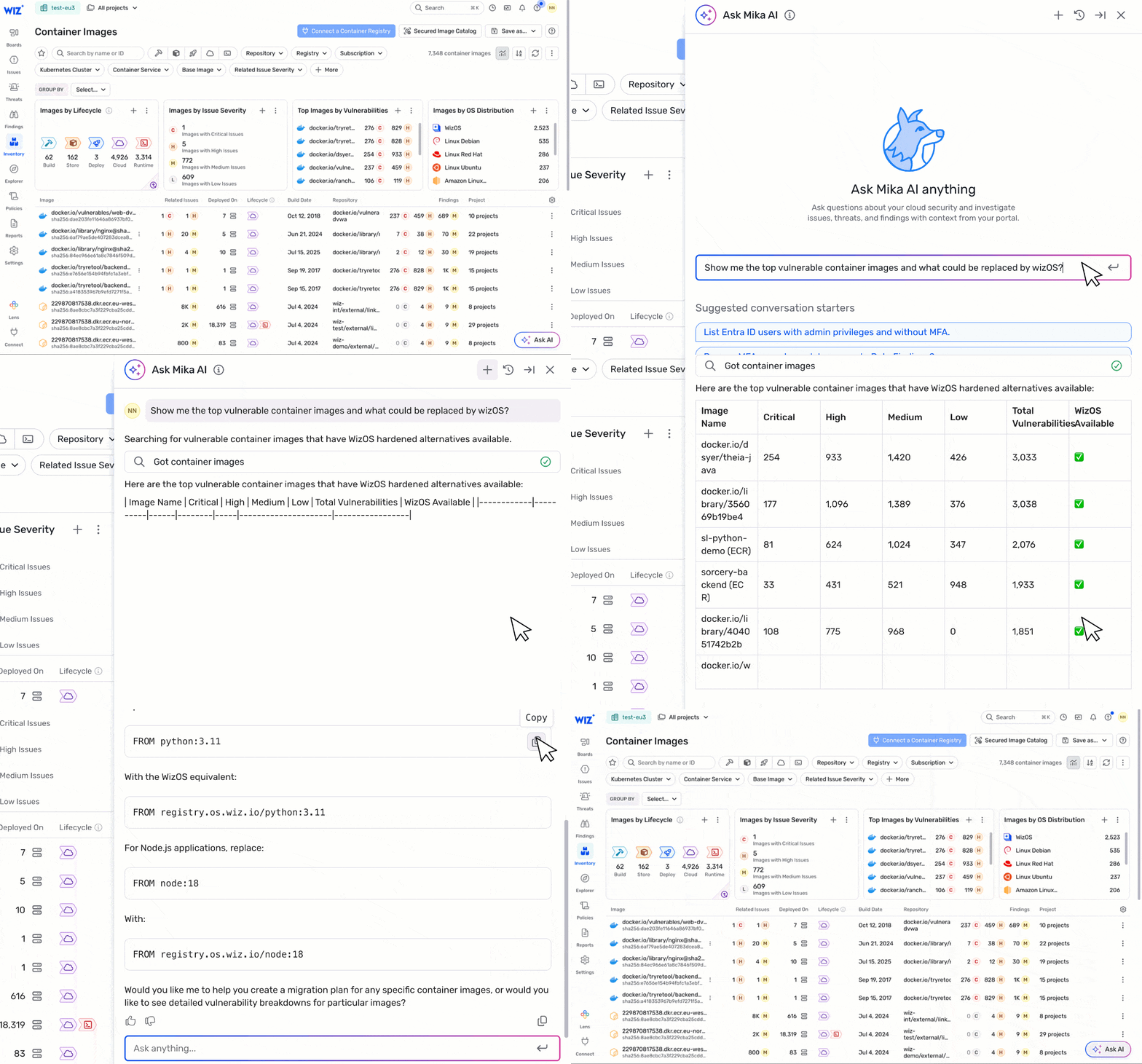
Wiz AI-APP brings those pieces together across the AI lifecycle:
AI-powered security automation: Mika AI provides intelligent risk analysis while the Blue Agent automates investigation and triage
AI security posture management: Wiz AI-SPM discovers models, agents, AI services, and related data stores across cloud and SaaS, then shows which ones are exposed or over-permissioned.
AI code scanning: Atlas acts as an autonomous AI vulnerability-research engine that validates AI code findings with working exploits at scale, so teams can fix reachable issues before they ship.
Data security posture management (DSPM) AI controls: Automatically detects sensitive training data and ensures that it's secure with new, out-of-the-box controls for extending DSPM to AI
AI attack path analysis: Wiz connects code, cloud, and runtime signals around AI pipelines so teams can see which paths an attacker could actually use and cut them off faster.
AI security dashboard: Provides an overview of the top AI security issues with a prioritized queue of risks so developers can quickly focus on the most critical one
Taken together, discovery shows what AI services and agents you run, posture and data controls flag what is exposed, Atlas proves which code issues are real, and Blue Agent helps investigate active threats. Because those signals share the same graph, teams can route fixes to the right owner instead of bouncing between AppSec, cloud, and SOC tools.
To see how Wiz connects AI code, pipelines, identities, and data into one risk view, get a demo.
See your AI risk graph in context
Explore how Wiz connects AI services, identities, data, and cloud exposure in one risk model.
