

Understanding vulnerability scanning and penetration testing fundamentals
Vulnerability scanning automatically finds potential weaknesses, while penetration testing manually tries to exploit them. A vulnerability assessment and penetration testing (VAPT) program uses automated scanners to identify likely security issues across your environment, then employs manual penetration testing to confirm exploitability and measure business impact.
Vulnerability Management Buyer's Guide
This buyer’s guide helps you choose the right vulnerability management solution and align teams around shared security ownership.

What is vulnerability scanning?
Vulnerability scanning is an automated process that identifies known security weaknesses in your systems, networks, and applications. A vulnerability scanner compares system configurations and software versions against a database of known issues.
This approach focuses on breadth. It covers a large attack surface quickly, which is essential for cloud environments where resources change constantly. Scanning provides you with a comprehensive inventory of potential security issues that need attention.
What is penetration testing?
Penetration testing is a manual, adversarial simulation where a security expert attempts to exploit vulnerabilities to achieve a specific goal. Testers think like attackers to chain different vulnerabilities together and bypass your security controls.
Penetration testing complements static application security testing (SAST) and dynamic application security testing (DAST) by chaining vulnerabilities across multiple layers—identity systems, network controls, application logic, and data access—to demonstrate complete attack paths that single-layer tools miss.
This approach focuses on depth. It validates real-world exploitability and shows you the actual business impact of a breach. Pen testing reveals complex attack paths that automated tools often miss because they lack human creativity.
The complementary nature of both approaches
Vulnerability scanning provides the foundation of your security by identifying potential weaknesses across your entire environment. Penetration testing then validates which of those vulnerabilities pose a genuine risk to your business.
This integrated approach is often called VAPT (Vulnerability Assessment and Penetration Testing). Together, they provide comprehensive coverage across the security testing lifecycle. Teams that combine continuous, contextual scanning with scoped, risk-led penetration testing reduce alert noise and focus effort where it counts—on exploitable paths that threaten business operations.
| Aspect | Vulnerability Scanning | Penetration Testing |
|---|---|---|
| Purpose | Identify known weaknesses at scale | Validate exploitability and business impact |
| Method | Automated rule-based checks | Manual adversarial simulation |
| Coverage | Broad—thousands of assets quickly | Focused—specific systems or attack scenarios |
| Frequency | Continuous or scheduled (daily/weekly) | Periodic (annual or after major changes) |
| Output | Findings list with CVSS scores and remediation steps | Attack path documentation with business impact analysis |
| Cost | Lower—scales efficiently | Higher—requires skilled security professionals |
| Best for | Maintaining security hygiene and compliance | Validating complex risks and critical systems |
Core differences between vulnerability scanning and penetration testing
Scope and coverage comparison
Vulnerability scanning offers broad, automated coverage across your entire environment. A single scanner can check thousands of assets, making it ideal for maintaining a complete asset inventory and managing your attack surface.
In contrast, penetration testing has a targeted, manual focus on specific systems or attack scenarios. While scanning identifies all potential vulnerabilities, pen testing prioritizes the ones that are actually exploitable. Cloud environments benefit significantly from scanning because it can keep up with dynamic, ephemeral resources that appear and disappear quickly.
Both scanning and penetration testing can be performed from internal and external perspectives. External testing simulates attacks from the internet, revealing your public attack surface. Internal testing assumes an attacker has gained initial access or simulates insider threats, revealing lateral movement risks and privilege escalation paths. Compliance frameworks like PCI DSS mandate both perspectives to ensure comprehensive coverage.
Methodology and execution differences
Vulnerability scanning uses an automated, tool-driven approach with predefined checks. It follows a strict set of rules to identify known patterns and flaws.
Penetration testing uses a creative, human-driven methodology that adapts based on what the tester finds. While scanners follow rules, testers follow attacker mindsets. Additionally, scanning runs continuously or on a schedule, whereas pen testing typically occurs at specific intervals, such as annually or after a major release.
Top Pen Testing Certifications for 2026
Pen testing certifications fall into distinct categories based on focus area, exam format, and target career level. Understanding these distinctions helps professionals invest in credentials that match their specific career goals rather than collecting overlapping certifications that validate the same skills.
En savoir plus

Output and reporting variations
Scanner reports typically list findings with severity ratings (such as CVSS scores), affected assets, and remediation guidance. Authenticated scans that use credentials to query systems provide richer, host-level detail including installed patches, running services, and configuration specifics compared to external, unauthenticated scans.
Pen test reports document specific attack paths, business impact, and strategic recommendations. These reports often include an executive summary that explains the risk in business terms. The context provided by a manual test differs significantly from the raw data provided by an automated scan.
Resource requirements and costs
Vulnerability scanning generally costs less and requires minimal specialized expertise to run once configured. It scales efficiently across large environments without adding significant headcount.
Penetration testing costs more and requires highly skilled security professionals. Costs vary widely based on scope, environment complexity, and testing depth—from focused application tests to comprehensive infrastructure assessments. Because of the cost and expertise required, you must carefully consider where to invest in pen testing within your cloud security program to get the best return.
Frequency and timing considerations
Vulnerability scanning is designed for continuous or frequent execution. You might run scans daily or weekly to catch new issues as they arise.
Penetration testing is periodic execution, typically happening annually or after significant changes to your infrastructure. Cloud environments demand more frequent scanning because the environment changes so rapidly. Compliance requirements often dictate the minimum frequency for both approaches.
What is internal vulnerability scanning?
Internal vulnerability scanning is the process of identifying security weaknesses within an organization’s internal network infrastructure.
En savoir plus
Cloud-native security testing considerations
Cloud environments introduce new challenges for security testing. The dynamic nature of the cloud requires you to adapt both your scanning and testing strategies.
How cloud environments change vulnerability scanning
Ephemeral resources and auto-scaling make traditional scanning difficult because assets may not exist long enough to be scanned. You need agentless scanning to achieve complete coverage without impacting performance or managing agents on every machine.
Cloud APIs enable continuous asset discovery and scanning as part of effective cloud vulnerability management by allowing the tool to see everything in your account. Furthermore, multi-cloud environments require unified scanning that works consistently across different platforms like AWS, Azure, and GCP.
Adapting penetration testing for cloud architectures
Cloud-native applications use microservices, which create new attack surfaces that traditional testing might miss. It is important to test cloud-specific services, APIs, and identity systems, as these are often the entry points for attackers.
Container and serverless architectures require specialized testing approaches, such as container security scanning, that understand how these technologies interact. Also, cloud pen testing must respect the cloud provider's terms of service and notification requirements to avoid being flagged as a malicious actor.
The role of context in cloud security testing
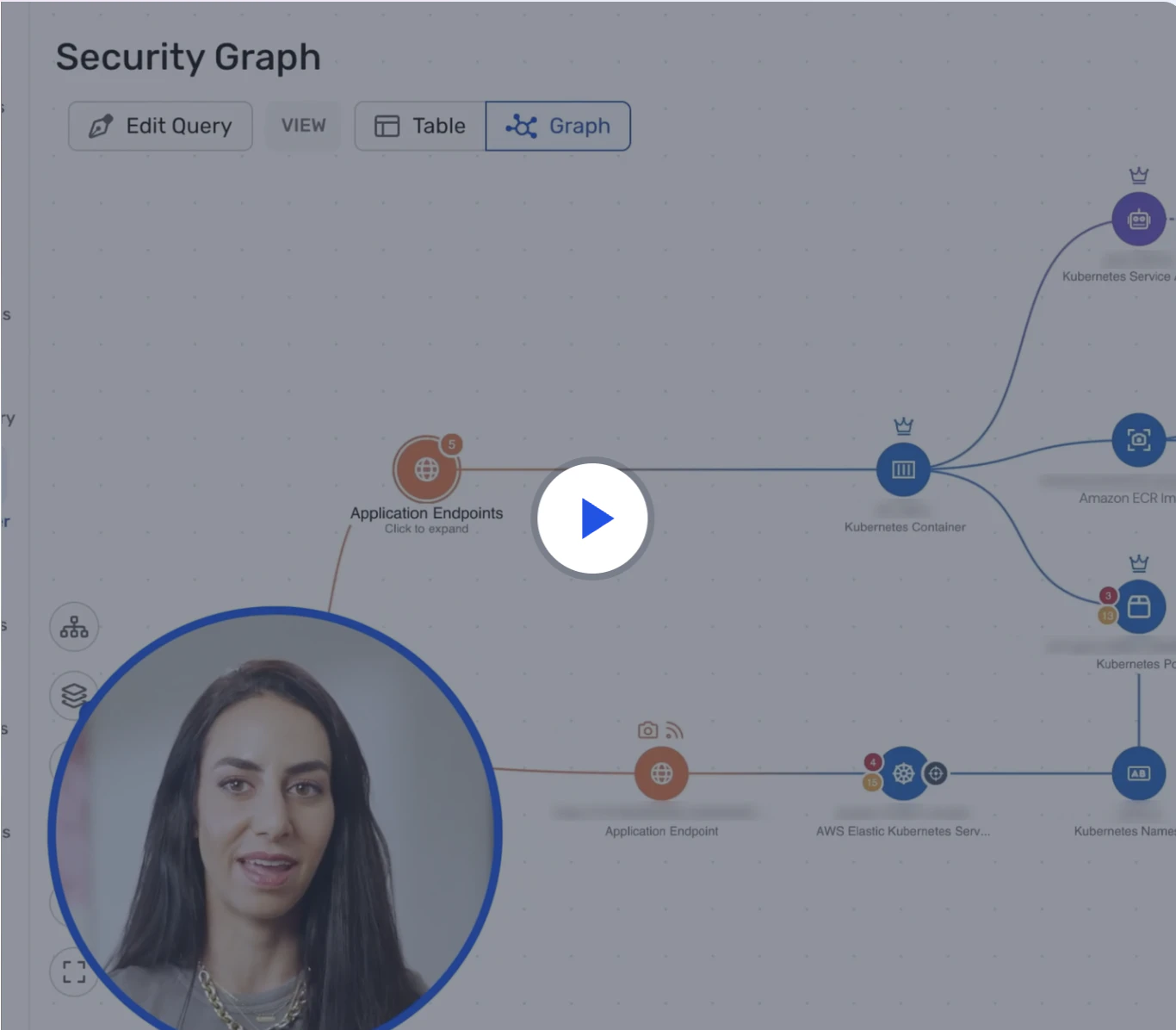
Cloud environments generate massive amounts of security data, which requires prioritization to be useful. The Wiz Security Graph connects vulnerabilities to actual risk by analyzing relationships between assets.
Understanding network exposure, permissions, and data sensitivity changes a vulnerability's priority. For example, a vulnerability on a machine exposed to the internet is more critical than one on a private network. Context transforms raw scanner findings into actionable security intelligence.
Integrating security testing into DevOps pipelines
Vulnerability scanning integrates into CI/CD pipelines as part of modern DevSecOps best practices to enable shift-left security. This allows you to catch issues early in the development process.
Incorporating penetration testing into rapid deployment cycles is challenging because it takes time. However, you can use automated security gates to block deployments that contain critical vulnerabilities found by scanners. Cloud-native development requires security testing that matches deployment velocity to avoid slowing down innovation.
Watch 12-minute demo
See how Wiz cuts through thousands of CVEs and surfaces the few that are truly exploitable in your cloud — mapped to identities, exposure, and real attack paths.
Watch now
Building an integrated security testing strategy
You do not have to choose between scanning and pen testing. A strong security strategy uses both to cover different aspects of risk.
Designing a complementary testing program
You can combine continuous vulnerability scanning with periodic penetration testing to get the best of both worlds. Use scanner findings to inform the scope and priorities of your penetration tests.
Create feedback loops where findings from your pen tests help you improve your scanner configurations. You should also align your testing frequency with your organization's risk tolerance and compliance requirements.
Prioritizing vulnerabilities across both approaches
Use CVSS scores alongside exploitability assessments from pen testing as part of your vulnerability prioritization strategy to rank your risks. Business context is crucial in determining which vulnerabilities matter most to your specific organization.
Identify toxic combinations where multiple vulnerabilities create critical attack paths. For instance, a vulnerability combined with high privileges is a toxic combination. Organizations have reduced critical risk exposure by combining contextual vulnerability scanning with prioritized remediation workflows—focusing first on issues that combine vulnerabilities with internet exposure, excessive permissions, or access to sensitive data rather than treating all findings equally.
Automating vulnerability management workflows
Automate scanner deployment and scheduling across your cloud environments to ensure nothing is missed. Integrations can route findings to the appropriate teams for remediation without manual intervention.
Track remediation progress and validate fixes through automated rescanning. Automation enables your security teams to focus on strategic activities, like penetration testing, rather than manual tasks.
Addressing skills gaps and resource constraints
Vulnerability scanning reduces the need for specialized security expertise on your daily operations team. You can leverage managed security services for penetration testing when you need deep expertise but lack internal resources.
Training development teams to understand and address scanner findings is important for scaling security. Cloud-native security platforms can amplify limited security team resources by automating the heavy lifting.
What is attack surface scanning? A complete guide
Attack surface scanning is the process of continuously discovering and monitoring internet-facing assets to identify entry points attackers can exploit.
En savoir plus

Measuring program effectiveness and ROI
You need to track the right metrics to prove your security program is working. These metrics help you demonstrate value and improve over time.
Key metrics for vulnerability scanning programs
Mean time to detect: The average time it takes to find a new vulnerability.
Coverage percentage: The portion of your estate that is actively scanned.
Vulnerability density: The number of issues found per asset.
You should track scanning frequency and consistency across your cloud environments. Measuring false positive rates and scanner accuracy ensures your team isn't wasting time. Trend analysis helps you demonstrate continuous improvement in your security posture.
Evaluating penetration testing outcomes
Measure the severity, exploitability, and business impact of pen test findings. Track remediation rates for confirmed risks to demonstrate how your organization reduces exposure over time and improves security control maturity.
Assess penetration testing value by estimating reduced incident likelihood and impact based on remediated findings. Successive pen tests should demonstrate security control maturity improvements, showing that your organization learns from identified weaknesses and strengthens defenses over time.
Demonstrating compliance and audit readiness
Common compliance frameworks like PCI DSS, HIPAA, SOC 2, and FedRAMP require both vulnerability scanning and penetration testing. You must document your testing activities to satisfy audit requirements.
Gather the evidence needed to demonstrate due diligence in your security testing. Automated reporting simplifies compliance documentation by generating the necessary proof with a few clicks.
Calculating security program ROI
Quantify the cost of your security testing programs, including tools and personnel. Estimate the value of prevented security incidents to show potential savings.
Measure efficiency gains from automation and consolidated platforms. Cloud-native platforms can reduce the total cost of ownership for security testing by combining multiple tools into one.
Top OSS Vulnerability Scanners [By Category]
Vulnerability scanning is an integral component of every vulnerability management program, providing security teams with insights needed to address vulnerabilities before they become attack vectors. When conducted regularly, vulnerability assessments offer asset discovery and visibility, attack surface management, and compliance enforcement.
En savoir plus

Contextual vulnerability management with unified cloud security
Wiz Unified Vulnerability Management (UVM) connects vulnerability findings to a Security Graph for end-to-end context across your cloud environment. Its agentless approach provides broad coverage across workloads and services with minimal operational overhead, helping teams understand which vulnerabilities pose real risk based on exposure, permissions, and data access.
Wiz enables continuous attack path analysis that simulates adversarial thinking between scans. This helps teams prioritize which findings warrant deep manual penetration testing and accelerates remediation by validating real exposure paths—bridging continuous automated scanning with targeted manual validation. This helps teams focus security testing resources on vulnerabilities that truly matter based on exploitability and business impact.
Wiz also extends security testing earlier in the development lifecycle with Wiz Code, which includes SAST capabilities that scan source code for vulnerabilities before deployment. By identifying security issues during development, Wiz Code complements runtime vulnerability scanning and penetration testing—catching flaws when they're easiest and least expensive to fix while reducing the volume of issues that reach production environments.
Wiz UVM's contextual mapping across your cloud estate helps you rapidly identify and remediate critical vulnerabilities—accelerating both initial scoping and fix validation by understanding which vulnerable systems have internet exposure, elevated privileges, or access to sensitive data.
See how contextual, agentless coverage and graph-based prioritization help you reduce real risk. Request a personalized demo to explore Wiz today!
Agentless Scanning = Complete Visibility Into Vulnerabilities
Learn why CISOs at the fastest growing companies choose Wiz to identify and remediate vulnerabilities in their cloud environments.
